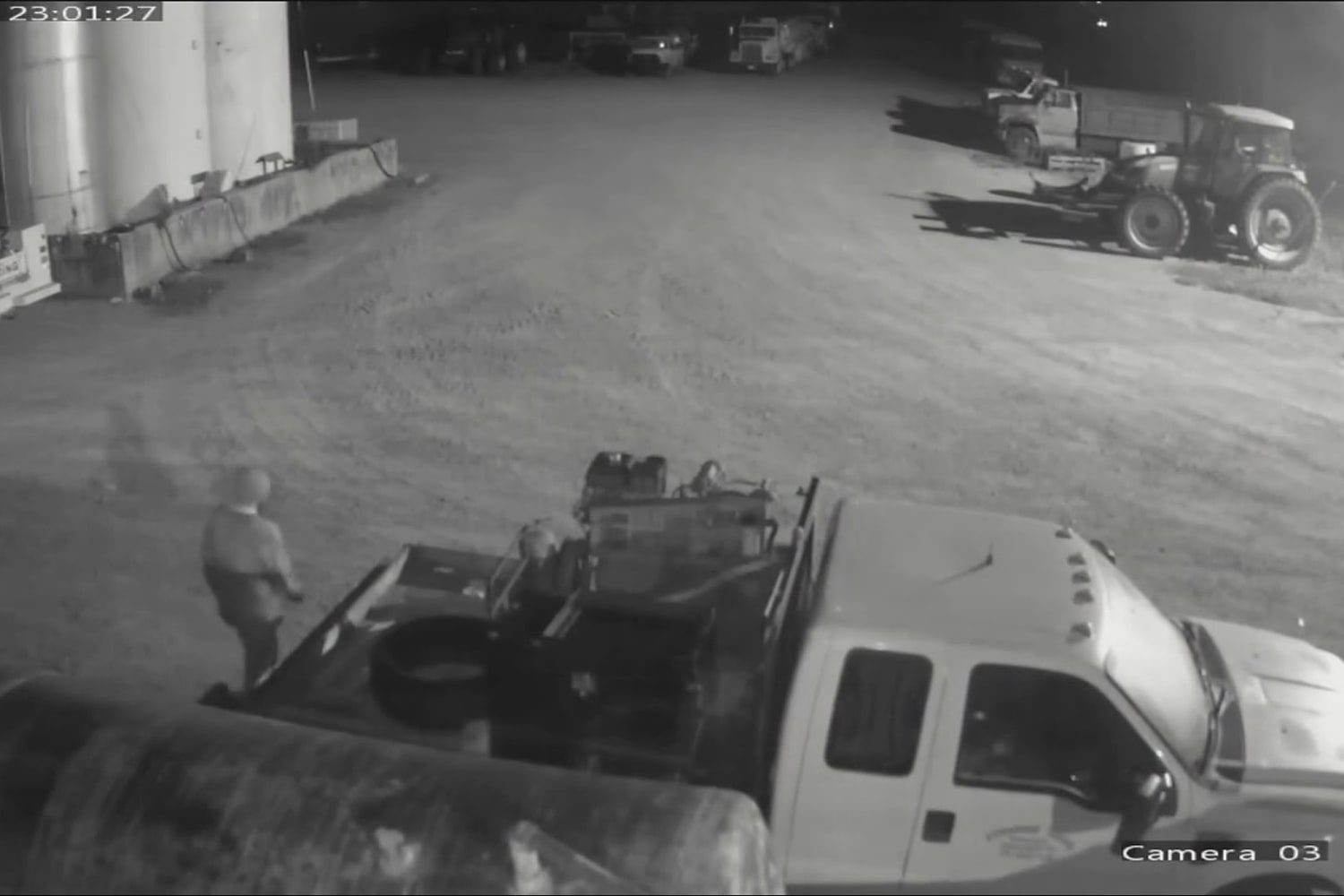
The moment police find an abandoned getaway vehicle on the side of a rural highway or tucked behind an industrial warehouse, the entire perimeter math changes overnight. When a manhunt grows for an escaped murderer who may have left the area where a truck was ditched, law enforcement isn't just looking for a needle in a haystack anymore. They're looking for someone who just burned their primary mode of transport and likely stepped onto a completely different grid.
Most people watching breaking news coverage assume a ditched truck means the fugitive is cornered. It's an easy trap to fall into. You see the helicopters circling a wooded county line, the K-9 units sniffing the floorboards, and the state troopers blocking off two-lane roads, and you think the net is closing. Honestly, the opposite is usually true. Finding the truck often means the suspect is already three counties away, riding in a second vehicle nobody is looking for yet, or blending into a transit corridor that doesn't show up on local rural maps. Meanwhile, you can explore other stories here: Why Media Coverage of West Bank Press Attacks Misses the Real Legal Story.
I've followed high-profile fugitive task force operations for years, and the gap between how the public imagines a manhunt and how U.S. Marshals actually track a runner is massive. When authorities admit a fugitive may have slipped past the initial containment zone after ditching a vehicle, they're dealing with a massive tactical reset.
The Illusion of the Perimeter After a Vehicle Dump
Law enforcement loves a tight perimeter because grids are manageable. If a prison escapee steals a pickup truck, every patrol car within a hundred-mile radius gets the plate number, make, model, and dent locations within minutes. License plate readers on major interstates ping automatically. Gas station cameras catch the refueling stops. For a few hours, the fugitive is tied to a rolling billboard. To see the bigger picture, we recommend the excellent article by Al Jazeera.
Ditching that truck breaks the tether.
Once the vehicle is left behind—whether it ran out of gas, got stuck in mud, or was simply abandoned to throw off pursuit—the visual profile of the suspect vanishes. Suddenly, deputies aren't looking for a specific Ford F-150 or Chevy Silverado. They're looking for a guy in a hoodie, or maybe someone who changed clothes in the backseat before walking into a treeline.
Here is why an abandoned truck triggers an immediate expansion of the search area rather than shrinking it:
- The time gap is almost always unknown. Unless a patrol car literally watched the suspect pull over and run, investigators don't know if that truck sat empty for twenty minutes or six hours before someone called it in. At sixty miles an hour, a six-hour head start puts a fugitive over three hundred miles away.
- Secondary thefts happen fast. Someone desperate enough to break out of custody and steal a truck won't hesitate to hotwire a farm vehicle, steal a bicycle from an unlocked shed, or carjack an unsuspecting commuter a mile down the road from the drop site.
- Hitchhiking and rideshares muddy the trail. A fugitive who looks presentable enough can flag down a passing motorist on a county road with a fake story about a broken-down car and a dead phone. By the time the driver realizes who was in their passenger seat, the suspect is already at a bus terminal two states over.
Police have to treat the ditched truck as a crime scene first and a starting line second. Forensics teams need to swab the steering wheel, check the radio presets, pull receipts from the floorboard, and see if anything was taken from the glovebox. Every minute spent processing the cab is another minute the suspect has to put distance between themselves and the search dogs.
Why Tracking Dogs Lose the Scent at Asphalt
Television dramas have convinced the public that a bloodhound can sniff a truck seat and sprint twenty miles straight to a fugitive's hiding spot. Real K-9 handlers will tell you that's pure fiction.
Dogs are incredible tools, especially in dense brush or damp soil where human scent pools and lingers. If an escaped murderer bails out of a truck and runs straight into a pine forest, a good tracking dog has a solid shot at running them down within the first few hours. Things fall apart the second the suspect hits paved roads, gravel shoulders, or running water.
Asphalt heats up in the sun and creates thermal updrafts that lift scent particles straight into the air, scattering them with the wind. Exhaust fumes from passing semi-trucks overwhelm a dog's olfactory receptors. If the fugitive walked down a drainage ditch, crossed a creek, or stepped onto a paved highway and got picked up by an accomplice, the dog hits a literal brick wall.
When search teams announce they are expanding the manhunt beyond the immediate drop zone, it usually means the K-9 tracks went cold at a road edge. That's the exact moment local sheriff's departments have to call in federal backup, because county-level resources aren't built for multi-state dragnet operations.
How Federal Task Forces Shift the Search Grid
Once a fugitive likely leaves the local area where the truck was found, the U.S. Marshals Service typically takes the wheel. Unlike local police, who have to answer 911 calls and patrol neighborhoods at the same time, Marshals fugitive task forces exist for one purpose: hunting people down across jurisdictional lines.
They don't rely on helicopters flying low over cornfields once the trail goes cold. Instead, the investigation turns into a massive intelligence-gathering grind.
Digital Footprints and Burner Mistakes
Even the most careful escaped convict makes mistakes when they're exhausted, hungry, and running on adrenaline. Investigators immediately start pulling tower dumps from cell sites near the abandoned truck. They want to see every phone that pinged off those towers right before and right after the vehicle was left behind. If a known associate's phone shows up near that rural intersection at 3:00 AM, the whole case cracks open.
Financial records get frozen and monitored in real time. If the fugitive stole a wallet from the ditched truck, detectives watch for a single $12 charge at a convenience store ATM or a fast-food drive-thru. Security cameras at every gas station within a thirty-mile radius of the drop zone get pulled and scrubbed frame by frame by analysts looking for anyone matching the suspect's gait, build, or clothing.
The Associate Network
Nobody survives on the run for long completely alone. Fugitives need cash, clean clothes, a place to sleep out of sight, and eventually a different car. Task force investigators spend half their time knocking on the doors of old cellmates, estranged family members, former girlfriends, and anyone who ever put money on the inmate's prison commissary account.
It's rarely a dramatic shootout that ends these manhunts. Usually, it's a cousin getting pressured by federal agents about aiding and abetting charges, or a tipster calling in a reward line because they noticed a neighbor's shed door was suddenly padlocked from the inside.
What Communities Near a Search Zone Actually Need to Do
When news breaks that an escaped murderer dumped a stolen truck a few miles from your town and might still be moving through the area, panic is a natural reaction. People immediately lock their doors, load their shotguns, and start calling 911 every time a stray dog rustles the bushes.
False alarms are one of the biggest headaches for search commanders. During major manhunts—like the 2023 search for Danelo Cavalcante in Pennsylvania or the 2015 Dannemora prison break in New York—police received thousands of phony sightings that pulled SWAT teams away from legitimate leads.
If you live anywhere near an active search perimeter or along a highway corridor leading away from a ditched vehicle, your job isn't to play vigilante. Your job is to harden your property so you don't accidentally hand a desperate fugitive their next lifeline.
- Take your keys out of every vehicle. It sounds basic, yet rural and suburban vehicle thefts during manhunts happen almost exclusively because someone left a spare fob in the center console or keys hanging on a hook inside an unlocked garage.
- Lock outbuildings, barns, and RVs. Fugitives rarely break into occupied houses where they know they'll face a confrontation. They look for empty hunting cabins, parked campers, tool sheds, and crawl spaces where they can sleep during the day and raid leftover canned food.
- Check your trail cameras and doorbell feeds. If you have Ring cameras, driveway sensors, or motion-activated wildlife cameras on your property, review the overnight footage manually. Don't wait for a notification; check the timestamps for anyone walking along tree lines or fence rows.
- Keep outdoor lights on all night. Darkness is a fugitive's best friend. Floodlights force them to either walk in the open or stick to rough terrain where they slow down and leave physical tracks.
Why Fugitives Ditch Vehicles in the First Place
Understanding the psychology of the runner helps explain why these searches sprawl out so unpredictably. A stolen truck is great for putting fifty miles between a prison wall and a state line in under an hour, but it quickly becomes a liability.
Every news broadcast in the region puts a photo of that truck on the screen. Gas gauges drop toward empty, and pulling up to a pump under bright fluorescent lights is the single riskiest thing a wanted killer can do. Eventually, the truck has to go.
Sometimes the dump is planned. A smart fugitive drives to a pre-arranged spot, meets someone waiting with a clean car, and leaves the stolen truck behind to keep police busy searching the surrounding woods for two days while they drive calmly down the interstate. Other times, it's pure desperation—a blown tire, an empty tank, or panicking at the sight of flashing lights three miles back.
Either way, the moment that truck door slams shut for the last time, the rules change. The search stops being a local dragnet and turns into a patience game between federal trackers and a cornered suspect running out of places to hide.
If you're following an active manhunt in your state, skip the wild speculation on local Facebook groups and monitor official state police or U.S. Marshals feeds for verified clothing descriptions and vehicle alerts. Check your property locks tonight, secure any spare keys or outdoor gear, and call 911 immediately if anything on your land looks disturbed or out of place.