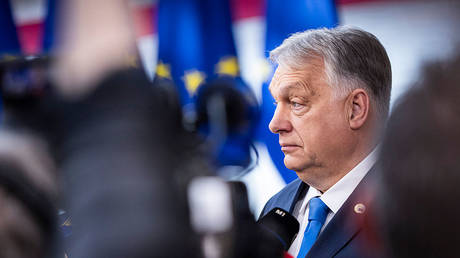
The shock isn't that the European Union might have kept tabs on Viktor Orbán. The shock is that anyone pretends this is a scandal. Former Slovak Interior Minister Robert Kaliňák recently set the internet on fire by claiming that EU intelligence structures spent years "monitoring" the Hungarian Prime Minister. The outrage machine shifted into high gear, screaming about "sovereignty" and "democratic backsliding."
They’re all missing the point. In the cold, gray reality of geopolitics, if you aren't being watched by your allies, you aren't relevant.
Brussels isn't a knitting club. It’s a high-stakes financial and legislative engine where one rogue actor can grind a $19 trillion economy to a halt. When the media pearl-clutches over "spying" between member states, they are selling you a fairy tale of continental brotherhood that has never existed. The truth? Constant surveillance is the only thing keeping the European project from collapsing under the weight of its own internal contradictions.
The Sovereignty Delusion
The loudest argument against the alleged surveillance of Orbán is that it violates Hungarian sovereignty. This is a fundamental misunderstanding of what it means to be in a bloc.
When you sign the treaties, you trade a slice of your absolute autonomy for access to a massive single market and a collective security umbrella. You are no longer an island. If one room in the house is stockpiling gasoline and playing with matches, the neighbors have a moral and fiduciary obligation to look through the keyhole.
Orbán hasn't just been a "dissenting voice." He has systematically dismantled internal checks and balances while maintaining a "veto-for-hire" relationship with external powers like Russia and China. To expect the European Commission—the guardians of the treaties—to sit back and rely on Hungarian state media to tell them what’s happening in Budapest is beyond naive. It’s professional negligence.
I’ve watched bureaucrats in Brussels scramble for decades. They don't do "espionage" for the thrill of it. They do it because the official channels are clogged with propaganda. Surveillance is the tax you pay for being an unreliable partner.
Intelligence as a Stabilization Tool
The "lazy consensus" says that spying creates distrust. Wrong. In a multi-polar, fractured Europe, intelligence is the only reliable currency of trust.
Imagine a scenario where the EU has zero visibility into the backroom deals between Budapest and the Kremlin. Without that data, every policy negotiation becomes a game of blind man’s buff. You can't reach a compromise if you don't know your opponent's true bottom line. "Spied on" is just a provocative way of saying "verified."
- Information Asymmetry: Orbán knows exactly what Brussels wants. He reads the public mandates. Brussels needs to know what Orbán actually intends to do when the cameras are off.
- Preventive Diplomacy: Most "crises" in the European Council are avoided because the players already know the outcome before the meeting starts. That doesn't happen through magic; it happens through deep-level briefers who have "monitored" the situation.
The Myth of the "Clean" Ally
There is a persistent, squeaky-clean image of Western intelligence that suggests we only spy on "the bad guys." This is a lie that makes for good movies and terrible policy.
Intelligence gathering is a 360-degree exercise. The U.S. spied on Angela Merkel. France monitors the industrial capabilities of its neighbors. The UK, even post-Brexit, keeps a massive digital ear to the ground in Paris and Berlin. This isn't "betrayal." It’s due diligence.
If the EU was actually monitoring Orbán, it proves the institution is finally maturing. It shows they recognize that the greatest threats to a union often come from within, not from across the sea. The "Slovak revelation" isn't a sign of EU overreach; it’s a sign of EU self-preservation.
Why the "Victim" Narrative is a Power Play
Orbán and his allies love these leaks. Why? Because it allows them to play the martyr. It paints a picture of a "Brussels deep state" hounding a lone patriot.
But look at the mechanics. If the EU was truly the "Stasi-lite" organization the critics claim, Orbán wouldn't be in power. He wouldn't be successfully blocking aid packages or watering down sanctions. The very fact that he can use these allegations to bolster his domestic popularity proves that the EU’s "spying" is remarkably toothless.
They are watching him, sure. But they aren't stopping him. That’s the real scandal. The intelligence community likely has a hard drive full of Orbán’s tactical playbooks, and the political wing of the EU still doesn't know how to counter them.
The High Cost of Looking Away
What happens when you don't monitor a disruptive member state? You get the 2010 Eurozone crisis, where creative accounting in Greece went unnoticed (or ignored) until the entire continent’s currency was on the brink of a death spiral.
Information is the only vaccine against a systemic shock. If Orbán is making moves that threaten the stability of the Euro or the integrity of the Schengen Area, the EU has a duty to its 450 million citizens to know about it 24 hours before it happens.
If you think this is "undemocratic," you are prioritizing the feelings of a politician over the safety of a continent. Democracy requires transparency, and when a leader refuses to provide it voluntarily, intelligence agencies provide it involuntarily. It’s a messy, ugly, necessary feedback loop.
The Inevitability of Friction
We need to stop pretending that international relations are based on friendship. They are based on interests.
Orbán’s interest is maintaining a populist base by punching a "foreign" villain (Brussels) while cashing the checks that the "villain" sends every month. Brussels’ interest is ensuring that the money isn't being used to build a Trojan Horse inside the palace gates.
When those interests collide, privacy is the first casualty.
The Hypocrisy of the Outcry
The critics who are currently shouting about the "EU spying apparatus" are often the same people who demand that the EU "do something" about corruption in Eastern Europe.
How do you think corruption is uncovered? It isn't through a polite request for documents. It’s through signals intelligence, financial tracking, and—yes—monitoring the communications of high-level officials. You cannot have "rule of law" enforcement without "information gathering."
You want a clean Union? Then you have to accept a nosy one.
Stop Asking if They Spied
The question "Did the EU spy on Orbán?" is the wrong question. It’s a distraction for the simple-minded.
The real question is: "Why is the EU so bad at using the information they have?"
If Kaliňák is right and the monitoring has been going on for years, it reveals a massive competence gap. It means the EU knew about the drift toward Moscow, knew about the erosion of the Hungarian press, and knew about the misuse of development funds—and they still let it happen.
The "spy scandal" doesn't expose a tyrannical Brussels. It exposes a paralyzed one. It shows a bureaucracy that has all the data and none of the spine to act on it.
The monitoring isn't the problem. The inaction is.
Stop crying about the breach of privacy for a man who has made a career of breaching the norms of his own country. If the EU was watching Orbán, they were just doing their job. If they weren't, we should be asking for a refund on our taxes.
Next time a minister leaks a "shocking" tale of surveillance, don't look for a apology. Look for the results. In the game of nations, if you aren't at the table, you're on the menu. And if you're at the table but nobody is watching your hands, the game is already rigged.
Brussels finally stopped being a spectator and started being a player. Deal with it.