Every time a minor bureaucrat in Tehran spits into a microphone, financial television anchors lose their minds. Neon red tickers flash across Bloomberg and CNBC screens worldwide. Algorithmic news scrapers aggregate the panic within milliseconds. Retail traders scramble to buy gold or short the S&P 500, convinced that World War III is scheduled for Tuesday morning. It is an exhausting, highly profitable theater for the media industrial complex, and it is entirely divorced from reality.
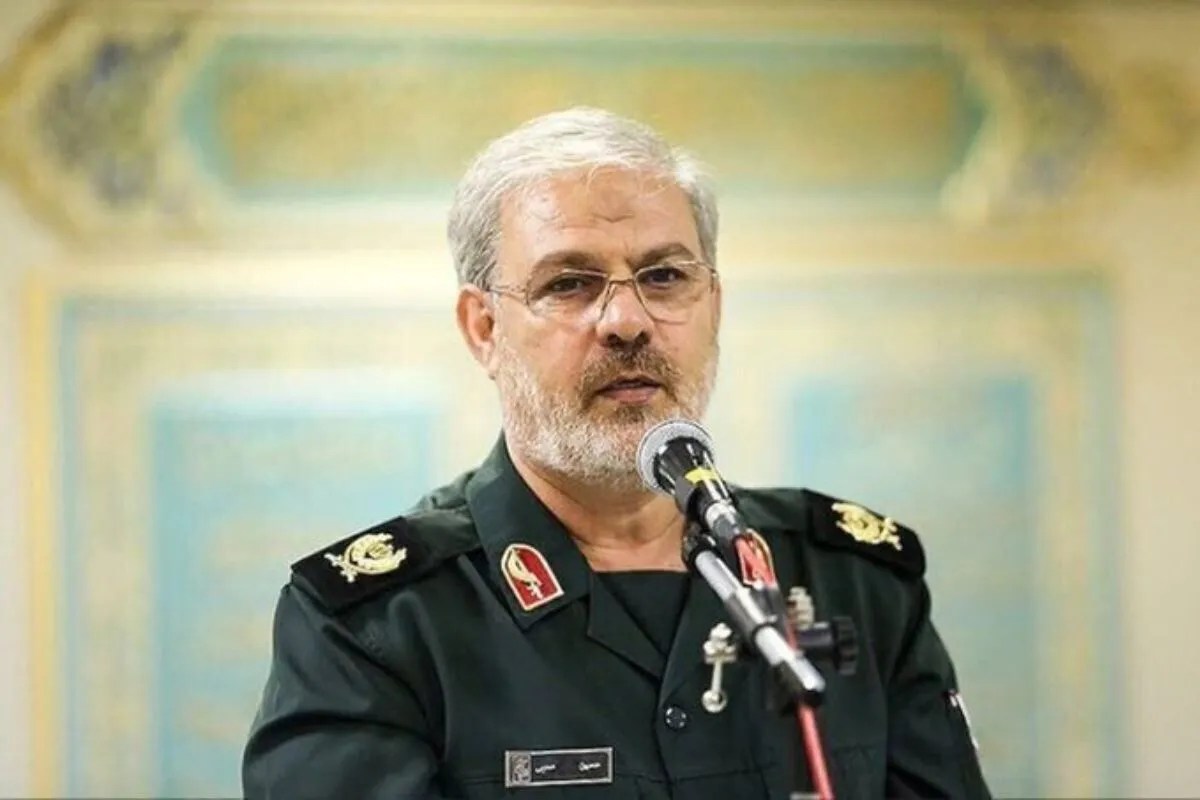
Let us look at the recent dispatch from Fars News regarding an Iranian official warning that conflict with the United States could expand further. Read the headline. Feel the manufactured terror. Then let us strip away the cheap adrenaline and examine what is actually happening beneath the bureaucratic noise. For an alternative view, consider: this related article.
I have watched trading desks panic over these exact quotes for fifteen years. I have seen junior analysts throw away millions of dollars hedging against phantom armageddons while seasoned operators quietly accumulate assets on the weakness. The lazy consensus among mainstream pundits is that every rhetorical escalation is a countdown timer to total catastrophe. That consensus is lazy, cowardly, and mathematically wrong.
The Anatomy of Domestic Posturing
To understand why Fars News publishes these breathless warnings, you have to understand who the target audience actually is. It is not Washington. It is not the Pentagon. It is internal. Similar coverage on the subject has been provided by NBC News.
When a state apparatus faces domestic economic pressure, currency depreciation, inflation spikes, or internal political friction, the oldest playbook in human history involves projecting external danger. Officials issue stern warnings about widening conflicts not because an expanded war serves their strategic interests, but because maintaining a perpetual state of heightened tension justifies domestic control, silences internal dissent, and rallies a fractured populace around the flag.
The Western press treats these statements as strategic blueprints. That is a catastrophic category error. They are domestic political survival tools disguised as foreign policy declarations. When an official states that the conflict could expand, they are performing for local cameras. They are signalling resolve upward and downward within their own chain of command.
Treating a domestic political press release as an operational military doctrine is like taking a Hollywood movie trailer as a historical documentary. Yet, financial markets and political commentators fall for it every single quarter, without fail. They mistake the megaphone for the artillery battery.
Why Real Escalation is Quiet
If you want to know when a state is actually preparing to widen a conflict, look at what they stop saying, not what they shout from the rooftops. Real military escalation is silent, bureaucratic, and methodical.
When serious strategic shifts happen, governments clamp down on public chatter. Supply lines quietly adjust. Sovereign wealth funds reallocate capital behind closed doors. Central banks quietly position reserves. Communications channels narrow rather than expand. The actors involved stop giving fiery quotes to state-run news agencies because drawing premature attention destroys operational surprise.
Notice the contradiction in the mainstream narrative. We are told that an adversary is calculating, patient, and ruthless in its regional strategy, yet we are simultaneously expected to believe that this same adversary broadcasts its exact expansion plans through routine press agency soundbites. It is absurd. Real strategists do not telegraph their next major offensive via a wire service interview.
The fact that an official is loudly proclaiming the possibility of expansion is the exact reason why immediate, catastrophic expansion is statistically improbable. True escalation walks softly and carries a massive, unannounced stick. Barking dogs rarely bite in the middle of a complex geopolitical chess match.
The Economics of Managed Friction
Modern great power competition operates on a spectrum of controlled friction. Neither Washington nor Tehran wants a total regional war. Total war destroys infrastructure, evaporates oil revenues, triggers internal regime collapse, and invites direct interventions that neither side can afford or manage.
What both sides want, and what they have maintained for decades, is a state of managed friction. This is an equilibrium of hostility where tensions remain high enough to justify domestic postures and proxy investments, but low enough to prevent systemic implosion. Think of it as a cold war operating at a high frequency.
In a managed friction regime, rhetoric must always remain loud to compensate for the fact that direct military actions remain tightly bounded. When direct kinetic actions are too costly, verbal escalation becomes the primary currency. Officials spend this currency freely because words are cheap, infinitely renewable, and satisfy the domestic need for aggressive posture without triggering a kinetic response that would obliterate their own strategic assets.
When you price in every verbal threat as an existential risk, you are mispricing the entire asset class of geopolitical risk. Markets chronically overpay for fear and underprice structural stability. The institutional players know this. They use the retail panic generated by wire services to buy discounted risk assets while the amateur class hides under the bed.
The Algorithmic Feedback Loop
Modern financial markets are no longer driven solely by human reflection. They are dominated by natural language processing algorithms that scan wire services, RSS feeds, and state-backed news outlets for keywords like escalation, conflict, and military.
When Fars News drops a quote warning of expansion, scrapers ingest the headline instantly. Quantitative trading desks program algorithms to execute risk-off orders based on sentiment scores rather than structural analysis. The market drops two percent in minutes.
This creates a perverse feedback loop. The state official issues a dramatic statement for domestic political consumption. Algorithmic scrapers misinterpret domestic political theater as impending kinetic disaster. Markets react violently. The media reports the market drop, citing the geopolitical tension as proof of imminent danger. The state official sees the global reaction, realizes the statement carried more weight than intended, and doubles down to maintain face.
You are watching a feedback loop of artificial stupidity. The algorithm cannot distinguish between a strategic military mobilization and a routine Friday sermon in Tehran. It only reads keywords and triggers capital flight.
Understanding this loop gives you an asymmetric edge. When you see a sharp, unprovoked sell-off driven purely by a wire service quote about potential escalation, you are looking at a gift. You are witnessing liquidity being misallocated by machines that cannot comprehend human political theater. The smart money waits for the algorithmic dust to settle, buys the oversold equities, and profits from the artificial panic.
Dismantling the People Also Ask Fallacy
Every time these headlines drop, search engines and social feeds flood with predictable variations of the same anxious questions. Let us dismantle them directly.
Will the conflict between Iran and the United States inevitably expand into a regional war? No. An inevitable war does not require constant verbal reminders to stay relevant. The structural disincentives for both capitals to engage in all-out war remain massive and immovable.
Why do state-controlled news outlets amplify these warnings? Because state-controlled media exists to serve state narratives. Fars News is an arm of official communication. Its function is to shape perception, project strength, and manage expectations at home. Treating its output as objective geopolitical forecasting is like treating a corporate earnings PR release as an independent audit.
Can investors hedge against these geopolitical shocks? Yes, but most do it entirely wrong. Buying out-of-the-money puts on the S&P 500 every time a Middle Eastern official makes a fiery speech is a tax on stupidity. If you want to monitor actual operational risk, watch maritime insurance rates in the Persian Gulf, track physical crude tanker tracking anomalies, and observe diplomatic backchannel communications between intermediary capitals like Oman or Qatar. Those are actual signal metrics. Wire service quotes are pure noise.
The Cost of Consuming Manufactured Panic
The modern information ecosystem profits from your anxiety. Every click on a panic-inducing headline about expanding conflicts feeds an ad-revenue engine designed to keep your nervous system permanently dialed to maximum stress.
When you internalize this noise, your decision-making degrades. You make poor portfolio choices, you misread global macroeconomic trends, and you allow politicians and state media mouthpieces to rent space in your head for free.
Stop reacting to the microphone. Start analyzing the incentives.
Look at the structural realities. Look at the balance sheets. Look at the logistical constraints. Look at the absolute absence of appetite for total war among the core decision-makers in Washington and Tehran. Once you view these events through the cold lens of institutional incentives rather than the emotional lens of breaking news tickers, the fog clears entirely.
The official from Fars News did his job today. He delivered a fiery quote, filled column inches, panicked retail investors, and reinforced domestic narratives. Your job is to recognize it for what it is: empty calories served in a gilded bowl.
Ignore the noise. Watch the capital flows. The rest is just theater.