Every mainstream pundit and desk-bound analyst is currently hyperventilating over the White House announcement to jack up automotive and steel levies to fifty percent. The lazy consensus in every major financial publication reads like a broken record: protectionist policies will instantly choke cross-border trade, wreck supply chains, and trigger an apocalyptic price surge for car buyers.
They are missing the forest, the trees, and the entire continent. For another view, see: this related article.
I have watched corporate boards blow millions on structural realignments because they misread supply signals, treating macro-announcements as static tax spikes rather than dynamic operational gunshots. Let us clear the smoke. The fifty percent tariff threat targeting Canadian cars, trucks, parts, and steel is not just a blunt instrument of economic nationalism. It is a violent corporate relocation policy disguised as a trade war.
The Import Invoice Fallacy
Let us define the core misunderstanding immediately. Commentators love to scream that this is a tax on foreign governments. Trade attorneys like Barry Appleton correctly point out that the initial invoice lands squarely on American dealers and importers of record. Related coverage on the subject has been published by Financial Times.
Fine. That is textbook mechanics. But stopping the analysis there is like looking at a chemotherapy prescription and declaring the drug toxic without acknowledging the tumor.
The lazy consensus assumes the supply chain is rigid. It assumes a vehicle designed in Detroit, assembled in Ontario with parts crossing the border five times, will simply absorb a fifty percent tax hike, pass it to the consumer, and keep moving. That is corporate suicide. No modern manufacturer operates with that level of passive stupidity.
Imagine a scenario where a major automaker calculates the margin hit of a fifty percent border levy on sub-assemblies. The rational response is not wringing hands in Michigan showrooms. The rational response is moving the stamping plant twenty miles south of the border before the implementation clock runs out.
The Sovereignty Clash and Corporate Realities
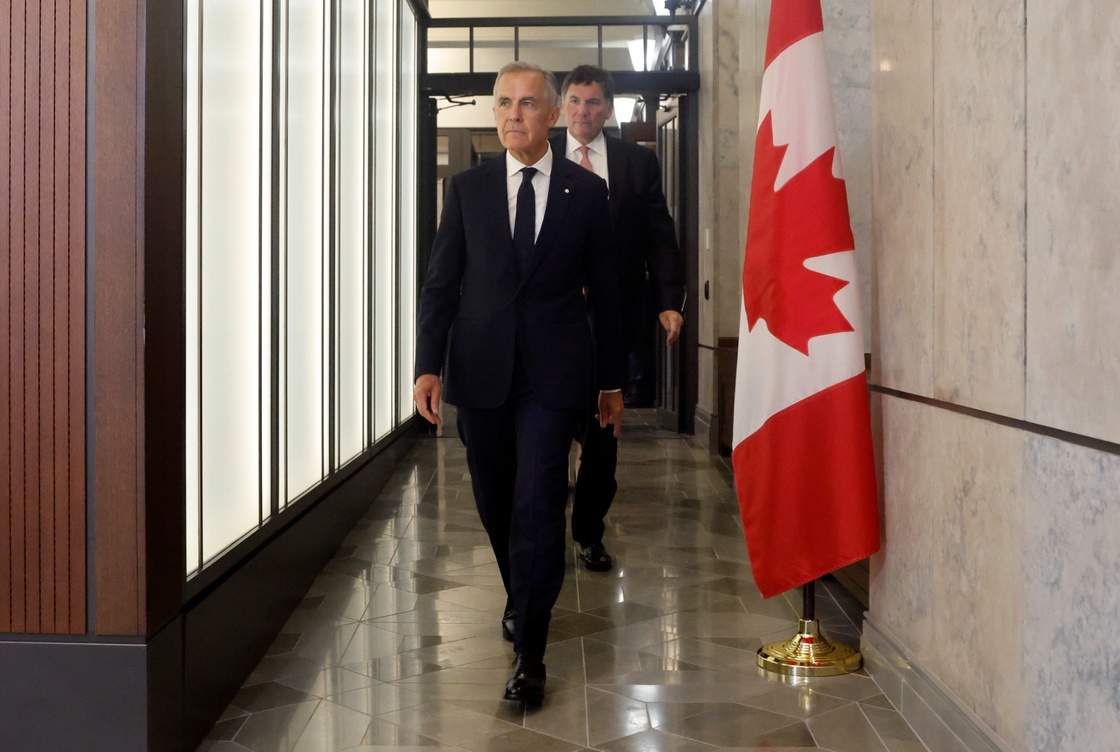
Prime Minister Mark Carney stepped up to the microphones in Ottawa to declare that Canada is effectively "at war" over trade, promising dollar-for-dollar retaliation. It makes great theater. It plays well to domestic political bases.
It also ignores the structural leverage at play.
Canada sends the vast majority of its automotive export volume directly south. When U.S. Treasury officials and trade representatives point out that negotiations collapsed because Ottawa pushed back against strict structural terms, they are highlighting a simple economic asymmetry. You cannot threaten asymmetric retaliation when your industrial base relies entirely on a single consumer market that is actively slamming the door.
Industry groups like Autos Drive America and analysts at Cox Automotive are already warning about pinched margins and constrained inventory. They are right about the immediate friction. They are dead wrong about the long-term equilibrium.
Dismantling the Protectionist Myth
People asking whether these tariffs will destroy the auto market are asking the wrong question. The real question is how fast legacy supply chains can uncouple from cross-border dependencies and hyper-localize production inside U.S. borders where the tariff rate sits cleanly at zero.
This is not about keeping foreign steel out; it is about forcing a re-engineering of North American manufacturing footprints.
I've seen companies spend decades optimizing supply chains for pure logistics cost efficiency, ignoring geopolitical single points of failure. They built integrated cross-border assembly lines under the old NAFTA and USMCA frameworks, assuming borders were permanent speed bumps rather than strategic gates. That era is dead. The fifty percent threshold is high enough to completely erase the labor-cost arbitrage that made Canadian assembly plants attractive in the first place.
When the cost of compliance eclipses the cost of relocation, capital moves. It always moves.
What Executives Should Do Right Now
Stop waiting for a diplomatic miracle or a last-minute exemption package. If your procurement pipeline relies on Canadian steel or cross-border sub-assemblies, you are sitting on ticking inventory.
- Audit every Tier-1 and Tier-2 supplier for geographic exposure. If their physical footprint is north of the Detroit River, assume your cost basis is doubling.
- Model the capital expenditure required to shift sub-assembly lines to domestic soil. Compare that capex against a sustained fifty percent margin penalty.
- Redraft supplier contracts to share regulatory risk before the effective enforcement date arrives.
The writing is on the wall. The border is hardening, and the old continental manufacturing consensus is finished. Adapt or become a liquidation statistic.