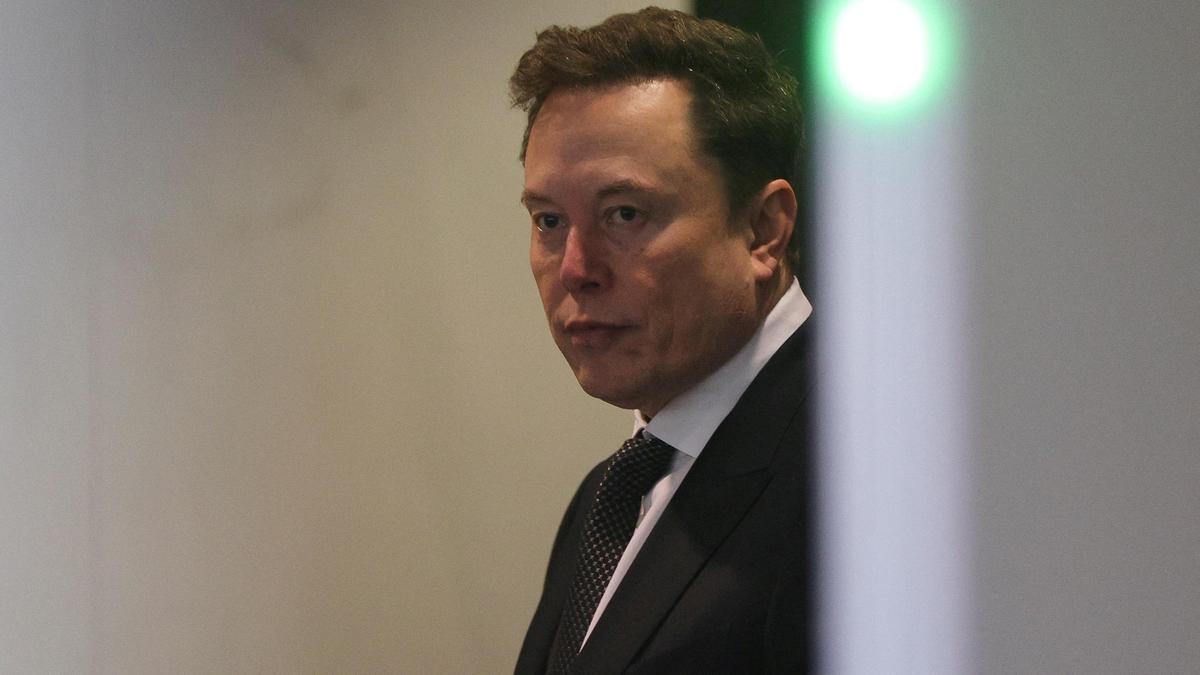
History books just got an update they didn't expect until the end of the decade. Elon Musk is officially the world's first trillionaire.
When SpaceX went public on June 12, 2026, it didn't just break market records. It smashed the wealth ceiling forever. Most Wall Street analysts predicted this wouldn't happen until 2028 or 2030. They were looking at the wrong company. They focused on Tesla while the real value exploded in the upper atmosphere.
If you want to understand how a single human accumulated more wealth than the gross domestic product of most nations, you have to look past the electric cars. You need to look at how a massive rocket IPO upside-downed the entire global financial order.
The Math Behind the Trillion
Let's look at the raw numbers because they sound like typos. SpaceX priced its initial public offering at $135 a share. That set the company's valuation at roughly $1.77 trillion. By the time the closing bell rang on its first day of trading under the ticker SPCX, the company surged past $2 trillion.
Musk owns about 38% of SpaceX. That single stake accounts for roughly $800 billion of his net worth. When you add his remaining Tesla shares, his options packages, and his stakes in xAI and X, his total wealth sits between $1.1 trillion and $1.4 trillion depending on the day's market swings.
To put that in perspective, he is worth more than Larry Page, Sergey Brin, Jeff Bezos, and Larry Ellison combined. The wealth gap between number one and number two on the global rich list is now a cool trillion dollars. It's an entirely different scale of money.
The Shift From Cars to Rockets
For years, people assumed Tesla would carry Musk to this milestone. That was a mistake. Tesla had a wild run in 2020 and 2021, pushing its valuation over a trillion dollars and making Musk the richest man alive. But car manufacturing is a low-margin, high-competition business. Eventually, reality catches up. EV adoption flattened, competitors arrived, and Tesla stock normalized.
SpaceX is a completely different beast. It operates as a functional monopoly in commercial space flight. No one else can land orbital rocket boosters regularly. No one else has a satellite internet constellation like Starlink with tens of millions of global subscribers.
When SpaceX acquired the artificial intelligence startup xAI in February 2026, the valuation math changed completely. It stopped being a launch company. It became the backbone of both orbital infrastructure and sovereign AI compute. The market priced the June IPO accordingly.
Why This Isn't Like Rockefeller's Wealth
Commentators love comparing Musk to John D. Rockefeller. Rockefeller became the world's first billionaire in 1916 through Standard Oil. At his absolute peak, his wealth represented about 1.5% of the total American GDP.
Musk's net worth right now represents roughly 3% of American GDP. It double-counts the concentration of wealth seen during the Gilded Age. The difference is liquidity. Rockefeller's wealth was trapped in physical pipelines, refineries, and real estate. Musk's wealth rides on highly liquid, hyper-speculative public equities traded every second on global markets.
That liquidity brings massive volatility. Between late 2024 and early 2025, Musk's public political alignments triggered consumer boycotts that erased $126 billion from his net worth in just a few months. He didn't care. He knew the SpaceX S-1 filing was coming. Public markets have short memories when a company controls access to space.
What Happens to Your Money Now
You might think a guy having twelve zeros in his bank account doesn't affect your daily life. You'd be wrong. This concentration of wealth alters how private capital dictates public infrastructure.
When a single individual owns the satellites providing internet to active war zones, the rockets NASA relies on to reach the space station, and the AI models processing enterprise data, traditional government regulation stops working. Governments become customers rather than regulators. The U.S. government has already signed over $20 billion in contracts with SpaceX. They can't afford to shut him down or penalize him without crippling their own defense and scientific programs.
If you want to position your own portfolio for this reality, stop buying traditional automotive stocks. Look at defense tech, orbital logistics, and satellite supply chains. The companies supplying components to public infrastructure giants are where the next wave of wealth will build.
Keep an eye on the daily trading volume of SPCX. The valuation is incredibly fragile and relies entirely on public sentiment. If those rocket launches hit a string of technical failures, hundreds of billions will vanish overnight. Watch the institutional fund inflows on Nasdaq. If the big mutual funds start trimming their stakes to manage risk, that's your cue to exit any high-flying tech positions you hold. Move your money into defensive infrastructure before the retail market panics.