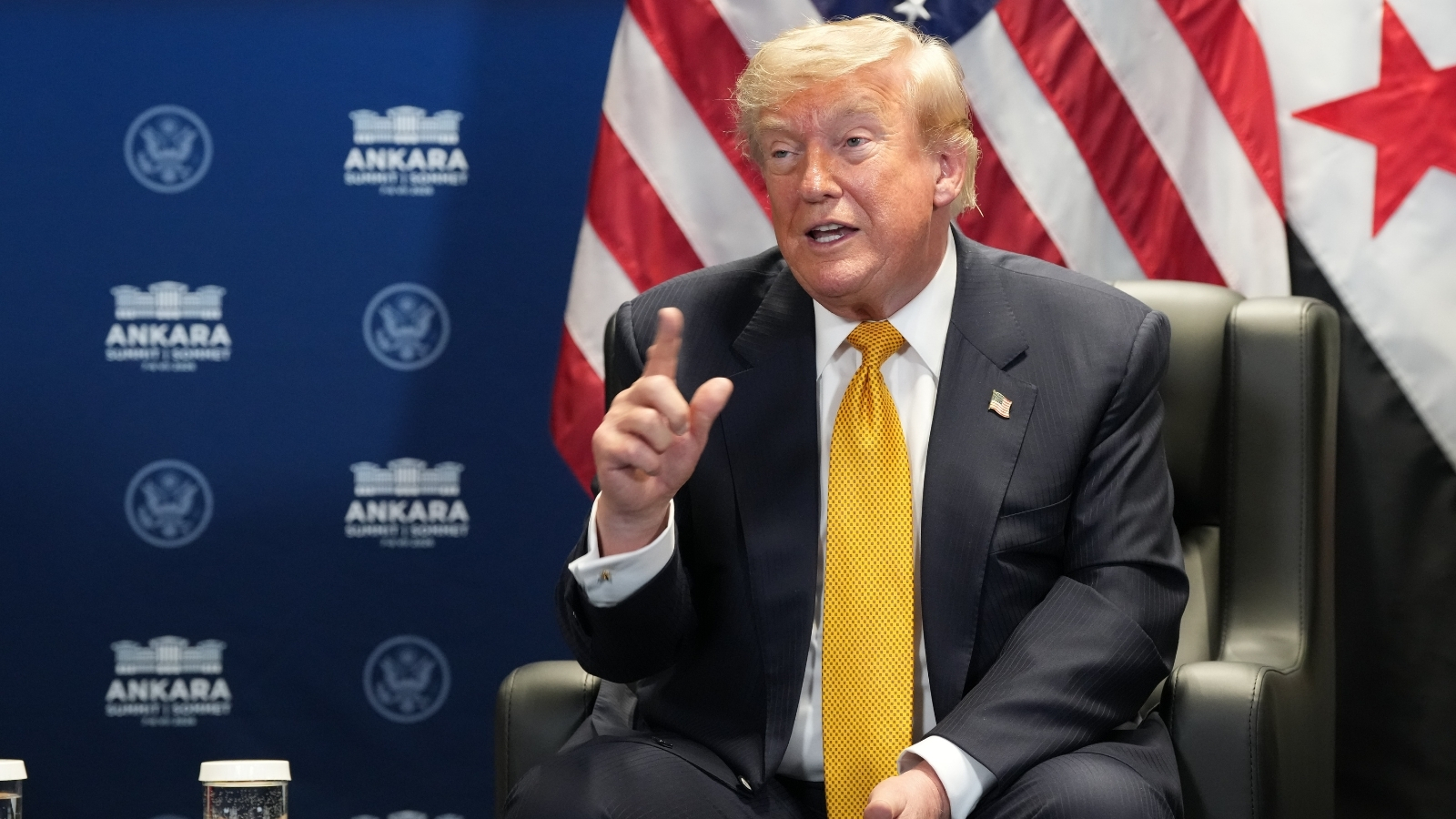
A single word can derail a 24-hour news cycle. We see it happen all the time in modern politics, where the gap between a serious policy statement and an internet meme is paper-thin. When Donald Trump stood before a crowd and started talking about his administration's foreign policy pressures on Tehran, nobody expected a geography lesson. Instead, they got a brand-new country. He called it the Islamic Republic of Japan.
The internet did exactly what you would expect. Social media lit up instantly with jokes, memes, and mock flags blending Mount Fuji with Middle Eastern iconography. Critics pointed to the slip as proof of fading sharpness. Supporters ignored it entirely or claimed it was a subtle joke. Also making headlines lately: The Kinematics of Coercive Diplomacy: Decoding the US-Iran Escalation Dominance Equation.
But if we look past the immediate partisan sniping, this verbal misfire reveals a lot about how modern political speeches work. It shows the intense pressure of the non-stop campaign trail. It also highlights how our brain processes complex ideas under stress. Obsessing over a obvious slip of the tongue usually means we miss the actual policy shifting right in front of us.
The Anatomy of a Political Verbal Slip
Public speaking at the highest level is a high-wire act. Politicians give multi-hour speeches multiple times a week, often flying through different time zones with minimal sleep. Under those conditions, the brain starts playing tricks on the speaker. More information on this are detailed by TIME.
Linguists have a name for these kinds of errors. They are speech disfluencies and lexical selection errors. When Trump was speaking, his brain was hunting for the word Iran. Both Iran and Japan are Asian nations that feature heavily in American trade and security discussions. They occupy similar mental drawers when a speaker thinks about global strategy.
The tongue simply picked the wrong file from the cabinet.
Mental Processing -> Selecting Foreign Policy Target -> Branch A: Iran / Branch B: Japan -> Verbal Collision
We all do this. You might call your kid by your dog's name. You might tell a coworker you will see them on Tuesday when you mean Thursday. The difference is that a microphone does not broadcast your daily brain farts to millions of people. For a politician, a momentary lapse becomes a permanent headline.
Why the Media Pounces on Simple Typos
News outlets love these moments because they are incredibly cheap to produce and guaranteed to generate clicks. Writing a serious, nuanced analysis of complex international sanctions requires hours of research. It requires interviewing economists and diplomats. It requires effort.
Writing an article about a silly phrase takes five minutes.
This creates a distorted view of political competence. We live in an era where style completely overrides substance. A politician can outline a deeply flawed economic plan with flawless delivery, and the press will praise their commanding presence. Meanwhile, a politician who proposes a brilliant piece of legislation but stumbles over a word is labeled as unfit for office.
This coverage feeds a constant loop of outrage. It encourages voters to treat politics like a sport where you cheer when the opposing quarterback trips on the turf. It does nothing to help people understand the actual issues affecting their lives.
A Long Tradition of Presidential Blunders
Trump is far from the first leader to recreate the global map during a live broadcast. American history is packed with examples of leaders getting tongue-tied under the spotlight.
George W. Bush practically created his own dialect during his two terms in office. His missteps became known as Bushisms. He famously struggled with the phrase "fool me once, shame on you" and gave the world unforgettable gems about making the pie higher. People mocked his intelligence for years because of those slips, yet he won two national elections.
Barack Obama once claimed during a 2008 campaign stop that he had visited 57 states, with one left to go. Critics tried to turn it into a sign of hidden agendas or deep ignorance. In reality, he was exhausted after months of non-stop travel and mixed up the number of states with the number of campaign stops he had made.
Even back in the era of traditional media, Gerald Ford accidentally declared during a 1076 debate that there was no Soviet domination in Eastern Europe. That mistake likely cost him the presidency because it happened during a critical debate about the Cold War.
The lesson here is simple. Human brains are fragile machines. They break down under exhaustion, regardless of political party or ideology.
The Strategy of the Unpolished Speaker
There is an interesting twist to how voters perceive these errors. For a specific type of politician, sounding overly polished is actually a disadvantage.
Many voters are deeply suspicious of teleprompter-reliant politicians who speak in perfectly measured, focus-tested sentences. They see that level of perfection as a sign of dishonesty. They assume a hidden team of consultants wrote every syllable to manipulate them.
When a leader misspeaks, it can oddly make them sound more authentic to their base. It sounds like a normal person talking at a kitchen table. Normal people stumble. Normal people say stupid things when they are tired. By sounding unpolished, a politician can reinforce their image as an outsider who refuses to play by the rules of the political establishment.
This is why attacks based on verbal slips rarely change anyone's mind. The opposition sees the mistake as validation of their hatred. The supporters see the criticism as a petty attack by an out-of-touch media elite. Everyone retreats further into their echo chambers.
Moving Past the Noise
If you want to be a truly informed voter, you have to learn to filter out these empty controversies. They are distractions designed to keep you angry and engaged.
Start by looking at written policies rather than live speech transcripts. A speech is a performance influenced by crowd energy, lighting, and adrenaline. A written policy platform represents a campaign's actual intentions. Look at what they put down on paper when they have time to think.
Pay attention to votes and executive actions instead of rhetorical stumbles. A president can call a country by the wrong name three times a week, but their signatures on executive orders and budget bills are what actually change the world. Focus on the signatures.
Stop sharing the memes. Every time you share a clip of a politician making a silly mistake, you help crowd out actual news. You tell media algorithms that you want more gossip and less substance. Demand better by ignoring the junk food of political journalism.
The next time a politician invents a new country or forgets the name of a major city, laugh if you want to. It is funny. But then turn off the social media feed and look at what else they said during that speech. That is where the real story always hides.