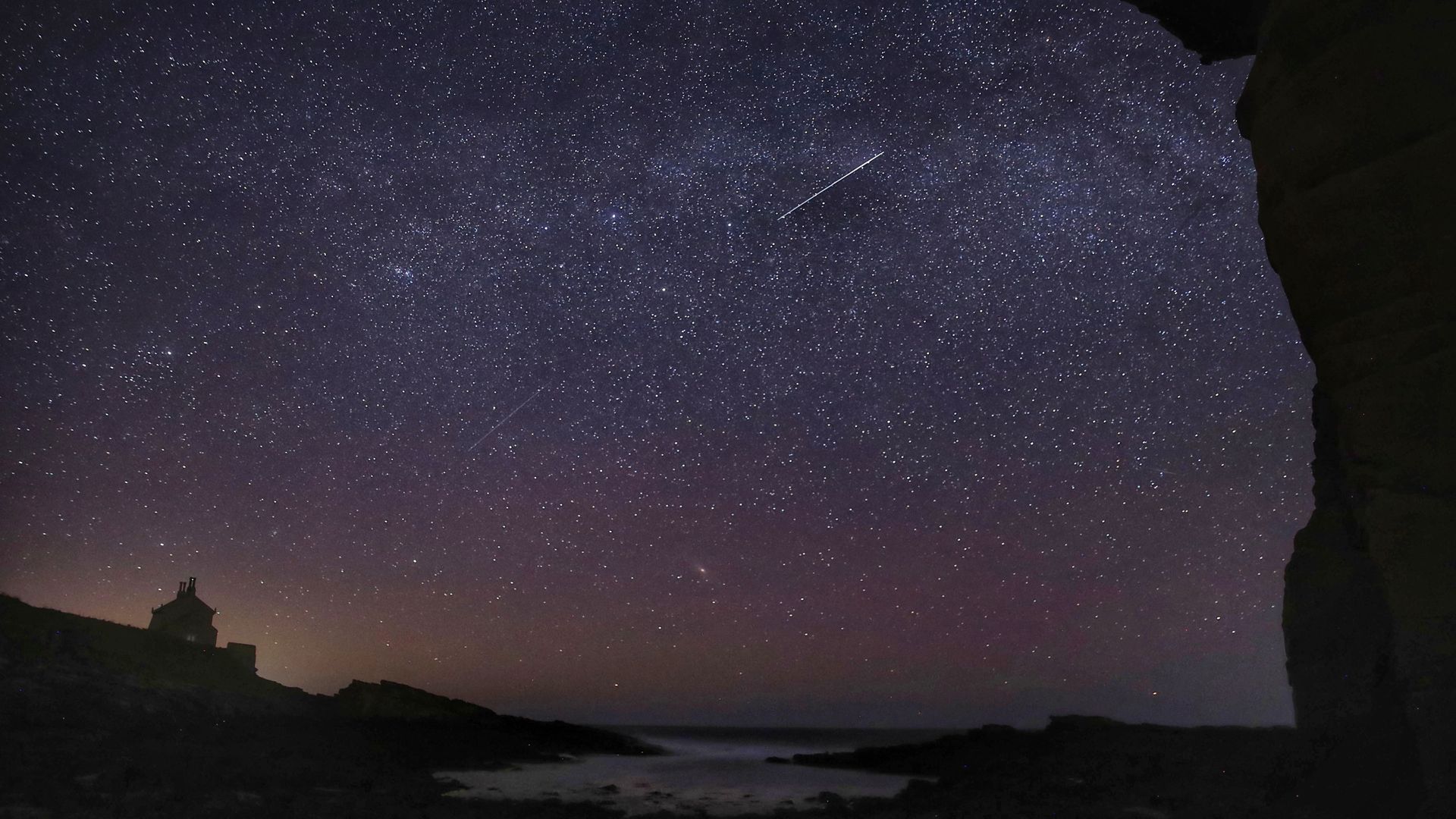
Stop looking at your phone and start looking at the sky. The Lyrid meteor shower is hitting its peak right now, and if you miss it, you’re stuck waiting until the Perseids in August for a show this good. Most people think they can just step outside, look up for two minutes, and see a fireball. It doesn't work that way. You need a plan, a dark spot, and a little bit of patience.
The Lyrids are one of the oldest known meteor showers. People have been watching these streaks of light for at least 2,700 years. We’re talking about debris from Comet C/1861 G1 Thatcher. As Earth passes through the trail of dust and rock left behind by this comet, those tiny fragments hit our atmosphere at roughly 110,000 miles per hour. They vaporize. That’s the "star" you see falling.
When to see the Lyrids at their best
Timing is everything. While the shower is active from mid-April through the end of the month, the peak window is narrow. You’re looking for the late hours of April 21 through the early morning of April 22. In 2026, we’ve got a bit of a challenge with the moon. A bright moon acts like a giant light bulb in the sky, washing out the fainter meteors.
You’ll want to head out after the moon sets or find a window where it’s low on the horizon. The best viewing usually happens between midnight and dawn. Don't expect a constant rain of fire. The Lyrids typically produce about 10 to 20 meteors per hour. That sounds low, but these meteors are known for being bright and occasionally producing "fireballs"—large explosions of light and color that can persist longer than a typical streak.
NASA and the American Meteor Society both track these events closely. They suggest that while the 15-per-hour rate is the average, the Lyrids are famous for "outbursts." Back in 1982, observers saw nearly 100 meteors per hour. You can't predict an outburst, but you definitely won't see one if you're inside watching Netflix.
Forget the telescope and find a dark sky
Here is the biggest mistake beginners make. They bring a telescope or binoculars. Don't do that. Meteors move way too fast for high-magnification gear. You want the widest field of view possible. Your own eyes are the best tools for the job.
You need to get away from city lights. Use a tool like Dark Site Finder to locate a "Blue" or "Grey" zone near you. Streetlights are the enemy. If you can see the glow of a nearby town on the horizon, move further away. Even a single porch light in your field of vision will ruin your night vision.
It takes about 20 to 30 minutes for your eyes to fully adjust to the dark. This is a biological process involving a protein called rhodopsin. Every time you glance at your smartphone, you reset that clock. If you absolutely must use a light to find your way, use a red LED flashlight. Red light doesn't kill your night vision the way white or blue light does.
Where to point your eyes
The radiant point—the spot where the meteors seem to originate—is the constellation Lyra. Look for the bright star Vega. It’s one of the brightest stars in the night sky. But here’s the pro tip. Don’t stare directly at Lyra. If you do, you’ll see meteors with shorter tails because of the angle. Instead, look about 45 degrees away from the radiant. This allows you to see the longer, more dramatic streaks as they zip across the sky.
Checking the weather forecast for the peak
You can have the best gear and the darkest site, but clouds will ruin everything. For the 2026 peak, the weather across the United States and Europe is looking hit-or-miss.
- The East Coast: High pressure is expected to keep things relatively clear, though coastal fog might be an issue in the early morning hours.
- The Midwest: Watch out for a passing cold front. If you see high-altitude cirrus clouds, the meteors will look blurry or disappear entirely.
- The West: Mountain regions are your best bet. Getting above the marine layer or valley smog is essential.
Check a specialized forecast like Clear Dark Sky. They provide "transparency" and "seeing" reports that go beyond just saying if it’s cloudy or not. They tell you how steady the atmosphere is. If the stars are twinkling aggressively, the air is turbulent. That's not great for steady viewing, but for meteors, you just need those clouds to stay away.
What to bring for a long night
This isn't a quick trip. If you're going to do this right, you’re going to be outside for at least two hours. It gets cold at 3:00 AM, even in April.
- A reclining lawn chair: Don't stand and crane your neck. You’ll get a cramp in ten minutes and quit. Lie back so you can see the whole sky comfortably.
- Layers: Bring more blankets than you think you need. A sleeping bag is even better.
- Hot drinks: Coffee or tea helps, but stay hydrated with water too.
- A friend: It's way more fun when someone else shouts "There!" when a fireball streaks across the North Star.
Why the Lyrids are worth the effort
Honestly, the world is loud and bright. Taking two hours to sit in a dark field and watch rocks from a comet burn up in the sky is a rare moment of perspective. It’s a reminder that we’re riding a planet through a debris-filled solar system.
Common mistakes include giving up too early. Most people go out at 10:00 PM, see nothing for ten minutes, and go home. The earth hasn't rotated into the debris path fully yet. You have to wait until the "leading edge" of the planet is facing the direction of orbit. That happens after midnight.
Stop checking the clock. Put the phone in the glove box. Lean back and let your eyes wander. The first one you see will be a faint zip. The second might be a glowing green streak that leaves a "train" of ionized gas in the air for several seconds. That’s what you’re there for.
Check your local cloud cover on an infrared satellite map right now. If it’s clear, grab a chair and a heavy blanket. Drive thirty minutes away from the nearest Walmart. Turn off the car lights. Sit. Wait. The universe will do the rest.