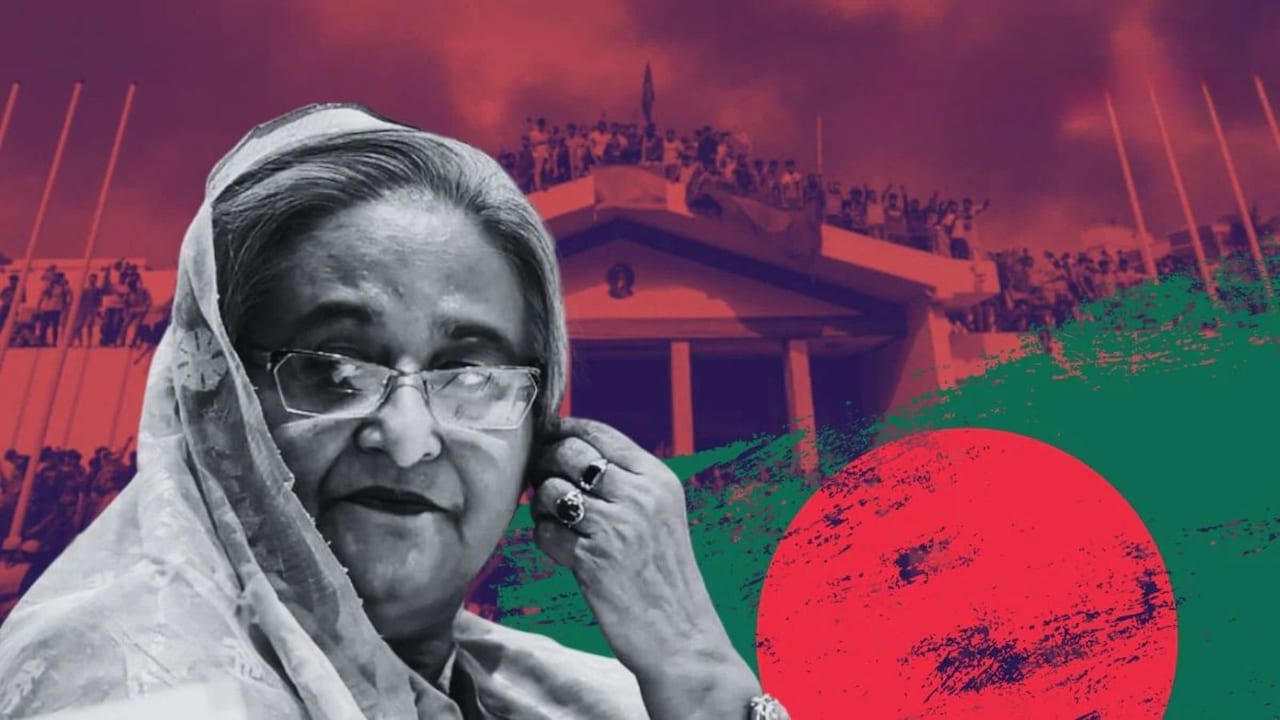
Two years after Sheikh Hasina packed herself into a military helicopter and fled Dhaka, foreign policy pundits are still peddling a lazy, recycled narrative. They tell you that India and Bangladesh are locked in an irreversible downward spiral. They point to border skirmishes, stalled trade talks, and New Delhi's quiet protection of an exiled leader as proof that a historic partnership has shattered beyond repair.
They are wrong.
The consensus view assumes that bilateral ties between two sovereign neighbors depend entirely on who sits in the prime minister's office. It treats geopolitics like a high school soap opera where hurt feelings and regime changes dictate permanent strategy. That perspective is not just naive; it ignores the grinding, unglamorous mechanics of regional survival.
Let's strip away the diplomatic theater and look at what is actually happening on the ground.
The Myth of the Geopolitical Divorce
Every standard commentary on South Asia loves to frame Bangladesh's post-Hasina era as a dramatic pivot toward China and Pakistan. Analysts hyperventilate over naval port access, defense memorandums, and anti-India rhetoric on social media.
I have watched companies burn millions banking on this binary worldview. They treat international borders as ideological walls.
The reality is far more transactional and far more resilient. Bangladesh cannot relocate its geography. It is surrounded on three sides by India, sharing a 4,096-kilometer border that handles billions in essential commodities, medical tourism, and power transmission. Dhaka needs Indian grid electricity just as much as New Delhi needs a stable eastern frontier that does not harbor insurgent camps.
When Tarique Rahman's government took office in early 2026, the diplomatic screeching grew louder, but the actual trade manifests barely blinked. Sovereignty is not a zero-sum game played out in cable news studios. It is a daily compromise driven by economic gravity.
Dismantling the Extradition Trap
People Also Ask: Will India hand Sheikh Hasina back to Dhaka, and will her refusal to stay quiet destroy bilateral trust?
The question itself falls into the trap of legalistic moralizing. The discussion over Hasina's extradition and her virtual press appearances from New Delhi is treated by commentators as a test of moral character. If India hosts her, it is acting in bad faith. If India extradites her, it betrays a longtime ally.
This is an amateur framework.
In realpolitik, hosting a deposed leader is not about sentimentality; it is a tactical anchor. New Delhi is not keeping Hasina in the capital out of nostalgic loyalty to the Awami League. She serves as an insurance policy against complete strategic blindness. By maintaining a line of sight on the ancien régime, India retains leverage across the political spectrum in Dhaka—engaging with the current administration while keeping alternative domestic power structures visible.
Meanwhile, Bangladesh's leadership uses the extradition demand as domestic theater. Shouting about fugitives in foreign capitals rallies the political base without requiring structural economic reforms at home. Both capitals know the rules of the game. The noise is for the public; the quiet channels are for survival.
The Uncomfortable Truth About Regional Interdependence
If you want a contrarian blueprint for how this relationship actually functions, stop watching the headlines and look at supply chains and security protocols.
- Power grids do not care about political revolutions: Cross-border energy flow has expanded, not contracted, over the past twenty-four months. Blackouts are politically fatal; ideology is a luxury for the well-lit.
- Border management is outsourced pragmatism: Smuggling routes and security threats do not pause for democratic transitions. Local commanders on both sides coordinate daily because a porous border hurts both economies equally.
- New leadership requires institutional resetting: The shift from a fifteen-year autocracy to an elected multi-party framework under the Bangladesh Nationalist Party means New Delhi has had to diversify its contacts beyond a single political family. That diversification is healthy, long overdue, and ultimately stabilizes bilateral longevity.
Stop Waiting for a Permanent Reset
The search for a neat, permanent "golden era" in South Asian diplomacy is a fool's errand. Bilateral relations between complex neighbors are never fixed; they are managed continuously through friction.
The friction you see today is not the breakdown of the system. It is the system working exactly as designed—noisy, messy, and entirely bound by mutual necessity.
Stop looking for enemies where there are only neighbors paying bills.