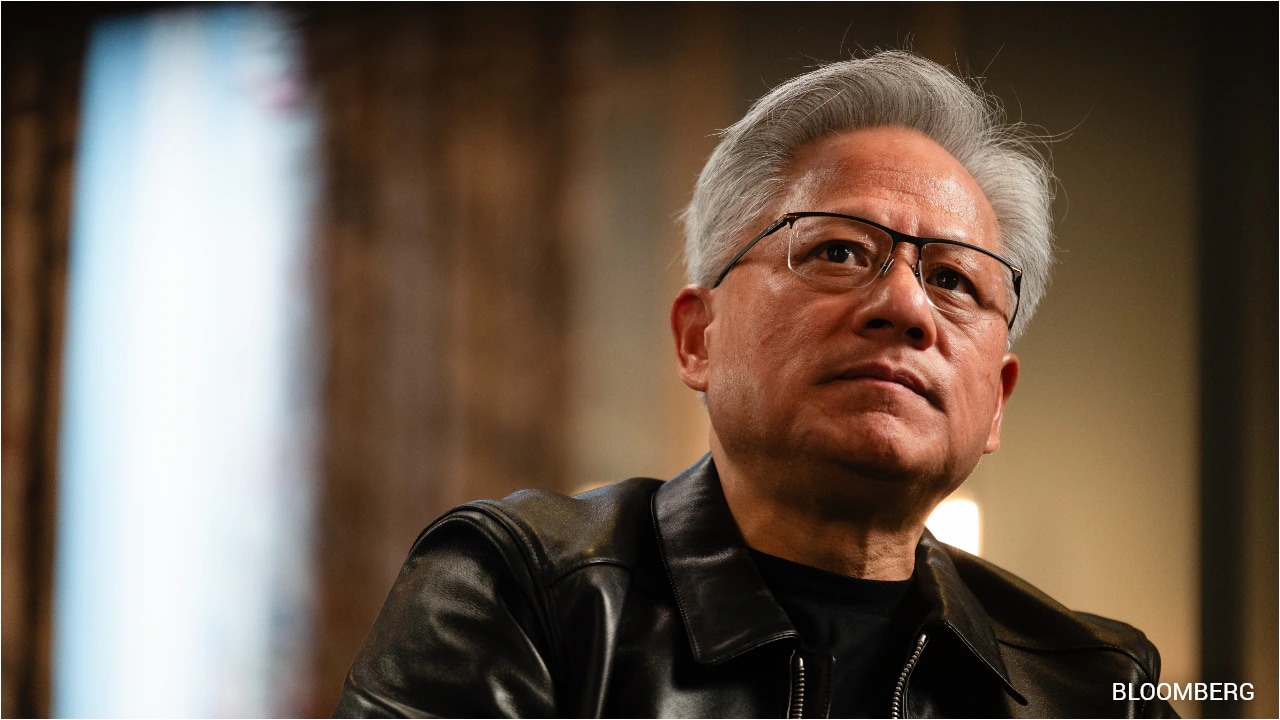
Jensen Huang is neither disgraced nor a former executive, and he has not been summoned to testify before the United States Congress as a ousted corporate leader. As of late 2026, Huang remains the active President, Chief Executive Officer, and co-founder of Nvidia, leading one of the most valuable technology companies in global history. Claims circulating online that frame Huang as a "disgraced ex-CEO" facing congressional hearings represent fabricated clickbait, satirical misinterpretations, or AI-generated disinformation designed to manipulate retail investors and harvest search traffic.
The internet rewards outrage. When a single executive controls the hardware backbone of modern artificial intelligence, every rumor about their downfall carries immediate financial weight.
Understanding why this false headline exists requires examining how financial disinformation operates in the semiconductor sector, the actual regulatory pressures Nvidia faces in Washington, and how investors can verify executive leadership claims before reacting to viral links.
Anatomy of a Fabricated Financial Headline
The specific phrasing of the viral reference—"Nvidia's disgraced ex-CEO Jensen Huang to testify before US Congress"—follows a predictable formula used by low-credibility content farms and automated spam networks. Notice the missing source link, the sensationalist adjective, and the institutional trigger. By pairing a household name in technology with words like disgraced and Congress, the headline bypasses critical thinking and triggers an immediate emotional response.
In legitimate financial journalism, a chief executive stepping down under scandal or receiving a congressional subpoena is an earthquake. Within seconds of such an event occurring, the Securities and Exchange Commission (SEC) receives a mandatory Form 8-K filing. Major wire services—Reuters, Bloomberg, the Associated Press—publish breaking alerts simultaneously. Trading halts or massive after-hours volume spikes appear immediately on the Nasdaq under the ticker NVDA.
None of that happened.
Instead, bad actors frequently recycle templates used during actual corporate collapses—such as Sam Bankman-Fried’s testimony following the FTX bankruptcy or Elizabeth Holmes’s fall at Theranos—and swap in the names of currently dominant executives. Sometimes these articles originate from malicious phishing campaigns designed to lure users onto spoofed financial news sites. Other times, they are generated by algorithmic content mills testing which keywords drive the highest ad impressions.
Where Jensen Huang Actually Stands at Nvidia
To appreciate how absurd the "ex-CEO" label is, look at Huang’s actual tenure and operational control. Co-founding Nvidia in 1993 alongside Chris Malachowsky and Curtis Priem, Huang has served as CEO for more than three decades. That makes him one of the longest-serving chief executives in Silicon Valley history, outlasting nearly every peer from the dot-com era.
Rather than facing removal, Huang has consolidated Nvidia’s dominance across data center computing, high-performance networking, and artificial intelligence infrastructure. Under his direction, the company transitioned from a specialized maker of 3D graphics cards for PC gaming into the primary architect of accelerated computing. The company’s CUDA software ecosystem, which Huang championed years before deep learning became commercially viable, created an engineering moat that competitors like AMD, Intel, and custom silicon teams at hyperscalers have struggled to breach.
Boards of directors do not oust founders who deliver historic revenue expansion and maintain near-monopolistic market share in enterprise AI training clusters. Nor has Huang been implicated in accounting fraud, personal misconduct, or governance scandals that would warrant the label "disgraced."
The Real Regulatory Friction Between Nvidia and Washington
Effective disinformation rarely comes out of thin air. It attaches itself to real, ongoing news stories and twists the facts until they become unrecognizable. While Jensen Huang is not a disgraced ex-CEO, Nvidia is frequently at the center of intense policy debates in Washington, D.C.
Understanding the real friction between Nvidia and the U.S. government explains why readers might find a congressional headline plausible at first glance.
Export Controls and National Security
Since 2022, the U.S. Department of Commerce’s Bureau of Industry and Security (BIS) has implemented increasingly strict export controls restricting the sale of advanced AI accelerators to China and other restricted jurisdictions. Because Nvidia’s flagship architectures—from the Hopper H100 and H200 lines to the Blackwell and Rubin generations—define the frontier of AI compute, Nvidia sits directly in the crosshairs of U.S. national security policy.
Whenever Washington tightens rules on compute density or interconnect speeds, Nvidia must redesign compliant chips for international markets or forfeit billions in regional revenue. Lawmakers on both sides of the aisle regularly scrutinize whether chipmakers are adhering to the spirit as well as the letter of export restrictions. Executives across the semiconductor industry routinely brief lawmakers, participate in closed-door roundtables, and engage with the Commerce Department on how supply chain rules affect American competitiveness. That routine policy engagement looks nothing like a disgraced executive testifying under subpoena.
Antitrust Scrutiny and Market Dominance
Success breeds regulators. When a single supplier captures upwards of 80 to 90 percent of the market for AI data center accelerators, antitrust authorities inevitably take notice. The U.S. Department of Justice (DOJ), the Federal Trade Commission (FTC), and European competition watchdogs have all examined how dominant chipmakers bundle hardware, networking gear, and proprietary software.
Regulators ask specific structural questions:
- Does tying proprietary interconnects like NVLink and networking hardware to GPU allocations disadvantage rival chipmakers?
- Do cloud service providers face subtle commercial penalties if they allocate capital toward competing accelerators?
- How do software licensing terms affect developers attempting to port workloads away from CUDA?
Antitrust inquiries are a standard hazard for every mega-cap technology firm, from Microsoft and Alphabet to Apple and Meta. Being investigated for market dominance is a business reality of scale, not proof of personal disgrace or corporate collapse.
AI Safety and Compute Governance
Congressional committees regularly hold hearings on artificial intelligence regulation, energy consumption in data centers, and semiconductor supply chain resilience following the CHIPS and Science Act. Lawmakers frequently invite industry leaders—including executives from OpenAI, Anthropic, Microsoft, Google, and Nvidia—to testify as subject-matter experts.
If Huang appears before a Senate or House committee, it is because lawmakers want insight into the physical limits of transistor scaling, domestic manufacturing capacity with partners like TSMC, or the power grid demands of gigawatt-scale AI clusters. In those settings, tech CEOs appear as industry witnesses shaping legislation, not defendants answering for corporate fraud.
How Market Manipulation Targets Tech Investors
False headlines about executive departures or sudden government investigations are not harmless internet noise. In modern algorithmic trading environments, fake news can trigger real financial damage within milliseconds.
Consider a hypothetical example of how this plays out in live markets. Suppose a coordinated network of social media accounts posts a fabricated press release claiming a major chipmaker’s CEO has resigned ahead of a criminal referral. High-frequency trading algorithms programmed to scan social feeds for negative sentiment keywords—like resign, subpoena, fraud, or disgraced—automatically execute sell orders before a human trader can read the second sentence. Retail investors watching a sudden 3 percent dip panic and sell at a loss, only for the stock to snap back minutes later once legitimate news desks debunk the rumor.
We saw a real-world precedent for this exact mechanism in May 2023, when an AI-generated image depicting an explosion near the Pentagon went viral on social media. Even though the image was entirely fake, major news aggregators amplified it briefly, causing a momentary, measurable dip in the S&P 500 before defense officials issued a denial.
Semiconductor stocks are particularly vulnerable to this dynamic due to their high beta, massive options volume, and intense retail participation. A fabricated headline claiming Jensen Huang has been ousted is tailor-made to exploit nervous shareholders looking for signs that the AI infrastructure boom has peaked.
Verifying Executive Scandals Before You React
When you encounter a dramatic claim about a public company or its leadership—especially one attached to a broken link, an unfamiliar domain, or an anonymous social post—run through a strict verification checklist before sharing or making financial decisions.
Check Primary Regulatory Filings
Publicly traded U.S. companies cannot hide leadership changes. Under SEC rules, the departure, resignation, or termination of a principal executive officer must be disclosed on Form 8-K (specifically under Item 5.02) within four business days, and major firms release these filings immediately to prevent insider trading allegations. You can search any company’s filings directly through the SEC’s free EDGAR database. If there is no Form 8-K, the CEO has not been fired.
Inspect the Official Congressional Calendar
Every formal hearing in the United States House of Representatives and the Senate is logged publicly in advance. Committees such as the Senate Commerce Committee, the House Energy and Commerce Committee, or the House Select Committee on the Chinese Communist Party publish witness lists on Congress.gov and their respective .gov websites days or weeks before a gavel drops. Searching the official witness schedule immediately exposes fabricated claims of secret or sudden congressional summonses.
Audit the Source Architecture
Look closely at the URL and publication metadata. Disinformation sites often mimic the typography and naming conventions of established outlets—using names like The Daily Financial Chronicle or US Tech Dispatch—while hiding their ownership in domain registries. Check whether the article includes:
- Named reporters with verifiable track records on beat coverage.
- Direct links to primary documents, court filings, or official statements.
- On-the-record responses from the company’s investor relations or communications team.
When a story relies entirely on vague attributions like "sources close to the matter say" while making an extraordinary claim that no major wire service has confirmed, treat it as fabrication.
Cross-Reference Wire Services
Financial wire services—Bloomberg, Reuters, and the Wall Street Journal—maintain dedicated reporters whose sole job is monitoring regulatory filings and executive movements at trillion-dollar companies. A genuine scandal involving Nvidia’s leadership would dominate the front page of every financial publication on earth within five minutes. Silence from tier-one newsrooms is definitive proof that a viral rumor is false.
The Cost of Algorithmic Noise
Information ecosystems reward speed and emotional friction over accuracy. As generative tools make it effortless to spin up plausible-sounding articles with zero editorial oversight, the burden of verification shifts entirely onto the reader.
Jensen Huang remains firmly at the helm of Nvidia, steering the company through complex export rules, fierce competitive pressure, and unprecedented infrastructure demand. Anyone claiming otherwise is selling fiction disguised as breaking news. Always check the SEC filings before you trust the headline.