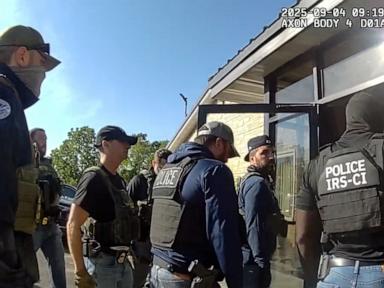
Every time body camera footage drops from an immigration raid at a New York manufacturing plant, the media treats it like a gritty, unvarnished window into enforcement reality. Cameras shake. Agents bark orders. Workers scatter. Headlines scream about human drama, civil rights violations, or the iron fist of the state coming down on local enterprise.
It is entirely performative.
If you think those body-worn lenses are capturing an effective crackdown on illegal labor, you are falling for the oldest magic trick in the regulatory playbook. You are looking at the shiny object while the actual machinery of the modern economy hums along completely undisturbed. I have spent years watching enforcement agencies stage high-visibility operations that satisfy political appetites while altering economic reality by precisely zero percent.
The lazy consensus is that these raids represent aggressive deterrence. The truth is much more cynical. They are public relations exercises masquerading as police work.
The Economics of Compliance Theater
Let us look at how labor markets actually function when the state decides to flex. A typical manufacturing facility in upstate New York or the outer boroughs of the city does not operate on a whim. Its supply chain is tightly integrated with regional distribution networks, seasonal demand spikes, and razor-thin profit margins.
When Immigration and Customs Enforcement kicks down a factory door with cameras rolling, the media focuses on the individual human tragedy of the detained workers. That is by design. It triggers an emotional binary: either you support harsh law enforcement or you support open borders. Both sides of this manufactured culture war miss the point entirely.
The real story is structural arbitrage. Modern low-margin manufacturing cannot survive at scale paying prevailing wages with fully documented, high-overhead domestic labor under current regulatory burdens. That is an economic fact, not a political opinion. When an agency raids a plant, hauls away thirty workers, and issues a hefty press release, the factory owners do not suddenly pivot to hiring local union labor at thirty dollars an hour.
Instead, production pauses for forty-eight hours. Temp agencies restructure. A new batch of subcontractors steps in within a week. The marginal cost of the raid is absorbed as a minor tax on doing business, while the agency gets its B-roll for the evening news. The systemic incentive structure remains entirely intact.
Dismantling the Body Camera Illusion
Proponents of these public operations argue that body camera footage brings transparency to enforcement. Accountability matters, absolutely. If agents use excessive force or violate due process, recording it is essential.
However, transparency without strategic efficacy is just expensive television.
Body cameras do not change the fact that physical raids on worksites are an obsolete, nineteenth-century tool being deployed against twenty-first-century economic networks. Physical worksite enforcement accounts for a microscopic fraction of unauthorized labor identification. The heavy lifting of immigration compliance—to the extent it happens at all—occurs behind desks through Form I-9 audits, E-Verify discrepancies, and corporate structure investigations.
Yet, routine paperwork audits do not make compelling local news. They do not generate dramatic footage of officers in tactical gear sprinting across a warehouse floor. They do not give politicians a thirty-second clip to fundraise off of.
So the state relies on the raid. It is policy driven by cinematography rather than outcomes.
The Real Question Nobody Is Asking
When commentators debate these operations, they invariably ask: How can we make enforcement more humane while maintaining border integrity?
That is the wrong question. It accepts the premise that random, theatrical factory sweeps are a legitimate mechanism for managing labor supply and rule of law.
The better question is: Why does the state continue to fund an enforcement mechanism that everyone in the industry knows is an economic non-factor?
The answer lies in political cover. Lawmakers need to project strength to constituents who demand border control, while business lobbies quietly ensure that the structural supply of flexible labor is never genuinely choked off. Raids hit the exact sweet spot of this compromise: they look brutal and decisive on camera, but they are localized and fleeting enough not to break the supply chains of major agricultural, manufacturing, and hospitality sectors.
It is a theatrical containment strategy.
What Actually Happens Next
If you want to disrupt the undocumented labor market, you do not storm a garment factory with forty agents and a camera crew. You target the financial plumbing. You penalize corporate officers with personal criminal liability for systemic payroll non-compliance. You track corporate shell structures that pass liability down to fly-by-night subcontractors.
You make white-collar executives bear the actual risk, rather than shifting all the friction onto line workers at the bottom of the organizational chart and tactical agents on the shop floor.
Of course, that will never happen on a wide scale. Because if you actually shut down the flow of flexible, under-market labor through rigorous financial enforcement, the cost of consumer goods, manufacturing output, and construction services would spike overnight, and voters would throw a fit.
So the cameras will keep rolling. The raids will keep happening. The theater will continue.
Stop watching the actors on the factory floor and start looking at the producers writing the script.