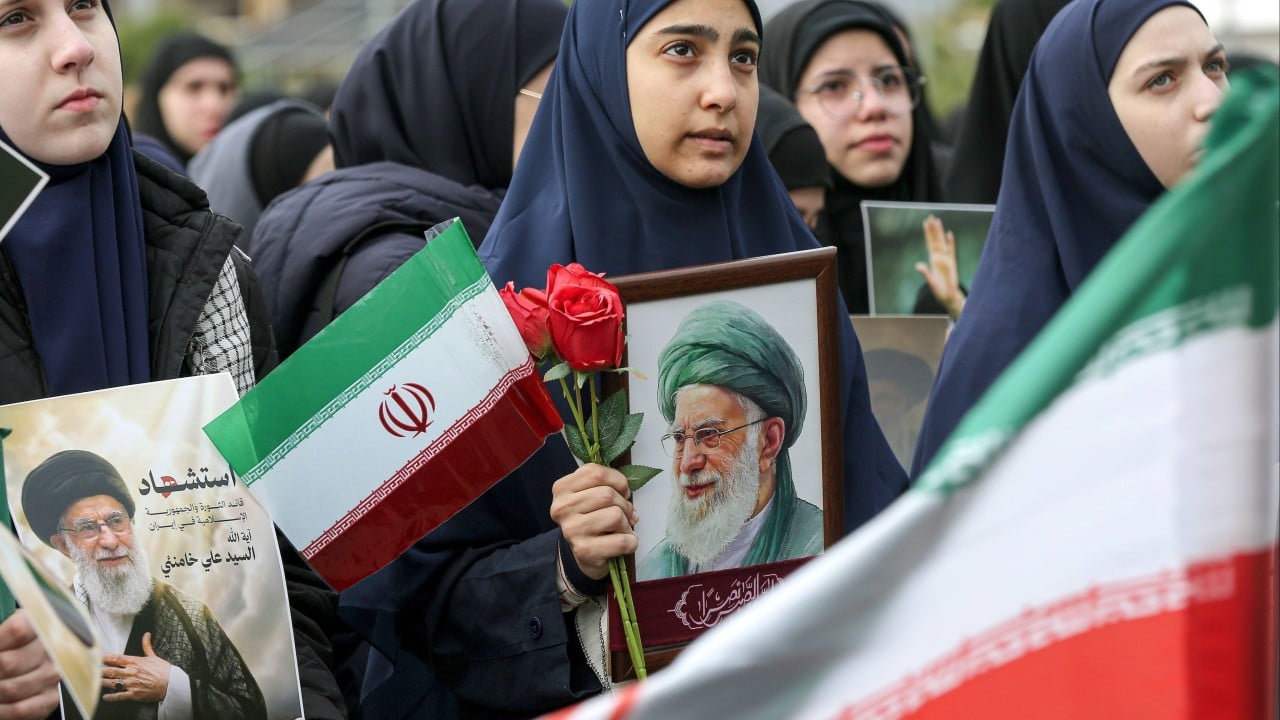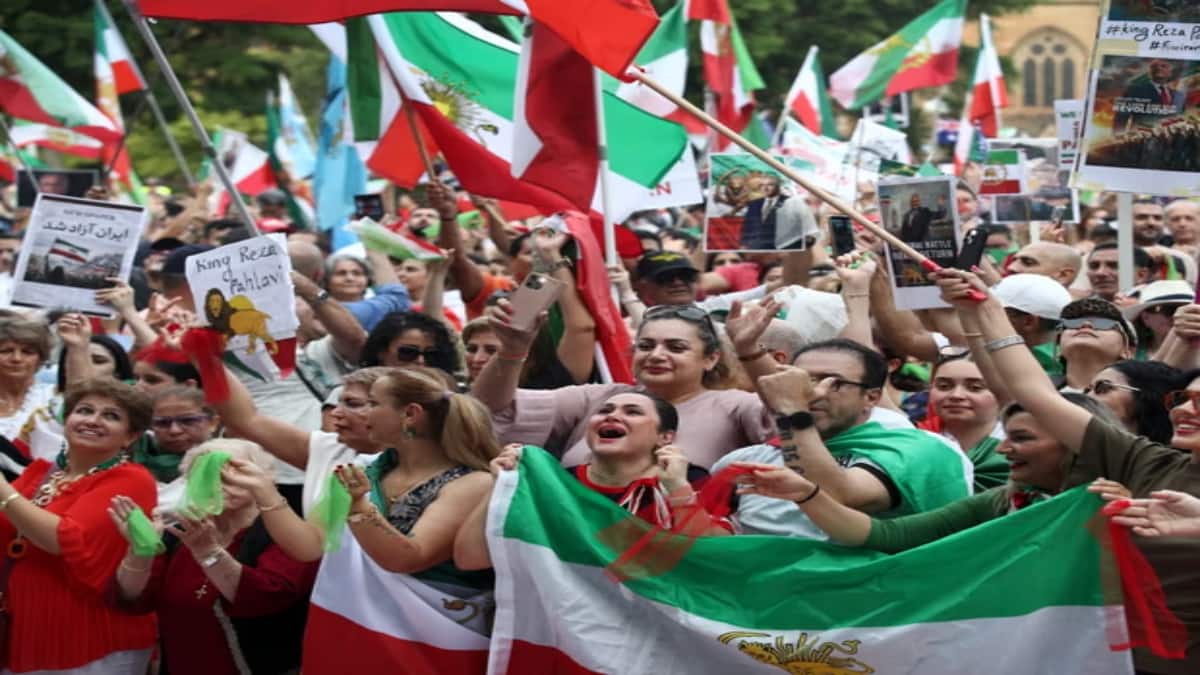
The death of Ali Khamenei has not just removed a dictator; it has punctured the pressurized hull of a nation held together by fear for thirty-seven years. Within hours of the confirmation that the Supreme Leader had been killed during the rapid escalation of regional hostilities, the streets of Tehran, Los Angeles, and London erupted in a visceral, synchronized display of joy that masks a terrifying reality. For the millions of Iranians who spent decades under the thumb of the morality police, this is a moment of liberation. For the tactical analysts watching the shifting movements of the Islamic Revolutionary Guard Corps (IRGC), it is the beginning of a bloody, protracted struggle for the soul of a nuclear-threshold state.
The immediate reaction was fireworks. In the working-class neighborhoods of southern Tehran, where the regime long claimed its strongest support, citizens distributed sweets and danced openly, defying the remaining security forces. But beneath the celebrations, a vacuum has opened. The unique structure of the Islamic Republic, which concentrated absolute power in a single cleric while balancing competing military and clerical factions, was never designed to survive a sudden, violent decapitation.
A System Designed for Stasis Now Facing Total Collapse
To understand why this moment is so volatile, one must look at how Khamenei maintained control. He played the "Artesh" (the traditional military) against the IRGC, and the pragmatists against the hardliners, ensuring that no single individual could ever challenge his authority. With him gone, those factions are no longer balanced; they are in direct competition for survival.
The IRGC is not a monolithic entity. It is a massive conglomerate with its own intelligence services, industrial complexes, and shadow banking systems. Without a Supreme Leader to mediate, the Guard is likely to split along provincial and economic lines. We are already seeing reports of local commanders in Sistan and Baluchestan refusing orders from the central command in Tehran. This isn't just a protest; it is a breakdown of the chain of command in a country brimming with advanced weaponry.
The "velayat-e faqih" system—the guardianship of the Islamic jurist—is intellectually bankrupt. The Assembly of Experts, the body tasked with choosing a successor, is currently paralyzed. Any name they put forward now will be seen as a puppet of the IRGC, stripped of the religious legitimacy that Khamenei, however controversially, still clung to. The street is no longer asking for reform; it is demanding the total erasure of the clerical class.
The Diaspora and the Myth of a Unified Opposition
While the celebrations in the diaspora have been loud, they highlight a secondary crisis: the lack of a clear, unified leadership to step into the breach. The Crown Prince, Reza Pahlavi, has a significant following, but he is deeply distrusted by the leftist and ethnic minority factions that have been doing the actual dying on the ground in Iran.
Outside observers often mistake the shared hatred of the regime for a shared vision of the future. It is a dangerous error. The Kurds in the west, the Baluchis in the southeast, and the Azeris in the north all have distinct, often conflicting, aspirations for autonomy. If a central authority does not emerge quickly, Iran faces the "Syrianization" of its territory—a multi-sided civil war where regional powers intervene to protect their specific interests.
The conflict that led to Khamenei’s death has also left the country’s infrastructure in tatters. This is a population that was already struggling with 50% inflation and a collapsing currency. Joy is a powerful emotion, but it does not fix a power grid or put meat on the table. The honeymoon period of this revolution will be measured in days, not months.
Regional Predators and the Nuclear Shadow
Israel, Saudi Arabia, and the United Arab Emirates are watching the internal collapse of their primary rival with a mix of triumph and intense anxiety. A weakened Iran is a goal; a chaotic Iran with a decentralized nuclear program is a nightmare.
The most pressing question for global security is the fate of the "Joint Comprehensive Plan of Action" (JCPOA) remnants and the physical nuclear sites at Natanz and Fordow. In the chaos of a leadership transition, who holds the keys? If an IRGC faction feels cornered, the temptation to use the nuclear program as an ultimate insurance policy or a scorched-earth deterrent is high. Intelligence agencies are currently scrambling to identify which specific commanders have physical control over enriched uranium stockpiles.
The proxy network—Hezbollah in Lebanon, the Houthis in Yemen, and various militias in Iraq—has suddenly lost its financier and spiritual north star. These groups are heavily armed and now effectively independent. We should expect a period of "freelance" terrorism as these groups attempt to secure their own funding sources or strike out in a desperate show of strength to prove they are still relevant without Tehran’s direct oversight.
The Security Apparatus is Making a Choice
History shows us that revolutions succeed only when the security forces refuse to fire on the crowd. We are at that tipping point. In the 1979 revolution, the Shah’s military eventually declared neutrality. Today’s IRGC and the Basij militia are different; they are deeply embedded in the economy. They aren't just defending an ideology; they are defending their bank accounts and their lives.
However, the lower-ranking members of the Basij are drawn from the same communities that are currently celebrating in the streets. They see their sisters and mothers among the protesters. The reports of desertions are currently unconfirmed but persistent. If the rank-and-file breaks, the senior leadership will be forced to either flee to friendly jurisdictions like Russia or Venezuela, or attempt a massive, desperate crackdown that could lead to a massacre of unprecedented proportions.
The "Watch" element of the current situation isn't just about the celebrations. It is about the movement of the 15th and 27th Divisions. It is about whether the air force remains grounded. It is about whether the internet stays off or if the "Grey Net" established by activists allows the world to see the reality of the internal purge currently underway within the Iranian bureaucracy.
The Economic Reality of the New Iran
If a transitional government manages to take hold, it inherits a poisoned chalice. The environmental crisis in Iran—drying lakes, massive dust storms, and a depleted water table—is an existential threat that the previous regime ignored in favor of military expansion.
Foreign investment will not return until there is a guarantee of stability, and stability is the one thing no one can provide right now. The international community needs to move beyond rhetorical support for the "brave people of Iran" and begin practical planning for a massive humanitarian and technical intervention. This includes stabilizing the rial and ensuring that food supply chains, which were largely controlled by IRGC-affiliated cooperatives, do not vanish overnight.
The transition from a theocratic autocracy to any form of functional democracy is rarely a straight line. It is a jagged, violent process of negotiation. The celebrations we see today are the end of a long, dark chapter, but they are also the prologue to a period of intense uncertainty. The man is dead, but the apparatus he built is still warm, and it is still dangerous.
The next forty-eight hours will determine if Iran becomes a successful model for post-authoritarian transition or the largest failed state in the history of the Middle East. Watch the borders. Watch the barracks. The celebrations are over; the struggle for the wreckage has begun.
Secure the nuclear sites immediately. Any delay provides a window for rogue elements to move assets that the world cannot afford to lose track of.