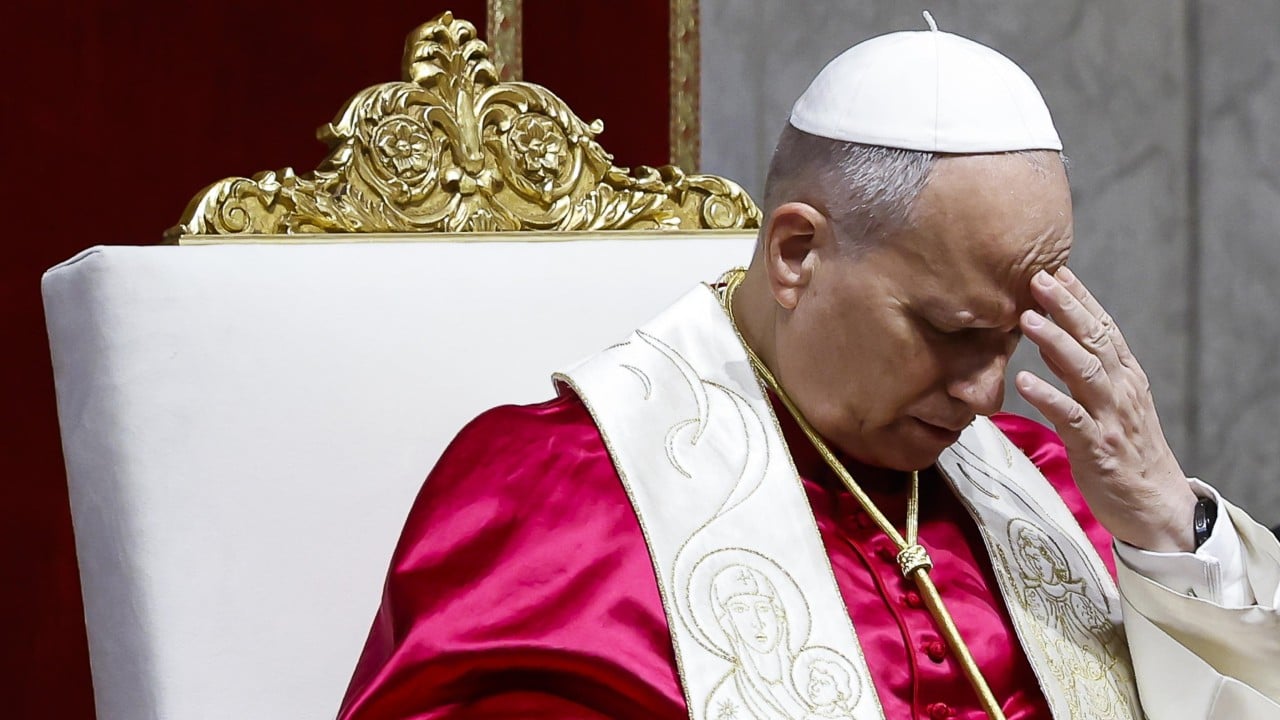
The Vatican’s recent hand-wringing regarding the "delusion of omnipotence" driving United States and Israeli policy toward Iran is a masterclass in performative moralizing. It is easy to sit behind the high walls of Rome, detached from the raw, kinetic realities of state survival, and lecture sovereign nations on the virtues of restraint. It is quite another to manage a regional security architecture where the primary adversary openly calls for your destruction and systematically funds proxies to bleed your borders.
Critics of the current trajectory love to lean on the trope that military deterrence is merely a symptom of hubris. They frame the calculated friction between Washington, Jerusalem, and Tehran as a failure of diplomacy. This is a lazy, dangerous misunderstanding of how the Middle East actually functions.
The Myth of the Rational Actor
The consensus narrative suggests that if the West would just tone down the rhetoric and extend a hand, Iran would magically pivot toward being a responsible regional stakeholder. This view ignores the fundamental ideological engine of the Iranian state. We are not dealing with a standard nation-state seeking a seat at the table of international commerce. We are dealing with a revolutionary entity whose internal legitimacy is predicated on an uncompromising anti-Western, anti-Zionist posture.
When religious leaders preach about the dangers of omnipotence, they are projecting a theological concern onto a geopolitical problem. Power in the Middle East is not a "delusion"; it is the only currency that prevents total collapse. I have spent enough time in security briefings watching tactical assessments to know that weakness is not a precursor to peace. In this region, weakness is an invitation to aggression.
The Calculus of Containment
Consider the strategic reality: Iran has successfully established a "Ring of Fire" via its proxies in Lebanon, Syria, Iraq, and Yemen. This is not a defensive posture. It is a deliberate, multi-layered strategy designed to hold the Israeli population centers and US regional assets hostage to Iranian whim.
The argument that US and Israeli pressure creates the conflict is inverted. The conflict exists because Tehran spent decades constructing an offensive infrastructure designed to project power far beyond its borders. Removing the pressure—which is what the Vatican-style rhetoric effectively demands—does not neutralize the threat. It provides the space for that threat to metastasize.
Imagine a scenario where the United States fully withdrew its presence and Israel adopted a purely passive defense. Does that lead to a period of cooling off? History suggests the opposite. The vacuum would be filled immediately, not by moderate forces, but by the most extreme actors empowered by the temporary abandonment of the regional security order.
Diplomacy as a Weapon
Diplomacy is often touted as the "adult" alternative to military pressure. Yet, in the hands of the Iranian regime, diplomacy has been used exclusively as a stalling tactic to buy time for uranium enrichment and ballistic missile development.
The "delusion of omnipotence" isn't found in the halls of the Pentagon or the Knesset; it is found in the belief that verbal commitments from revolutionary regimes override their demonstrated actions. If you ignore the empirical evidence of a regime’s trajectory because you prefer a world where everyone plays by rules they don't actually believe in, you aren't being moral. You are being naive.
The Cost of Neutrality
There is a specific kind of arrogance inherent in adopting a "plague on both your houses" stance. It suggests that the actor defending its existence and the actor sponsoring regional instability are morally equivalent because both use force. This is a corruption of ethics.
Those who demand that Washington and Jerusalem de-escalate assume that the status quo is the worst possible outcome. They are wrong. The worst outcome is a regional hegemon armed with nuclear capability and a track record of asymmetric warfare. If you aren't willing to use the full weight of your economic and military influence to prevent that, you aren't advocating for peace. You are merely outsourcing the cost of your own security to someone else, while keeping your hands clean to write the next op-ed on why it all went wrong.
Why Your Moral Compass is Broken
We are told to prioritize dialogue. We are told that escalation is a choice. But when a nuclear-threshold state is actively arming militias to destabilize its neighbors, "de-escalation" is just a polite term for surrender.
I’ve watched executives and politicians try to appease hostile actors for years, thinking they could "manage" the aggression. They always fail. The reason they fail is that they view the situation through the lens of human resources or theological negotiation, while their adversary views it through the lens of cold, hard attrition.
You do not defeat a revolutionary ideology with a stronger argument. You defeat it by making the cost of its pursuit unbearable. If that is considered "omnipotence," then let it be. Anything less is just a slow-motion catastrophe dressed up in the language of pacifism.
The reality is that peace in the Middle East is not achieved by lecturing the powerful on their ego. It is achieved by building a wall of deterrence so high that the price of crossing it becomes irrational, even for the most committed fanatics in Tehran. Anything else is just noise.
Stop asking for more diplomacy. Start asking why we are so terrified of winning.