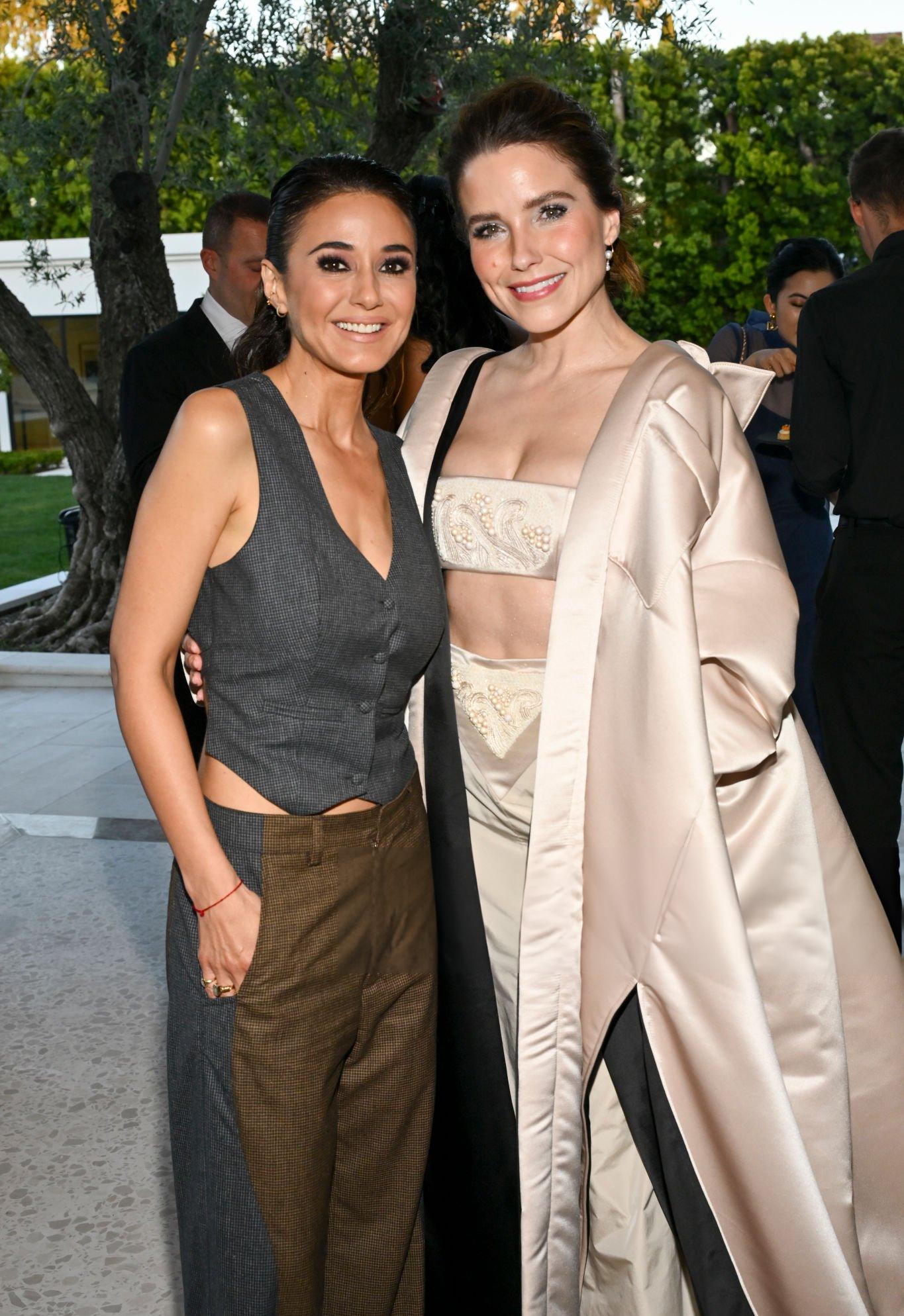
The red carpet for the Fashion Trust U.S. Awards isn't a showcase of talent. It is a high-stakes masquerade where the industry’s elite pretend that wearing a dress for twenty minutes constitutes a rescue mission for the American garment district.
You’ve seen the headlines. Fergie in something sculptural. Michèle Lamy in her signature, avant-garde armor. The trade publications treat these sightings like holy relics, as if the mere presence of a pop icon can solve the systemic rot in fashion’s middle class. They are selling you a lie. The "lazy consensus" suggests that celebrity visibility equals brand longevity. It doesn't. It equals a temporary spike in Instagram engagement that rarely translates to a sustainable balance sheet.
I’ve sat in the backrooms where these "grants" are discussed. I’ve seen designers receive a six-figure check while their production chain is still tied to a single, over-leveraged factory in Midtown that’s one rent hike away from becoming luxury condos. The Fashion Trust U.S. Awards are a beautiful band-aid on a gunshot wound.
The Visibility Trap: Why Getting Dressed Isn't Getting Paid
The prevailing logic in fashion media is that a celebrity endorsement is the "ultimate" (apologies, the absolute) validation. If Michèle Lamy wears your piece, you’ve made it.
False.
Visibility without infrastructure is a death sentence. When a celebrity wears an emerging designer to a high-profile event like the FTUS Awards, it triggers a specific, violent cycle:
- The Surge: The designer’s DMs explode.
- The Samples: Stylists for ten other "B-list" stars demand free samples for the following week.
- The Overhead: The designer spends their meager capital shipping pieces around the globe, hoping for another hit.
- The Crash: No one actually buys the $4,000 silk column gown because the brand lacks a retail partner or a functional e-commerce backend.
By focusing the awards on the "glamour" of the attendees rather than the gritty logistics of the winners, we are teaching young designers to be socialites instead of CEOs. A $100,000 grant sounds impressive until you realize it barely covers the cost of a single runway show and a publicist's retainer for six months.
The Lamy Effect and the Fetishization of the "Edgy"
Michèle Lamy is a titan. Her aesthetic is a masterclass in brutalist luxury. But when the industry uses her image to validate an awards ceremony, they are engaging in the fetishization of the outsider to mask the conservatism of the insider.
The Fashion Trust U.S. claims to support "diverse talent," yet the red carpet remains a parade of the established protecting the nascent. We see the same revolving door of judges and mentors. It creates a closed loop where "innovation" is defined by what fits the current editorial aesthetic of a few gatekeepers, rather than what has the potential to scale into a billion-dollar business.
True disruption in fashion isn't a weird silhouette. It’s a new way to handle deadstock. It’s a localized supply chain. It’s a direct-to-consumer model that doesn’t rely on the predatory wholesale cycle. But you can't photograph a localized supply chain on a step-and-repeat. So, we talk about the shoes.
Stop Asking "Who Are You Wearing?" and Start Asking "Who Is Your CFO?"
If we actually cared about the survival of American fashion, the red carpet interviews at the FTUS Awards would be brutal.
Imagine a scenario where, instead of asking about the inspiration behind a sequined bodice, an interviewer asked:
- "What is your customer acquisition cost?"
- "How are you managing your inventory-to-sales ratio?"
- "Does this grant cover your health insurance, or just your fabric bill?"
The industry treats designers like delicate artists who shouldn't be bothered by the "vulgarity" of commerce. This is patronizing and dangerous. I have seen brilliant designers—the kind who win these exact awards—bankrupt within three years because they were "mentored" by people who haven't looked at a P&L statement since the 90s.
The "Fashion Trust" should be a venture capital fund, not a social club.
The Myth of the "Emerging" Label
The term "emerging designer" is a marketing tactic used to keep talent in a state of perpetual gratitude. It implies a linear path: you emerge, you grow, you become a house.
In the current economy, that path is a cliff. The gap between a "Trust" winner and a sustainable brand like Ralph Lauren or even a mid-sized success like Proenza Schouler is a chasm that money alone can't bridge.
The FTUS Awards celebrate the "emergence" but ignore the "existence." They provide the spark but no oxygen. We see celebrities like Fergie lending their brand equity to the event, which is noble in a vacuum. But that equity is a currency that the designer can't actually spend at the bank. It is "clout," and as anyone who has tried to pay a New York City commercial lease knows, clout has a terrible exchange rate.
The Cost of the Party
Let's do the math that the glossy magazines won't touch.
The cost of producing a gala of this magnitude—the venue, the catering, the security, the PR firm, the travel for the A-list "ambassadors"—often rivals the total amount of prize money given to the designers.
Think about that.
We spend millions to create an environment where we can give away thousands. It is a spectacle of wealth designed to congratulate the wealthy on their "support" of the struggling. If the goal were purely the success of the designers, the event would be a series of private pitch meetings in a nondescript office building, and the catering budget would be diverted into a manufacturing subsidy.
But that wouldn't be "fashion," would it?
The Counter-Intuitive Solution: Radical Boringness
If I were running the Fashion Trust, the red carpet would be cancelled.
Instead, I would mandate that every designer receiving funds must spend 40% of that capital on operational technology—ERP systems, logistics software, and legal fees for intellectual property protection.
The guests wouldn't show up in couture. They would show up in the designer’s "bread and butter" pieces—the t-shirts, the trousers, the basic knits that actually keep a brand's lights on between gala seasons.
We need to stop celebrating the "showpiece." The showpiece is a vanity project. The "boring" navy blazer that fits perfectly and sells out four times a year is the work of art that actually builds an industry.
The Verdict on the FTUS Awards
The Fashion Trust U.S. Awards are a symptom of a culture that values the image of support over the mechanics of success. Seeing Fergie and Michèle Lamy in the same room is a great photo op. It is not a business strategy.
The status quo says: "Give them a stage and a check."
The reality says: "Give them a supply chain and a seat at the adult table."
Until we stop treating designers as mascots for our own perceived "coolness" and start treating them as the heads of high-risk startups, we are just watching a very expensive funeral for American creativity, one red carpet at a time.
Burn the gowns. Buy the software. Stop clapping for the bare minimum.