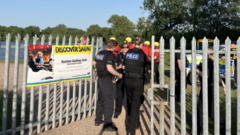
A teenage boy goes under the surface of a local lake on a hot afternoon. Emergency crews launch a massive search operation, deploying divers, sonar equipment, and drones. Hours later, the rescue mission shifts to a recovery operation as a body is pulled from the water.
It is a tragedy that plays out with agonizing predictability every summer. Local news outlets run brief, formulaic reports detailing the location, the response time, and the standard warnings from local authorities to stay out of unmonitored waters. But treating these incidents as isolated, tragic accidents obscures a systemic failure. The reality is that our current approach to open water safety is fundamentally broken, relying on passive warnings and outdated infrastructure that fail to address the physiological and psychological triggers behind these drownings.
To truly understand why young people continue to drown in reservoirs, lakes, and disused quarries, we have to look past the surface-level narrative of teenage recklessness. We have to examine the phenomenon of cold water shock, the illusion of swimming competence, and the chronic underfunding of public recreational infrastructure.
The Invisible Killer Hidden in Warm Summer Afternoons
When air temperatures soar, the surface of a lake can feel deceptively inviting. This creates a lethal trap. While the top few inches of water might be warmed by the sun, deeper layers remain intensely cold, often hovering well below fifteen degrees Celsius even in the height of summer.
When a person jumps or falls into water this cold, the body undergoes an involuntary physiological reaction known as cold water shock. It does not matter how fit the individual is, or how well they can swim in a heated indoor pool. The sudden drop in skin temperature triggers an immediate, uncontrollable gasp for air. If the individual's head is underwater when that gasp occurs, they inhale water directly into their lungs.
Following the initial gasp, hyperventilation takes over. The heart rate spikes violently, and blood pressure skyrockets, causing immediate panic.
[Sudden Cold Water Immersion]
       │
       ▼
[Involuntary Gasp Reflex] ───► (If submerged: immediate water inhalation)
       │
       ▼
[Hyperventilation & Panic] ───► (Rapid loss of airway control)
       │
       ▼
[Thermal Shock & Incapacity] ───► (Loss of motor skills within minutes)
This rapid breathing makes it nearly impossible to coordinate a swimming stroke or call for help. Within minutes, the cold numbs the extremities, restricting blood flow to the core to protect vital organs. The muscles in the arms and legs lose their strength, and the individual can no longer keep themselves afloat. This happens silently and quickly, completely upending the popular myth that a drowning person will splash wildly and scream for assistance.
The Illusion of Swimming Competence and the Pool Bias
A significant factor driving these summer tragedies is a false sense of security built around indoor swimming proficiency. Millions of children learn to swim in tightly controlled environments. They are accustomed to crystal-clear, heavily chlorinated water, predictable depths, bright lighting, and a total absence of currents, underwater debris, or sudden temperature drops.
When a teenager who is classified as a competent swimmer enters an open body of water, they are entering a completely foreign environment.
In a natural lake or reservoir, visibility is often reduced to zero just a few inches below the surface. This sudden loss of visual reference points can induce severe spatial disorientation, fueling panic. Furthermore, natural waters contain hidden hazards like submerged branches, thick weed beds, and discarded industrial waste that can easily ensnare a swimmer.
Traditional swimming lessons rarely prepare young people for these variables. Knowing how to swim twenty-five meters in a heated pool wearing lightweight swimwear does not translate to surviving a sudden immersion in a dark, weed-choked lake while fully clothed or weighed down by waterlogged shoes. The industry standard for water safety education must shift from teaching swimming strokes to teaching survival skills, specifically the practice of floating on one's back to allow the initial wave of cold water shock to pass before attempting to swim.
The Failure of Passive Deterrence
Walk around almost any public reservoir or unmonitored lake and you will find the same sight. Faded, metal signs bolted to fences, displaying a red circle with a slash over a swimmer, accompanied by the words "Danger: No Swimming."
Local authorities and private landowners view these signs as a shield against liability. If someone enters the water and drowns, the institutional defense is simple: they were warned. However, from a psychological and behavioral perspective, these passive warnings are utterly ineffective at deterring the demographic most at risk.
Adolescents and young adults do not process risk in the same way older adults do. The prefrontal cortex, the area of the brain responsible for long-term planning and risk assessment, is not fully developed until a person reaches their mid-twenties. When a group of teenagers gathers at a lake on a stifling day, the immediate social reward of peer approval and instant relief from the heat completely overrides the abstract threat presented by a static sign.
Furthermore, when signs are placed universally across every body of water regardless of actual risk, they suffer from a phenomenon known as warning fatigue. If a teenager sees a "No Swimming" sign at a perfectly calm, shallow pond where people routinely wade without issue, they begin to view all such signs as bureaucratic overprotection. They assume the danger is exaggerated, leading them to ignore the warnings at high-risk sites like deep quarries or fast-flowing reservoirs where the danger is terrifyingly real.
The Infrastructure Deficit and the Criminalization of Cooling Off
To solve the open water crisis, we must confront an uncomfortable truth about public spaces. In many regions, there is a severe shortage of accessible, affordable, and safe outdoor swimming options.
As municipal budgets have tightened over the past few decades, public outdoor pools and supervised swimming zones have been among the first facilities to be closed, neglected, or privatized. For a low-income teenager stuck in an urban area during a heatwave, a trip to a commercial water park or a managed beach is often financially impossible. The local reservoir or unregulated lake becomes the only viable option to cool down.
Instead of managing this reality, society has largely chosen to criminalize it. We erect high fences, install security cameras, and threaten trespassers with fines. This heavy-handed, prohibition-only strategy backfires catastrophically.
By forcing young people away from accessible, visible areas of a lake, we push them into more remote, hidden spots where they are completely isolated. If someone gets into trouble in a hidden cove or a blocked-off section of a quarry, their friends are less likely to be seen by passersby, and emergency services will face significant delays in locating them.
A Pragmatic Blueprints for Reducing Drownings
Continuing to do the same thing every summer while expecting different results is a policy of systemic negligence. We cannot fence off every drop of water in the country, nor can we police every shoreline. We need a fundamental shift toward active risk management and targeted intervention.
- Designate and Safe-Zone Select Waters: Instead of issuing blanket bans, authorities must identify bodies of water where swimming can be safely accommodated. This involves clearing underwater hazards, establishing shallow wading areas, and provisioning lifebuoys and emergency throw lines.
- Deploy Smart Public Safety Technology: Replace passive signs with solar-powered, interactive emergency stations. These stations can feature clear, visual instructions on how to perform a rescue without entering the water, alongside one-touch buttons that instantly transmit precise GPS coordinates to emergency services.
- Revamp School Curriculums Around Water Survival: Public safety education must move beyond pool-based swimming proficiency. Schools need to implement mandatory training focused on cold water survival tactics, specifically emphasizing the "Float to Live" technique to combat the involuntary gasp reflex.
- Fund Managed Public Swimming Infrastructure: Municipalities must view access to safe, cooled public spaces as a public health necessity rather than a luxury. Investing in supervised municipal swim sites, complete with trained lifeguards during peak summer months, directly draws crowds away from high-risk, unmonitored waters.
The tragic loss of life in our lakes and reservoirs is not an inevitable consequence of summer heat. It is the direct output of a safety strategy that relies on cheap signs and institutional finger-pointing rather than modern physiology, behavioral science, and equitable public infrastructure. Until we stop treating drowning as a series of isolated accidents and start treating it as a predictable structural failure, the recovery teams will keep heading out into the water, and the bodies will keep coming out.