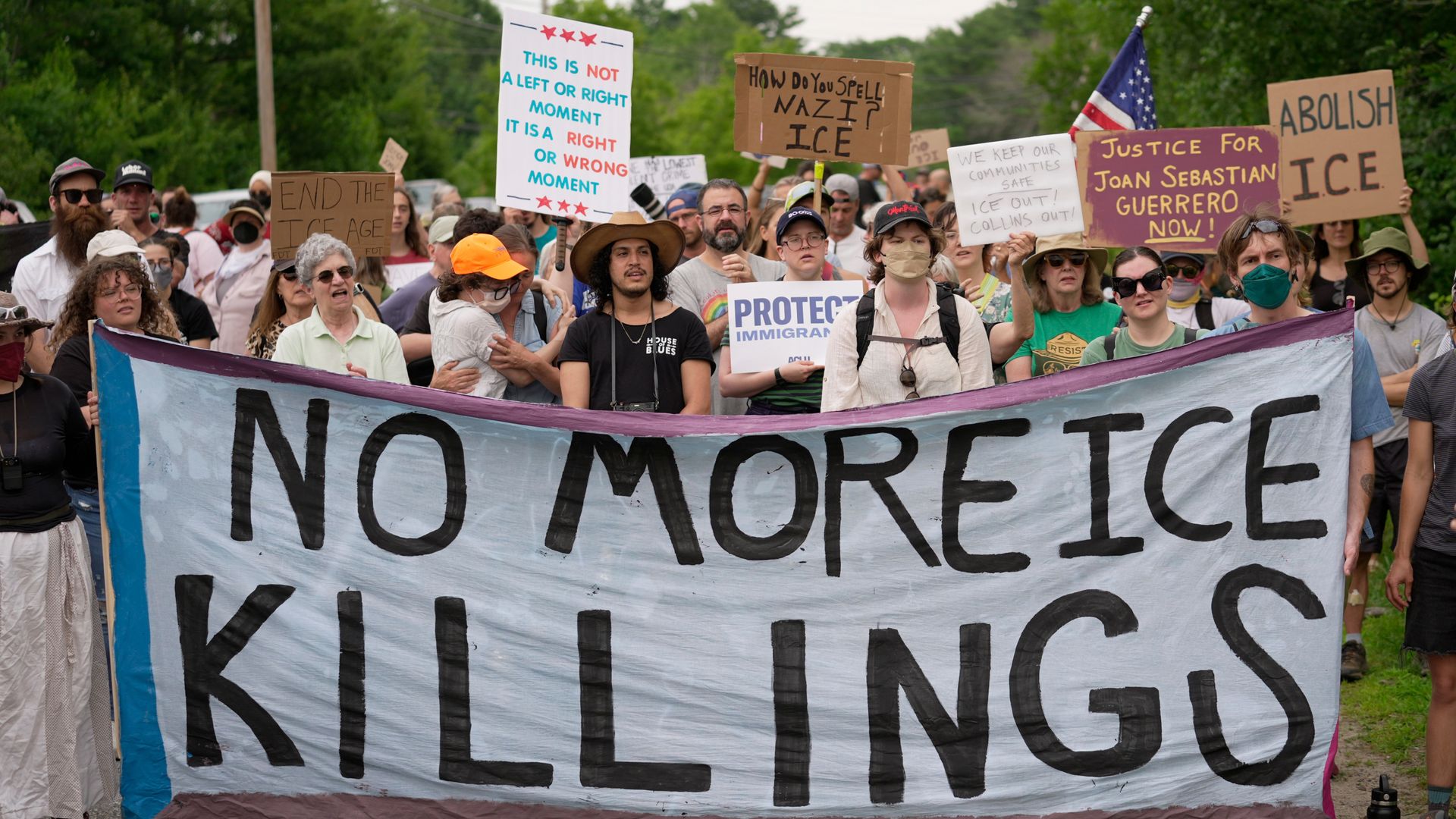
The tragic reality of immigration enforcement in America just hit a tipping point. On July 13, 2026, an Immigration and Customs Enforcement (ICE) officer shot and killed Johan Sebastián Durán Guerrero, a 26-year-old Colombian national, in the quiet coastal city of Biddeford, Maine. This wasn't an isolated incident. Just one week earlier, federal agents in Houston pursued and fatally shot 52-year-old Lorenzo Salgado Araujo while he was driving his construction crew to work.
These back-to-back killings sparked immediate, passionate protests in Maine and Texas. More importantly, they forced the Department of Homeland Security (DHS) to issue an emergency directive ordering ICE to suspend most vehicle stops nationwide.
If you've been watching the aggressive push for mass deportations under the administration, these events should make you pause. The official narrative and the scene on the ground tell two entirely different stories. Let's look at what actually happened, what the government isn't telling you, and why these incidents change the conversation about federal power on local streets.
What Really Happened in Biddeford Maine
According to DHS, ICE officers were conducting surveillance on a home in Biddeford, looking for someone with a final order of removal. When a white vehicle left the residence, officers tried to pull it over. DHS claims the vehicle attempted to flee, and the officer opened fire because he "feared for public safety". Maine Senator Angus King later reported that Homeland Security Secretary Markwayne Mullin told him the driver tried to use the vehicle "as a weapon".
But eyewitness testimony and local security footage paint a far more complicated picture.
Local resident Daniel Boucher heard three distinct gunshots. When he looked out his window, he saw a small white car and an unmarked law enforcement SUV. He ran to the intersection and witnessed officers dragging a limp, bloody body from the driver's seat.
"His face was bloody. His head was bloody," Boucher said. "I clearly heard the victim say, 'I tried to stop.'"
When Boucher confronted the officer who fired the shots, the officer reportedly claimed, "He tried to run me over."
Yet, security footage from a nearby business shows the white vehicle moving at a modest speed and making several slow circles before the SUV blocked its path. There's another major problem: the target of the original ICE arrest warrant wasn't even in the car. Durán Guerrero, who lived nearby with his wife and young daughter, was authorized to work in the United States and had nothing to do with the warrant.
A Disturbing Trend of Unmarked Vehicle Chases
This isn't a case of one officer making a bad split-second decision. It's a systemic policy failure. The fatal shooting in Maine was at least the ninth time ICE has used deadly force since the latest federal immigration crackdown began.
Only days before the Maine incident, 52-year-old Lorenzo Salgado Araujo was killed under strikingly similar circumstances in Houston, Texas. Federal agents driving unmarked vehicles chased Salgado Araujo's truck as he drove his construction crew to a job site. In that case, too, the agency claimed the driver used his vehicle to evade and threaten officers.
When plainclothes federal agents in unmarked SUVs box in civilian cars on local roads, drivers don't always know they are dealing with law enforcement. To an average motorist, an unmarked vehicle aggressively blocking their path looks like a carjacking or a road-rage incident. The instinct to flee or maneuver away is a natural survival response, not necessarily a sign of criminal guilt.
No Body Cameras and Zero Federal Accountability
Perhaps the most frustrating part of these shootings is the complete lack of transparent evidence. The ICE officers involved in the Maine shooting were not wearing body cameras. The agents in the Houston shooting didn't have them either.
Without body-worn video, the public is forced to choose between the word of federal agents and the accounts of local bystanders. This lack of basic accountability is precisely why hundreds of protesters gathered outside the ICE detention center in Scarborough, Maine, and at vigils in Portland.
Local leaders are rightfully furious. Former Maine Senate leader Troy Jackson publicly called for "ICE out" and stood alongside immigrant rights organizations demanding justice. Even internationally, the political shockwaves are hitting hard. Outgoing Colombian President Gustavo Petro openly condemned the shooting, accusing federal officers of treating Durán Guerrero as "an inferior being without rights."
The Policy Shift and What Happens Next
The sudden DHS directive to suspend most vehicle stops is a rare admission that current tactics are too dangerous to continue. But temporary suspensions don't solve the core issue. If you live in an area with active federal immigration enforcement, you need to know how to navigate these tense, rapidly evolving situations safely.
Here are the immediate steps you should take if you are stopped or if you witness an aggressive federal enforcement action:
- Record everything safely: If you are a bystander, pull out your phone and record the interaction from a safe distance. Since ICE officers frequently operate without body cameras, civilian video is often the only objective record of what transpired.
- Know your rights in a vehicle: If you are pulled over by an unmarked vehicle and suspect it may be law enforcement, you have the right to slow down, turn on your hazard lights, and drive to a well-lit, public area before stopping. You can also call 911 to verify if an active police or federal unit is attempting to pull you over.
- Support local advocacy groups: Organizations like the Maine Immigrants' Rights Coalition and Presente! are actively funding legal support and aid for families affected by these operations. Getting involved locally is the fastest way to push for policy changes on the ground.
The state attorney general's office in Maine is currently conducting an independent investigation into the death of Durán Guerrero. Whether this investigation leads to actual criminal charges against the officer remains to be seen, but the public pressure isn't going away anytime soon.