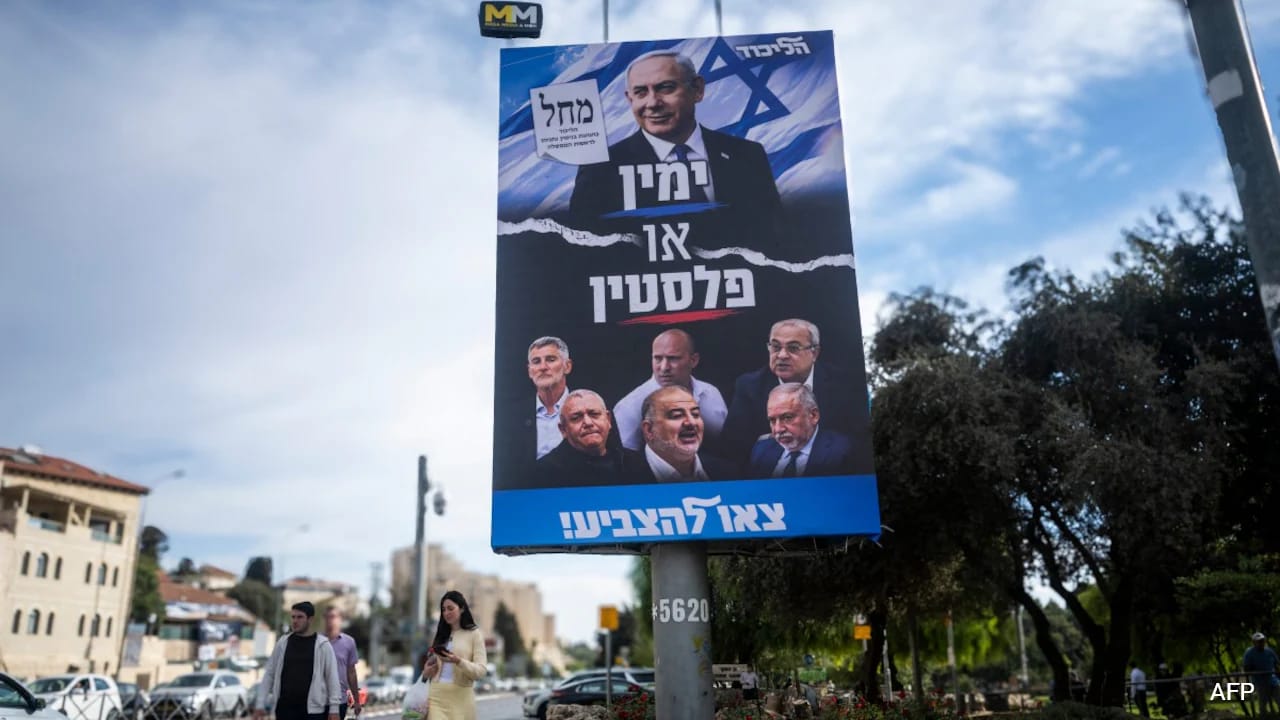
Stop counting Knesset seats like they are poker chips. That is where every lazy election recap goes off the rails.
Read the standard playbook—Coalition, Minority, Deadlock: 4 Possible Scenarios In Israel Elections—and you get the same tired parlor game. Four neat boxes. Four predictable outcomes. A tidy little map of a messy system.
It is lazy. Worse, it is wrong.
Following the October 27, 2026 Knesset election, analysts have been slicing the 120-seat map into neat categories. Netanyahu’s bloc dropped from 64 seats in 2022 to 53. Jewish-led opposition parties sit around 48 seats. Arab parties surged to 19 seats on roughly 78% voter turnout—the highest mark since 1999. President Isaac Herzog handed the mandate to Yashar leader Gadi Eisenkot with 67 recommendations on paper.
On paper, the math looks simple. In reality, the conventional "four scenarios" model misses how Knesset math actually breaks down.
The Myth of the Neat Four-Box Forecast
Pundits love symmetry. Give them a hung parliament and they immediately sort it into clean buckets: a narrow majority coalition, a minority government, a grand unity play, or another trip to the ballot box.
That framing treats Knesset seats as static loyalty tokens. They are not. In Israeli politics, a recommendation to the president is a starting bid, not a blood oath. Eisenkot’s 67 recommendations bundled Jewish-led opposition lawmakers with Arab parties—even though major voices inside his own camp refuse formal governing deals with Arab factions. Meanwhile, Netanyahu’s 53-seat bloc sits eight seats shy of a 61-seat majority, and United Torah Judaism withheld its endorsement over ultra-Orthodox military draft exemptions.
The real divide isn’t "four scenarios." The real divide is between arithmetic (who has the numbers) and veto power (who refuses to sit at the same table).
When analysts draw four neat boxes, they assume each path is an independent option on a menu. Usually, two or three of those "options" are just variants of the same stalemate—or traps disguised as exits.
Why "Deadlock" Is Not a Bug—It’s the Operating System
Ask anyone outside Jerusalem what happens when no bloc hits 61 seats, and they say "deadlock." Ask someone who has watched coalition horse-trading up close, and they will tell you deadlock isn't a malfunction. It is the incentive structure.
I have watched political strategists and outside observers blow millions of dollars in mispriced risk models because they assumed a hung Knesset meant instant collapse or automatic unity. They treated every deadline under Basic Law: The Government as a cliff edge.
Look at how the statutory clock actually works:
- First mandate: The president’s nominee gets 28 days, with up to 14 days of extensions.
- Second chance: If that fails, the president has three days to pick a second lawmaker (28 days, no extension) or hand the baton to the Knesset.
- Knesset nomination: Lawmakers get 21 days to gather 61 signatures for a candidate, who then gets 14 days without extension—or the Knesset dissolves and sends the country back to the polls.
Notice what sits between those deadlines: leverage. Every extra day raises the price of a ministry, a budget line, or a draft exemption.
A common "People Also Ask" question goes like this: Can a minority government govern Israel without 61 seats?
The lazy answer is "yes, if it gets outside support." The brutal answer is: only if its enemies find the alternative worse. Under Israeli law, a government needs 61 signatures to win the final parliamentary nomination stage, while its initial confidence vote requires more votes for than against. That opens the door to outside backing or abstentions—just as Yitzhak Rabin’s government survived in 1993 after Shas exited, relying on outside support from five Arab MKs.
Except history isn’t a skeleton key. What worked in 1993 faces sharper ideological red lines, deeper distrust, and higher political costs today. Calling a minority government a "scenario" without pricing the cost of keeping it alive is like calling a tightrope walk a "commute."
The Hidden Math Behind Turnout and the 3.25% Threshold
Here is the mistake almost every surface-level election piece makes: it treats seat shifts as a referendum on voters changing their minds.
Data from the 2026 vote—highlighted by analysts such as former MK Ofer Shelah and institutions like the Israel Democracy Institute—tells a sharper story. Total valid votes jumped nearly 20% over 2022, lifting turnout past 78%. Arab turnout surged, while Netanyahu’s bloc saw a much smaller vote increase and lost seats—not because millions of right-wing voters suddenly became left-wing overnight, but because turnout math and wasted votes shifted the board.
In 2022, opposition parties like Meretz and Balad fell short of the 3.25% electoral threshold, wasting roughly 290,000 votes—about seven seats worth of representation. In 2026, votes below the threshold—such as those for The Reservists–Economic Party (155,000) and Ofer Winter’s list (96,000)—were split across camps rather than piling up on one side.
Let’s run a quick thought experiment. Imagine a scenario where turnout stays high at 78%, the 3.25% threshold remains untouched, and two mid-sized parties on the same side of the aisle refuse to merge ahead of the next vote. Even a 1% dip below the threshold wipes out thousands of ballots and hands free seats to rival lists through seat-allocation math.
| Common Misconception | What Actually Drives Outcomes | Why It Matters in Coalition Talks |
|---|---|---|
| Recommendations to the president equal coalition votes | Endorsements are tactical signals, not governing commitments | A candidate can lead in recommendations and still lack 61 willing partners |
| Seat swings prove massive ideological flipping | Differential turnout and threshold waste do heavy lifting | Coalitions form around immediate bargains, not imaginary voter mandates |
| Unity governments easily solve deadlock | Rivals face steep base backlash and leadership vetoes | As the Israel Democracy Institute notes, grand coalitions carry real political costs |
Another favorite "People Also Ask" question: Is a national unity government the cleanest way out of deadlock?
No. It is the cleanest way to anger everyone’s core base at once. As scholars at the Israel Democracy Institute point out, unity governments between rival camps—like Likud and Yashar—can bridge crises in theory, yet fragmentation and leadership vetoes can leave even broad pairings short of a majority or politically radioactive to their own voters.
Where My Contrarian Read Can Burn Me
Being contrarian is easy when you don’t have to live with the downside. So let’s put my own thesis on the table and test where it can fail.
First, backroom pragmatism can surprise hardliners. Israeli politicians have built careers out of swearing "never" until the ministerial portfolios are on the table. If a defector moves or a compromise is carved out on draft exemptions or judicial/security policy, a coalition that looked impossible on Tuesday can look inevitable by Friday.
Second, external shocks rewrite domestic calendars. Regional security escalation, economic pressure, or a sudden shift in party leadership can turn a slow-motion standoff into a forced march overnight. If I over-index on procedural mechanics and under-weight a shock event, the model breaks.
How to Actually Read the Next Few Weeks
Stop asking, "Which of the four scenarios wins?" Start asking three harder questions every single morning:
- Who pays the price for another election? Any party staring down threshold risk or voter fatigue hates a repeat vote. Follow the fear of going back to the polls, not the speeches at press conferences.
- Where does the Haredi draft standoff land? Military service exemptions for ultra-Orthodox seminary students remain a live fault line that can break or block deals across camps.
- Is outside support treated as a crutch or a trap? Relying on external votes without formal coalition buy-in keeps a government breathing—right up until the first vote where nobody owes the prime minister a favor.
Watch the red lines, watch the clock, and ignore anyone selling you a neat four-box map of a 120-seat brawl.
(If you're reading this in a signed-out session, signing in to a Google Account lets you save threads like this and pick up where you left off later.)