The morning frost still clung to the wooden planks of the Summerside docks when Arthur last saw the yellow tractor.
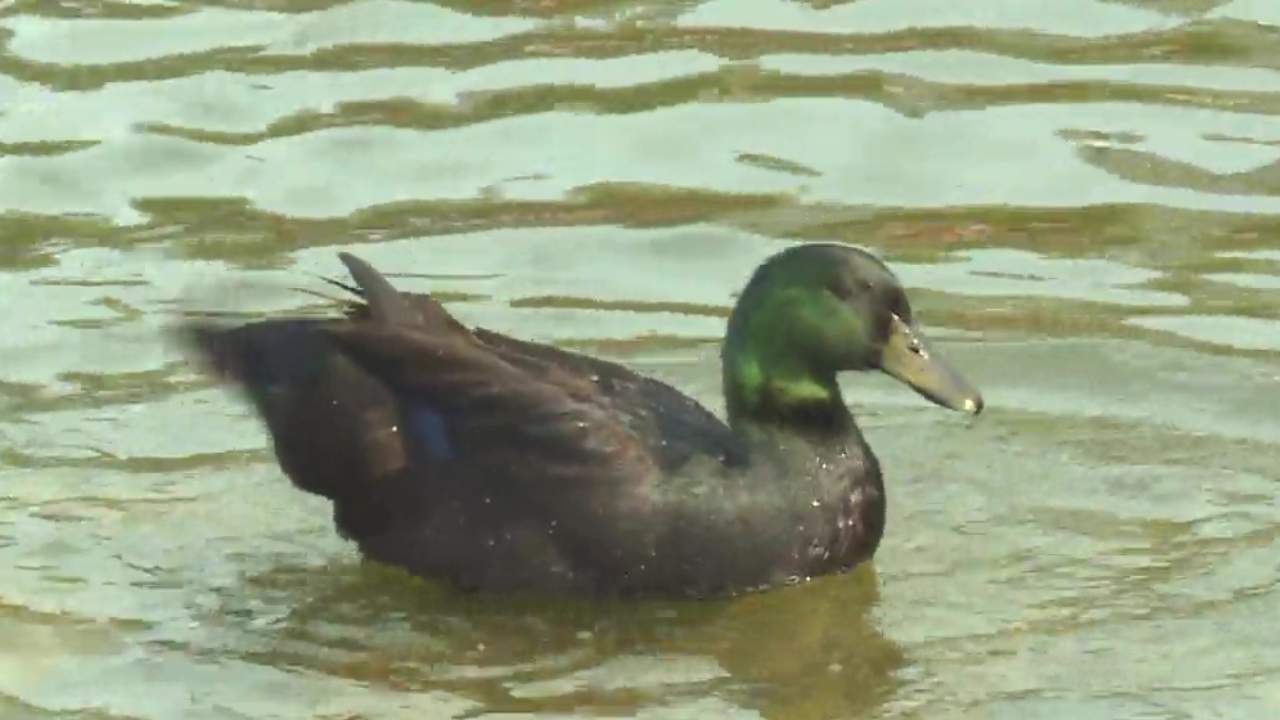
Arthur is not his real name, mostly because ducks do not have birth certificates, but for four years the residents of southeast Edmonton’s Lake Summerside community have called him that. Or sometimes just "The Boss." Right now, The Boss was standing on one leg fifty feet out on the thin, slate-colored ice, looking entirely unbothered by the fact that half a dozen municipal workers and wildlife relocation specialists were standing on the shore holding heavy-duty nets, clipboards, and a very large cardboard crate. Also making headlines lately: The Narrow Water Where the World Breathes.
He stretched his neck. He gave his preen gland a quick scratch. Then, with an insolent flick of his tail feathers, he turned his back on them.
Summerside is an artificial lake community known for pristine beaches, manicured lawns, and a rigid adherence to suburban order. Homeowners pay hefty association fees for the quiet illusion of control. Lawns are measured. Fences are stained. Ducks, however, did not read the bylaws. More insights regarding the matter are explored by NPR.
For the past several migration seasons, a small coalition of resident waterfowl has refused to head south when the temperature drops below zero. Leading this feathered resistance is Arthur, a mallard with a stubborn streak wider than the lake itself and a penchant for stationing himself right where the homeowners' association wants absolute compliance.
Rehoming attempts began in earnest three weeks ago.
Consider what happens next: a well-intentioned team arrives in high-visibility vests, armed with grain buckets to lure the quarry into a designated holding zone. It is a textbook strategy used by urban wildlife management teams across North America. Lure. Capture. Transport. Release into a natural wetland far outside city limits where geese and ducks belong.
Except Arthur has memorized the script.
He didn't panic when the first handful of cracked corn hit the frosty grass. He walked forward, head bobbing with calculated rhythm, flanked by two loyal drakes who acted more like secret service agents than migratory birds. But the moment the perimeter net twitched three yards away, Arthur didn't fly. He dove.
Mallards can dive when startled, but Arthur stayed under for an unnatural length of time, surfacing fifty yards out in open water where the lake aerator kept a circular pool unfrozen. He shook the icy droplets from his crown, let out a raspy, defiant quack that echoed off the neighboring vinyl siding, and paddled in lazy circles.
The wildlife officers packed up their nets before noon. They always do.
The deeper issue here is not stubborn wildlife. It is our collective discomfort with anything that refuses to be managed. We build artificial lakes in the middle of the prairie, stock them, chlorine-treat them, surround them with asphalt and mortgage payments, and then act surprised when nature stubbornly insists on being wild.
Residents are divided. Some look at Arthur and see a nuisance—a vector for mess on the communal docks, a bird that eats too much bread from toddlers' hands and forgets how to forage. They worry about winter survival. They worry about the delicate ecosystem balance of a man-made body of water designed primarily for paddleboards and evening strolls.
Others see something entirely different.
Sarah Vance, who has lived facing the east beach for seven winters, watched the failed rescue attempt from her kitchen window with a steaming mug of black coffee.
"Look at him," she whispered, pointing toward the dark silhouette bobbing on the gray water. "He’s lived through four Alberta winters right here. He knows every dock, every backyard with a heated birdbath, and every neighborhood dog that isn't on a leash. If we ship him off to some marsh near Gibbons, he’ll be disoriented. He’s a city duck now. This is his neighborhood."
That is the paradox at the heart of Lake Summerside. We invite wildlife in with open, bread-filled hands during the warm summer months, snapping photographs for Instagram and teaching our toddlers how to say "quack." But the moment the leaves fall and the lake freezes over, our hospitality turns bureaucratic. We want the wildness packaged, sanitized, and removed when it becomes inconvenient.
Arthur stays because he has adapted. He has figured out that the warm runoff pipe near the southeast corner stays tepid even in January. He knows which garage overhang keeps the bitter north wind off his back at midnight. He has learned the exact schedule of the local mail carrier who always drops a handful of sunflower seeds by the storm drain.
He is an urban pioneer with webbed feet.
The relocation committee will be back. Bureaucracy moves slowly, but it rarely gives up entirely. City bylaws regarding wildlife feeding and artificial habitat retention are explicit. Unmigrated waterfowl create hygiene issues, draw predators like coyotes closer to residential patios, and disrupt the engineered equilibrium of community lakes.
Logic says they are right. The experts have the data. Urban ecosystems function best when they are kept wild, and feeding wild animals creates dependencies that ultimately harm them.
Yet, standing on the frozen shore as the pale afternoon sun dips below the rooftops of Summerside, logic feels terribly cold.
Across the ice, Arthur has hauled himself onto a snowbank. He isn't shivering. He tucks his bill beneath his scapular feathers, closing his eyes against the wind. He is entirely at home in a place that wasn't built for him, surviving entirely on his wits, his resilience, and an unyielding refusal to go where he is told.
The wind shifts. A car door slams down the block. The ice groans beneath the weight of the afternoon.
Arthur doesn't move a muscle.