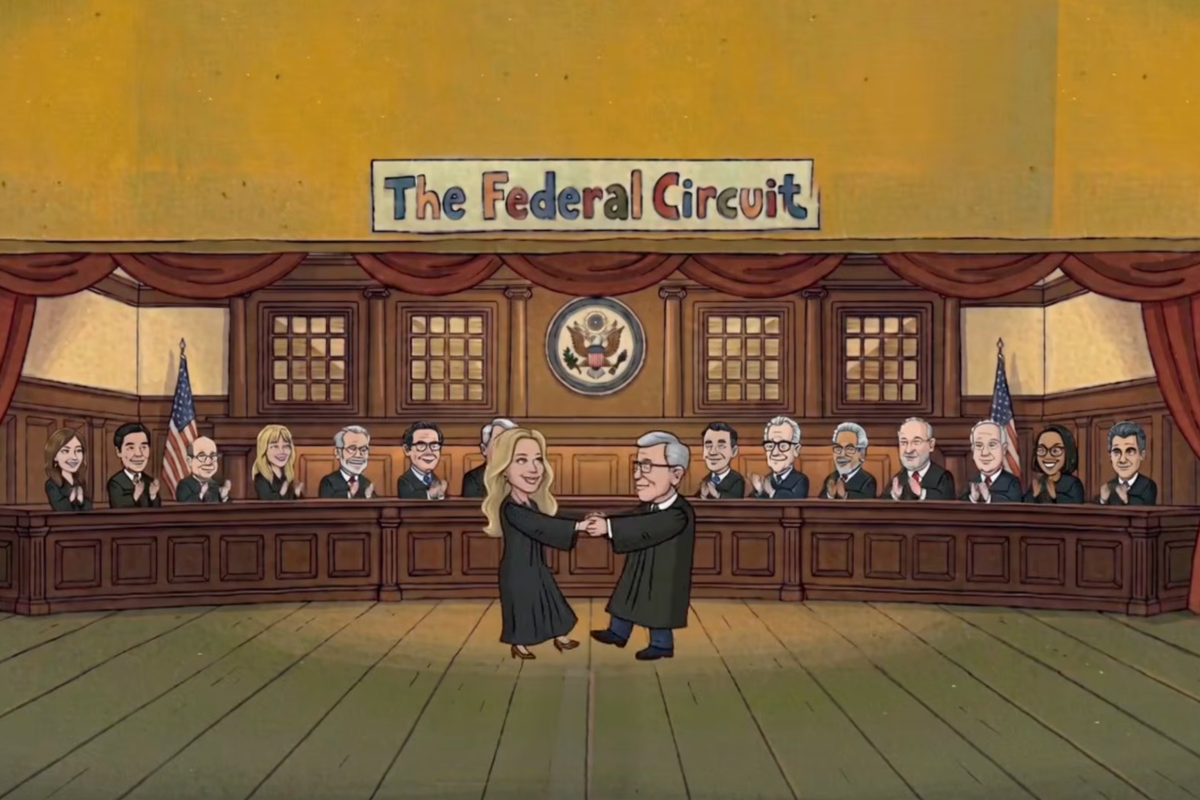
The federal judiciary has a massive public relations problem. Most Americans cannot name a single supreme court justice, let alone explain what a circuit court does. So when the U.S. Court of Appeals for the Eighth Circuit decided to bridge the knowledge gap, they picked a classic medium. They animated an educational video styled after the iconic 1970s Schoolhouse Rock series.
It did not go well.
Instead of making civil procedure accessible, the court created an internet mockery. The video tries to explain how cases move through the appellate system, but it suffocates under the weight of legal jargon and stiff, lifeless animation. It is a textbook example of what happens when government institutions try to adapt to internet culture without understanding why internet culture works.
The Eighth Circuit Attempt at Schoolhouse Rock
Civic education is dying. The Annenberg Public Policy Center regularly tracks how little citizens know about government branches, and the results are consistently bleak. The Eighth Circuit, which covers seven states from Arkansas to Minnesota, tried to fix this. They introduced an animated character meant to mirror the lovable "Bill" from the classic "I'm Just a Bill" segment.
The execution fell completely flat. The charm of the original cartoons relied on infectious jazz hooks composed by Bob Dorough and expressive, fluid hand-drawn animation. The court's version features clunky digital rendering and a musical track that feels completely devoid of soul.
The script is the real offender. The original series succeeded because it translated complex legislative maneuvers into simple metaphors. A bill was just a sad piece of paper sitting on Capitol Hill. The Eighth Circuit video abandons simplicity almost immediately. It drops viewers directly into a dense swamp of legal definitions, throwing around phrases like "de novo review" and "abuse of discretion" without giving ordinary citizens a reason to care.
Why Legal Institutions Struggle with Pop Culture
Government agencies always seem to lag a decade behind media trends. The underlying issue is structural. Bureaucracies are designed to minimize risk, eliminate spontaneity, and filter everything through layers of administrative approval. Good art requires the exact opposite.
When a federal court attempts to create viral educational content, the final product gets managed by a committee of judges and clerks. Every line of the script gets scrubbed to ensure total legal precision. If a lyric is catchy but technically generalizes a complex rule of civil procedure, a clerk will rewrite it to be accurate. The result is a song that is legally bulletproof but entirely unlistenable.
We see this pattern constantly across public sectors. The FBI tries to post relatable warning tweets. State departments try to use popular memes. It almost always results in collective internet cringing. The underlying message gets completely lost because the audience focuses entirely on the awkward delivery.
What the Court Got Wrong About Modern Audiences
People want authenticity. They want clear, unpretentious explanations. The Eighth Circuit assumed that putting a cartoon filter over a law school lecture would magically make it appealing to high school students or the general public.
It does not work that way. The video fails to address the actual human element of the courts. It focuses entirely on abstract mechanics: briefs, oral arguments, appendices, and records. It completely ignores the stakes. Why do these cases matter? How do appellate decisions affect the daily lives of the people living within the Eighth Circuit?
Eighth Circuit Jurisdiction:
- Arkansas
- Iowa
- Minnesota
- Missouri
- Nebraska
- North Dakota
- South Dakota
If you leave those questions unanswered, the animation is just an expensive gimmick. A plain-spoken, five-minute video of a judge speaking directly to a camera would have been infinitely more effective, significantly cheaper, and far less embarrassing.
How to Explain Complex Systems Without Being Boring
You do not need animation budgets or embarrassing musical numbers to teach people about federal courts. You just need to follow basic communication principles that legal professionals usually ignore.
First, kill the legalese. If you must use a term like "interlocutory appeal," you need to explain it instantly using an everyday analogy. Think of it like a referee reviewing a play before the game is actually over.
Second, lead with narrative. The law is entirely driven by human conflict. Every major appellate decision started because two parties had a massive, unresolved disagreement that altered their lives or businesses. Tell that story first. Once the audience is invested in the outcome, they will naturally want to understand the mechanism of the appeal.
Finally, stop trying to look cool. The federal judiciary derives its authority from its seriousness and its adherence to constitutional principles. When it tries to masquerade as a Saturday morning cartoon, it cheapens its own image without gaining any cultural relevance.
If you want to understand how federal courts actually function, skip the court-produced cartoons. Open a browser and read the actual summaries of high-profile cases on sites like SCOTUSblog or the official court websites. Look at the briefs filed by advocacy groups. Listen to real audio recordings of oral arguments, which are readily available and far more dramatic than any forced musical number. Real education comes from engaging with the actual work of the courts, not from watching judges try to dance.