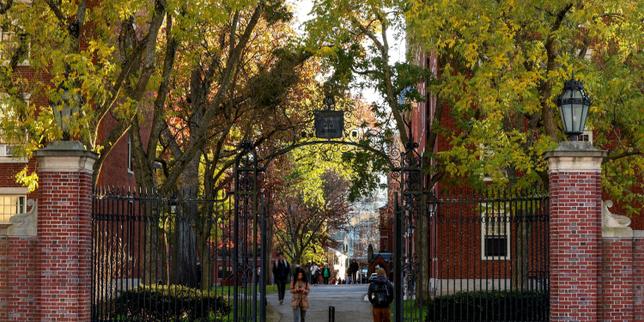
Two months of sheer panic on American university campuses and in foreign newsrooms just came to a screeching halt. U.S. District Judge F. Dennis Saylor vacated a sweeping Department of Homeland Security (DHS) rule that would have slapped strict expiration dates on visas for international students, exchange researchers, and foreign journalists.
If you're following immigration policy closely, you know this wasn't just a minor bureaucratic tweak. The Trump administration's rule, published in the Federal Register on July 17, 2026, sought to dismantle a decades-old framework called duration of status. Instead of letting students finish their degrees or reporters cover long-term beats without arbitrary mid-stream cutoffs, DHS wanted to force them into rigid, expensive extension cycles. Judge Saylor—a George W. Bush appointee—didn't just pause the policy. On November 16, 2026, he threw it out entirely under the Administrative Procedure Act, calling it arbitrary, capricious, and completely outside the agency's legal authority.
How Duration of Status Actually Works
Most headlines treat visa rules like simple entry tickets, which is why people miss what made this fight so existential for higher education and global media. Under the existing duration of status system (marked as "D/S" on immigration forms), foreign nationals holding F-1 student visas, J-1 exchange visitor visas, and I visas for foreign media don't get a hard calendar expiration date at the border.
Instead, their legal stay lasts as long as they do what they came to do.
For an F-1 student, that means staying enrolled full-time and making normal academic progress. If a doctoral thesis takes six years instead of four, the university's designated school official updates the student's I-20 form in the Student and Exchange Visitor Information System (SEVIS). The student doesn't have to beg a federal immigration officer for permission just to finish running lab experiments. For foreign correspondents on I visas, their stay stays valid as long as they remain employed by their accredited foreign news organization.
DHS tried to blow that up. Had the July 2026 rule survived, the system would have shifted overnight to fixed admission periods:
- F-1 and J-1 visa holders would have been capped at a maximum of four years, regardless of how long their degree or research program actually takes.
- Foreign journalists on I visas would have been restricted to just 240 days—roughly eight months—down from up to five years.
- Chinese journalists faced an even harsher 90-day cap, requiring renewal applications every three months just to keep reporting from Washington or New York.
- Graduate students would have been banned from changing their academic majors mid-program or pursuing a second degree at the same or lower educational level (like earning an MBA after completing a law degree).
Anyone needing more time would have been forced to file an Extension of Stay application with U.S. Citizenship and Immigration Services (USCIS), complete with biometric screenings, hefty filing fees, and processing backlogs that routinely stretch for months. Worse yet, Judge Saylor noted in his earlier September opinion that a DHS denial of an extension request would have been entirely discretionary and unappealable.
Why Judge Saylor Struck Down the DHS Rule
When federal courts review agency regulations, judges usually give the executive branch plenty of breathing room on technical policy calls. Not this time. Saylor's November 16 opinion dismantled DHS's legal arguments piece by piece, exposing a massive gap between what Congress authorized and what the administration tried to enforce.
DHS Exceeded Its Statutory Authority
Under the Immigration and Nationality Act, Congress created the F-1 visa classification specifically to let foreign students come to the United States and pursue educational opportunities. DHS argued that its general power to set the "times" and "conditions" of nonimmigrant admission allowed it to rewrite the rules from top to bottom.
Saylor wasn't buying it. He pointed out that banning graduate students from switching concentrations, blocking joint degrees, and preventing students from pursuing consecutive degrees at the same level directly sabotages the purpose of the visa class. "Put bluntly, DHS is seeking to prevent or discourage the very activity — providing educational opportunities for foreign students in the United States — that Congress sought to permit and encourage," Saylor wrote. The statute simply doesn't hand DHS a blank check to hollow out the F-1 program.
The Arbitrary and Capricious Standard
Even if DHS had the statutory power, the Administrative Procedure Act requires federal agencies to show their math. You can't upend a system governing nearly two million F-1 and J-1 visa holders—plus tens of thousands of international journalists—based on vague hunches.
DHS claimed fixed expiration dates were necessary to curb visa overstays, reduce immigration fraud, and protect national security. Yet the agency failed to prove that existing tracking tools—specifically SEVIS, which already monitors student enrollment and status in real time—were broken. Saylor found that DHS never seriously weighed the staggering administrative and financial costs of its overhaul against the unproven security benefits.
Take doctoral programs as a real-world example. According to a 2025 statistical analysis by the American Institute of Physics (AIP), roughly 97 percent of international PhD recipients in physics and astronomy take more than four years to complete their degrees. Under the DHS rule, virtually every single international physics PhD candidate in America would have hit a legal wall mid-dissertation, risking deportation or forced departure if USCIS stalled on their extension paperwork.
The Bigger Picture Behind the Campus and Media Crackdown
To understand why universities, scientific societies, and media unions fought this rule so fiercely, you have to look at the broader timeline of 2025 and 2026.
When President Donald Trump returned to office in January 2025, his administration immediately targeted international education and foreign press access alongside broader immigration enforcement. In spring 2025, federal officials triggered chaos by terminating hundreds of international student records directly inside SEVIS over ideological disputes and minor infractions—actions that federal courts later reversed.
When ad-hoc revocations hit legal roadblocks, the administration pivoted to formal rulemaking. The July 17, 2026 fixed-stay rule was supposed to take effect on September 15, 2026. Universities spent August frantically telling international students to cancel overseas trips and get back to U.S. soil before the deadline.
Judge Saylor first stepped in on September 14, 2026—literally 24 hours before the rule went live—issuing a preliminary injunction that postponed enforcement. The government initially appealed to the First Circuit Court of Appeals, then asked for a 30-day pause while Saylor ruled on the full merits of the case. That gamble backfired when Saylor granted summary judgment to the plaintiffs and vacated the rule nationwide.
And this isn't the only loss DHS suffered that week. On November 17, 2026, another federal district judge blocked two August DHS directives that tried to gut Curricular Practical Training (CPT) by restricting internships exclusively to those mandatory for every student in a degree program.
The damage from months of regulatory whiplash is already visible in the numbers. Fall 2026 enrollment surveys reported a 15 percent drop in new international student enrollment and a 9 percent decline in overall international student numbers across U.S. institutions. Talented researchers and students aren't waiting around to see if their lab funding gets interrupted by a visa renewal backlog—they're taking offers in Canada, Europe, and Asia instead.
For foreign journalists, the stakes were equally chilling. While Judge Saylor resolved the case on statutory and Administrative Procedure Act grounds without needing to rule on constitutional claims, forcing foreign reporters to apply for DHS permission every eight months—or every 90 days for Chinese nationals—created an obvious First Amendment trap. If a correspondent writes critical coverage of the White House and suddenly faces a discretionary, unappealable visa extension denial, press freedom evaporates overnight.
What Happens If DHS Appeals the Ruling
Let's be realistic: the legal fight isn't finished. DHS has every right to appeal Judge Saylor's November 16 final judgment to the First Circuit Court of Appeals, and observers expect the administration to do exactly that.
Here is what actually matters right now for students, researchers, universities, and journalists:
- Filing an appeal does not revive the rule. Because Saylor vacated the regulation in full, duration of status remains the active law of the land unless a higher court grants an emergency stay—an uphill battle given how thoroughly DHS lost on the statutory text.
- Watch out for targeted agency workarounds. Even without the fixed-stay rule, USCIS and consular officers still hold broad discretion during initial visa interviews at U.S. embassies abroad and at ports of entry.
- Keep your SEVIS and employment records spotless. Students on F-1 and J-1 visas must continue maintaining full-time course loads, getting designated school official sign-offs before international travel, and documenting academic progress on schedule.
- Foreign media bureaus should verify I-visa assignment letters. Reporters entering or re-entering the U.S. should carry current employer verification letters confirming ongoing assignment duties, since CBP officers still inspect credentials at the border.
If you're an international student, exchange scholar, or foreign correspondent working in the United States, take a breath—your four-year cliff and 240-day countdown are officially dead for now. Stay in close contact with your university's international office or your newsroom's immigration counsel, keep your travel signatures current before booking winter flights, and don't let outdated July headlines dictate your academic or career plans.