The Tremor Before the Thunder
The ground in southern Texas does not usually shake like this.
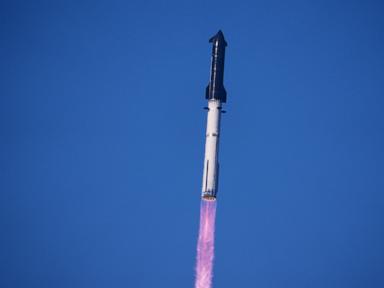
Long before the sound arrives—a deafening, bone-rattling roar that tearing through the humid air of Boca Chica—there is a deep, subsonic hum that travels through the mud, through the soles of your boots, straight into your chest. It is the sound of thirty-three engines burning liquid methane and oxygen at a rate that defies ordinary human comprehension.
Standing near the perimeter, watching that colossal silver cylinder rise on a pillar of orange fire, you realize something profound about human ambition. We are frail, fragile creatures. Yet here we are, hurling thousands of tons of steel into the black void above, hoping to weave a blanket of signals around the planet.
This test flight was not merely another line item on a corporate checklist. Tucked inside the massive payload bay of Starship sat the newest generation of Starlink satellites—larger, heavier, and vastly more capable than anything sent into orbit before.
To understand why this moment mattered so deeply, you have to look far away from the launch pad.
A Signal in the Dust
Imagine a young student named Maya sitting at a wooden kitchen table in a remote mountain village. Her school laptop sits open, displaying a frozen video buffering screen. For millions of people across rural counties and isolated islands, the modern world is something that happens elsewhere, behind a wall of poor connectivity and high costs.
The previous generation of satellite internet was built on compromises. Small satellites, limited bandwidth, tight constraints. They worked, but they struggled under heavy demand.
To fix that problem, engineers had to throw away the old playbook. They needed satellites with massive phased-array antennas and direct-to-cell capabilities. But heavy, sophisticated hardware presents a cruel engineering paradox: you cannot deploy advanced orbital networks if you do not have a rocket large enough to lift them.
Enter Starship.
The entire architecture of this flight was designed around a single, uncompromising goal. Prove that the largest flying object ever built by human hands can act as a reliable, repeatable cargo vessel for the digital backbone of tomorrow.
The Mechanical Ballet
The launch sequence is violent, but the engineering is delicate.
As Starship cleared the tower, the staging maneuver—a mid-air sequence where the massive Super Heavy booster flips and separates from the upper stage—executed with cold precision. The hot-staging technique, which fires the upper stage engines while still attached to the booster, forces both vehicles through incredible physical stress.
- The Booster: Thirty-three engines firing in unison, guiding a giant steel tube back toward its ocean landing target.
- The Ship: Six vacuum-optimized engines kicking in, accelerating the payload toward orbital velocity.
Inside the control room, hundreds of young engineers sat frozen before monitors. Many of them spent eighty hours a week tweaking fuel valves, writing guidance algorithms, or inspecting thermal tiles by hand. For them, every tick of the mission clock represents thousands of hours of missed dinners, skipped sleep, and relentless pressure.
When the cargo bay doors opened high above the atmosphere to simulate payload deployment, it was not just a mechanical test. It was the physical validation of years spent solving problems that textbooks had declared impractical.
The Physics of Scale
Why push for larger satellites in the first place? Why accept the terrifying risk of launching an experimental rocket carrying prized hardware?
The math is brutal.
Smaller satellites mean more launches, higher cost per gigabit, and congested orbital shells. Larger satellites, loaded with high-gain antennas and laser inter-satellite links, can route terabytes of data across the globe without touching a single ground station until the final jump.
Consider what happens next:
A vessel navigating an arctic storm can beam real-time meteorological data across thousands of miles of open ocean. Emergency responders in a flood zone can drop a terminal on a hood of a truck and instantly coordinate rescue operations. Maya, sitting at her kitchen table, clicks play on an educational video, and it streams instantly without a single stutter.
That is the invisible stakes riding on top of every test flight. The hardware in the sky is only as good as the steel that carries it there.
Where Fire Meets the Black
As the spacecraft pushed deeper into its flight profile, thermal cameras captured the blue glow of plasma beginning to envelope the hull upon initial re-entry tests. Every thermal tile glued to the stainless-steel skin faced thousands of degrees of heat. Some held firm; others burned away under the relentless friction of upper atmospheric gas.
Failures here are not viewed as tragedies. They are collected as data points. Every piece of telemetry harvested during a high-speed descent informs the design of the next hull sitting in the assembly bay just a few miles down the road.
SpaceX builds rockets not like watchmakers build timepieces, but like auto manufacturers build cars on an assembly line. Test, break, analyze, rebuild, repeat.
The Horizon Beyond the Marsh
Back on the ground in Boca Chica, the dust eventually settles. The deafening roar fades into the ambient sounds of coastal birds and the gentle lap of ocean waves against the shoreline.
The steel tower stands tall against the setting sun, scorched black near the base but unbroken. In the assembly building nearby, technicians are already welding the ring segments for the next vehicle.
We often talk about space flight in abstract terms of tonnage, thrust, and delta-v. But at its core, this ongoing effort is a deeply human story. It is about our refusal to stay contained within our immediate surroundings. It is about connecting a lonely school table in the mountains to the collective knowledge of human civilization.
The rocket will fly again. The satellites will keep multiplying. And somewhere, far from the fire and noise of the launchpad, someone will turn on a screen, connect instantly to the world, and never give a second thought to the fifty tons of steel that made it possible.