Dust.
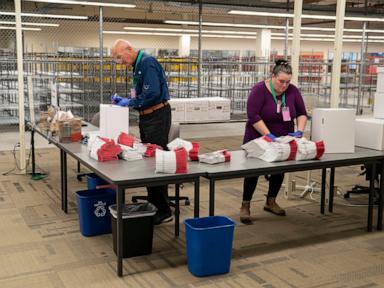
That is what fifty years actually smells like when you pull a cardboard banker's box from the steel shelving of a municipal evidence vault in Salt Lake County. It smells like dry paper turning acidic, stale cigarette smoke trapped in the weave of a wool coat from 1974, and the faint, metallic tang of rusted staples holding together yellowed witness statements that nobody has read since Richard Nixon was in the White House.
I have spent years reporting from the fluorescent-lit basements where cold cases go to wait, and I can tell you that a crime scene never really closes. It just freezes. While the rest of the world moves on—highways widen, shopping malls rise over old orchards, children grow old and bury their parents—the woman in the photograph stays nineteen forever, frozen in a black-and-white yearbook portrait with feathered hair and a tentative smile.
For half a century, families across Utah have lived inside that freeze.
And now, the ice is cracking.
The Architecture of an Open Wound
To understand why Utah authorities connecting Ted Bundy to another 1970s homicide matters right now—decades after Bundy died in Florida’s electric chair in 1989—you have to stop thinking about true crime as entertainment and start thinking about grief as an architectural problem.
Consider a hypothetical family living in the Salt Lake Valley in the autumn of 1974. Let’s call them the Millers, though their real names are etched on granite headstones from Bountiful to Provo. On a Tuesday evening in October, their daughter walks out the front door to buy a pack of gum or return a library book. The porch light is on. Dinner is cooling on the stove. She never comes back.
What happens to a house when a person simply evaporates?
You cannot mourn a vanishing the way you mourn a death. Death has edges. It has a hospital room, a casket, a certificate signed in black ink. A disappearance—or an unsolved murder where the killer remains a shadow—has no walls at all. Every knock at the door for the next twenty years might be a detective. Every tall man in a beige Volkswagen Beetle driving past the grocery store triggers a spike of adrenaline that leaves your hands shaking in the produce aisle.
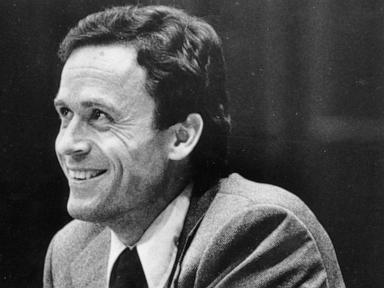
Between January 1974 and November 1975, Utah became the hunting ground for a predator who weaponized ordinary politeness. Ted Bundy was a law student at the University of Utah. He wore turtlenecks. He carried books. He walked with a fake cast on his arm, asking young women to help him load a sailboat or carry a briefcase to his car.
Before his execution, Bundy confessed to thirty homicides across seven states, including at least eight in Utah. Among those confirmed or strongly linked in the Beehive State were Nancy Wilcox, Melissa Smith, Laura Aime, Debra Kent, and Susan Curtis. Yet investigators who worked those original task forces always harbored a sickening certainty: thirty was a floor, not a ceiling. Bundy used confessions like currency, trading names for stays of execution, withholding details to maintain control over the families who begged him for the location of their daughters' remains. When the switch was thrown at Starke, Florida, on January 24, 1989, he took his remaining secrets to the crematorium.
Or so he thought.
Why Cold Cases Are Suddenly Waking Up
People often ask why law enforcement spends scarce taxpayer dollars investigating murders committed fifty years ago when both the killer and the victim's parents may already be dead. It sounds pragmatic on paper. In reality, it misunderstands what justice actually does for a community.
Unresolved violence is like an unexploded shell buried beneath a playground; just because nobody has stepped on it lately doesn't mean the ground is safe. When Utah investigators reopen a 1970s homicide file and link it to Bundy, they are not trying to put a dead man in prison. They are correcting the historical record and returning a stolen identity to a human being who was reduced to a case number.
How does a case go from dead to solved after five decades? Think of modern forensic investigation like restoring a painted-over fresco. For decades, detectives only had the top layer—smudged fingerprints, degraded blood types, eyewitness memories warped by trauma and time. Today, cold case units use a combination of three distinct tools to strip away the paint:
- Forensic Genetic Genealogy (FGG): Even microscopic amounts of touch DNA left on clothing fibers or ligatures in 1974 can now be sequenced into complex SNP profiles, allowing genealogists to build family trees backward and forward until the branches intersect at a single suspect.
- Geographic and Temporal Profiling: Modern behavioral analysts map a killer's "comfort zone"—the corridors between home, school, and work—against previously unlinked disappearances. Bundy lived at 565 First Avenue in Salt Lake City; when you plot his class schedule at the University of Utah Law School against missing persons reports from 1974 and 1975, invisible patterns snap into sharp focus.
- Cross-Jurisdictional Digital Archiving: In 1974, a sheriff's deputy in Utah County and a detective in Salt Lake County communicated via teletype, carbon paper, and rotary phones. A crucial detail—a specific brand of rope, a missing class ring, a sighting of a tan VW—could sit in one filing cabinet while the matching body lay twenty miles away in another jurisdiction. Digitizing those millions of pages lets investigators search across county lines in seconds.
When Utah authorities announce a new connection between Bundy and a 1970s homicide, it is rarely because a magical piece of video footage suddenly appeared. It is because a cold case detective sat down with three thousand pages of paper, cross-referenced a forgotten witness statement with Bundy’s known credit card receipts from Chevron gas stations along Interstate 15, and realized the timeline fit down to the minute.
The Anatomy of a Predator’s Camouflage
To grasp why so many cases slipped through the cracks in 1974, you have to step out of our hyper-surveilled present and walk into the analog world of the mid-1970s.
There were no Ring cameras on porches. No cell phone towers pinging a teenager's location every thirty seconds. No amber alerts flashing across highway billboards. In Utah—a state defined then, as now, by high social trust, tight-knit neighborhoods, and a culture that prized courtesy—predators enjoyed an almost supernatural invisibility.
Bundy understood that cultural operating system better than anyone. He didn't lurk in dark alleys wearing a ski mask. He stood under bright fluorescent lights in high school hallways, like he did at Viewmont High School in Bountiful on November 8, 1974, the night seventeen-year-old Debra Kent vanished from a school play parking lot. He asked drama teachers for help identifying a car. He smiled. He looked like the kind of young man a mother would hope her daughter brought home from college.
That is the detail that still makes my stomach turn when I read the old transcripts. It wasn't his brutality that made him effective; it was his ordinariness.
When investigators examine a cold case from that era—looking at a young woman who vanished near a shopping mall in Murray, or a hitchhiker whose remains were found in a canyon east of Provo—they have to look past the monster myth that Hollywood built around Bundy and see the twenty-seven-year-old law student who knew how to blend into the background noise of a Tuesday afternoon.
What Doubt Feels Like at Midnight
I will admit something that most journalists try to hide behind clinical prose: covering these cases changes how you walk through the world.
After you spend enough afternoons reading autopsy reports and interviewing the siblings of murdered women, you stop believing in coincidence. You start noticing how easily a life can be erased in the ninety seconds it takes to walk across a poorly lit parking lot. And yet, you also have to guard against the opposite trap—turning Ted Bundy into a bogeyman responsible for every unsolved tragedy in the American West.
That is the tightrope Utah investigators walk every single day.
In the 1970s, plenty of other predators operated along the Wasatch Front. Linking a 1970s homicide to Bundy requires clearing an extraordinarily high evidentiary bar, precisely because Bundy’s name carries so much gravitational pull. If a detective prematurely blames Bundy for a murder committed by a local acquaintance or another transient killer, the real perpetrator walks free—or dies unmasked—and the family is handed a lie dressed up as closure.
True investigative rigor means asking the hardest questions first:
- Did Bundy have a documented alibi, such as a law school exam or a verified credit card purchase in another state, on the exact date the victim disappeared?
- Does the victimology—age, appearance, hairstyle, point of abduction—align with his established behavioral signature, or are investigators forcing a square peg into a round hole?
- Is there physical trace evidence preserved in the vault that can either confirm or definitively rule out his presence?
When authorities finally step up to a podium and state that the evidence connects Bundy to another 1970s homicide, they have usually spent years trying to disprove their own theory first.
The Weight of a Name
Think about what happens in the quiet hours after the press conference ends and the television vans pack up their satellite dishes.
The reporters go back to their desks to file their stories. The True Crime forums light up with amateur sleuths dissecting timelines and debating Bundy’s travel routes between Salt Lake City and Aspen. Within forty-eight hours, the internet moves on to the next scandal, the next outrage, the next headline.
Meanwhile, somewhere in Utah—or Idaho, or California—an elderly brother or sister sits at a kitchen table with a cup of coffee going cold.
For fifty years, they have carried an unfinished sentence inside their chest. They have wondered if their sister suffered, if she ran away, if someone they knew from church or high school had hurt her, if she was still alive somewhere in a basement. Every holiday dinner had an empty chair that nobody knew how to talk about.
Now, finally, the sentence has a period at the end of it.
Knowing it was Ted Bundy does not bring her back. It does not erase the half-century of birthdays missed, weddings unattended, or parents who went to their graves without ever knowing what happened to their child. The horror of the truth is heavy.
Yet uncertainty is heavier. Uncertainty rots from the inside out. Truth, even when it is brutal, has solid ground beneath it. You can stand on it. You can grieve properly on it. You can finally lay down the burden of wondering.
The Light Inside the Vault
We like to tell ourselves that time heals all wounds, mostly because it sounds comforting on greeting cards. It is a lie. Time does not heal an unsolved murder; it just buries it deeper under layers of silence, bureaucracy, and forgetting.
What actually heals—or at least stops the bleeding—is refusal. The refusal of a detective to let a cardboard box stay sealed on a back shelf. The refusal of a forensic scientist to accept that a sample from 1974 is too degraded to speak. The refusal of a family to let a young woman’s life be reduced to a footnote in a serial killer’s biography.
Somewhere in a Salt Lake County evidence room right now, another cardboard box is sitting on a metal shelf. The tape holding it shut has turned brittle and amber with age. Inside are photographs, handwritten notes on lined yellow legal pads, and a small brown paper bag sealed with a rusted staple.
Somebody’s daughter is waiting inside that box to be brought home.