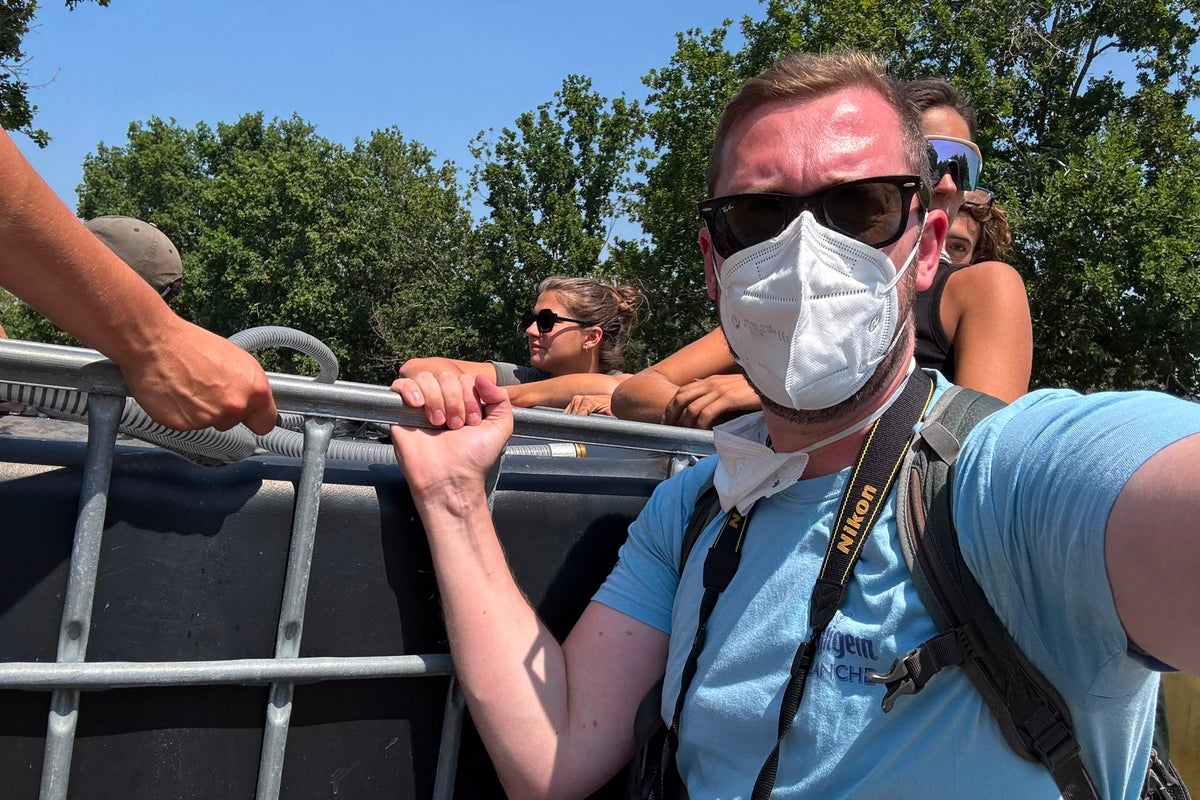
The heat hits you first. It is not just a temperature reading on a weather app. It is a physical weight that pushes against your chest. I stood at the edge of a forest in the Gironde region during the peak of a summer firestorm. The sky turned an eerie, bruised purple. The air tasted like scorched pine and history. You hear people talk about wildfires in the news, but standing there, watching an entire ecosystem vanish in minutes, is a different beast entirely. It ruins your romanticized view of nature.
Most reports focus on the statistics. They list the hectares burned or the number of emergency personnel deployed. Those numbers matter, but they miss the soul of the experience. They miss the sheer, chaotic logistics of a volunteer fire brigade trying to hold a line against a moving wall of flame that seems to have a mind of its own. Also making waves in this space: Why the New Iraq and Turkey Energy Deal Changes Everything for Middle East Trade.
The reality of the fire line
You have to understand how these fires behave. They do not just burn; they hunt. In the pine forests of southwestern France, the soil is often sandy and the trees are packed tight. This creates a tinderbox. When a fire starts, it doesn't just crawl along the ground. It climbs the trunks. It crowns. The canopy catches, and then the wind takes control.
I worked alongside local firefighters who had spent decades in these woods. They don't panic. Panic is a luxury you cannot afford when the radiant heat is enough to melt gear. They move with a rhythm born of repetitive, brutal necessity. You aren't just fighting fire with water. You are fighting it with geometry. You dig firebreaks. You backburn to starve the beast of fuel. It is manual labor performed in full protective gear while the world around you is turning into charcoal. Additional insights into this topic are detailed by Associated Press.
Most observers think planes and helicopters do all the work. They are the heroes of the evening news, dropping red dye and water from the sky. But ground crews are the ones who actually win the fight. Without a team on the ground to mop up hot spots and secure the perimeter, a fire will just reignite the moment the sun gets hot again.
Why climate shifts change the game
France is dealing with a new reality. The forest fire season used to be a predictable window. Now, it is a looming threat that can strike as early as spring. Rising temperatures and prolonged droughts have made the vegetation more flammable than ever. We are seeing fire behaviors that even veteran foresters find hard to predict.
The strategy has shifted. It is no longer just about suppression. It is about landscape management. You cannot simply build a wall of trucks and expect to win. You have to look at the monoculture pine forests that have defined this region for generations. When you plant one type of tree in perfect rows, you are essentially building a highway for fire.
Forestry experts in the EU are starting to push for mixed-species forests. Broadleaf trees like oaks are much more resistant to fire than resin-heavy pines. They act as natural buffers. This isn't just an aesthetic choice. It is a survival tactic. If you want to protect your home or your region from the next wave of fires, you have to support policies that prioritize biodiversity over timber yield.
The unseen toll on communities
Living through a wildfire threat isn't just about the physical danger. It is the psychological strain. You watch your neighbors pack their cars. You see the stress in the eyes of the elderly who remember the fires of the past. There is a sense of helplessness that sets in when the wind changes direction.
I remember talking to a local vineyard owner. Her fields were miles away from the active front, yet she spent three days with her hoses out, soaking the perimeter of her property just in case an ember drifted over. This is the new norm. It is a constant, low-level hum of anxiety that lasts for months.
If you are visiting or living in fire-prone regions, you need a plan. Don't assume the authorities will reach you in time if the roads become blocked. Keep your bags packed. Know your evacuation routes. Most importantly, keep your property clear of dry brush. The defensible space around your home is the difference between a total loss and a manageable event.
Actionable steps for the concerned
You might feel small when faced with a disaster of this scale. You aren't. There are ways to contribute to the fight before the flames actually start.
First, get involved with local prevention groups. Many French communes have associations that focus on clearing undergrowth. This is dirty, thankless work, but it is the most effective way to stop a fire from becoming a catastrophe. If you own land, treat it like a hazard. Clear the lower branches of your trees. Remove dead wood.
Second, pay attention to the fire risk maps. During the summer months, these maps dictate what you can and cannot do in the forest. Obeying them isn't just about avoiding a fine. It is about not being the person who triggers a blaze because they wanted to have a barbecue in the woods during a level-four drought alert.
Third, support organizations that train and equip volunteer firefighters. They are the backbone of the response. Many of these local units are chronically underfunded and rely on outdated equipment. Your support helps them get the breathing apparatus and heat-resistant clothing they desperately need.
The experience of fighting a wildfire stays with you. You walk away with a different appreciation for the resilience of nature and the fragility of our own structures. It is a brutal lesson, but one we need to learn if we are going to survive the changing seasons. The smoke eventually clears, but the scorched earth remains as a reminder that we are only ever one dry summer away from an extraordinary challenge.