The sea does not care about inches. It does not care about plastic, aluminum, or the proprietary rights of an eighty-two-year-old man who simply wanted a cushion between his bones and the scorching wooden slats of a beach lounger.
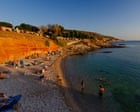
On a stretch of sand in Chalkidiki, under a Greek sun that had beaten down on generations of disputes over shade and salt water, a life ended over thirty square centimeters of canvas. Recently making waves in this space: Why Trump Wants His Proposed 250-Foot Arch to House Drones and Snipers.
We measure civilization by our monuments, our poetry, our legal codes carved into stone. Yet beneath the high-minded architecture of modern tourism, a primal geometry persists. Give two strangers limited access to comfort, a bounded horizon, and the scorching midday heat, and civilization begins to peel away like wet paper.
Consider what happens next. Not in the courtroom, where lawyers will parse testimonies, or in the police reports that reduce a tragedy to a case file of accidental homicide and municipal negligence. Consider it on the shore. Additional insights regarding the matter are explored by Associated Press.
The sand is hot enough to blister the soles of your feet. The air smells of salt, sunscreen, and dry pine needles drifting from the cliffs above. For decades, the ritual of the beach has been framed as an escape from the machinery of daily life. We go to the water to dissolve our anxieties. But the modern coastline has been parcelled, rented, bartered, and enclosed. Every square foot of sand comes with a price tag or an unwritten hierarchy.
The eighty-two-year-old man, whose name dissolves behind the cold anonymity of police blotters, had secured his spot. To him, that lounger was not a piece of resort furniture. It was a temporary citadel. It was a claim to dignity in a world where aging often strips people of their territory.
Then came the intrusion.
An altercation over a sunlounger sounds trivial. In the safety of our air-conditioned rooms, reading headlines on glowing screens, we chuckle at the absurdity. People fighting over beach chairs. It sounds like a satire of contemporary excess. But human violence rarely erupts over abstract ideals. It erupts over proximity. It erupts when two bodies occupy the exact same space of desire and neither is willing to yield.
The argument was sharp. Words traded in the salt-heavy air. Shoving followed. A loss of balance. The hard impact of a skull against the earth—or perhaps simply the overwhelming surge of adrenaline in an octogenarian heart that had endured eight decades of winters, only to give out over a dispute for a rented cushion.
By the time the ambulance arrived, siren wailing against the cicadas, the sunlounger was empty. Someone else would rent it an hour later. The blood in the sand would be washed away by the tide.
This is the hidden cost of our crowded paradises.
We have turned the earth’s most restorative landscapes into theme parks of scarcity. Every beach is managed, zoned, and monetized. When you rent a lounger on a Greek island or a mainland coast, you are not just buying foam and canvas; you are buying a temporary exemption from the chaos of the crowd. You are buying a small island of personal sovereignty.
When that sovereignty is challenged, the illusion breaks.
I remember standing on a crowded Mediterranean beach a few summers ago, watching two families nearly come to blows over the shadow cast by a palm tree. It seemed ridiculous until I looked closer. It wasn't about the shade. It was about the exhaustion of living in a world where every inch of space is contested. We are packed so tightly into our leisure that we bring our urban claustrophobia right down to the foam-kissed shore.
The Greek police investigated, as they must. Arrests were made. Charges of fatal bodily harm floated through the local courts. But no legal verdict can answer the deeper question hanging over the Aegean.
How did we reach a point where a day of rest could end in an obituary?
The answer lies in our collective refusal to acknowledge our own limits. We demand endless expansion, endless tourism, endless extraction of joy from landscapes that can only hold so much weight. We crowd the shores. We stake our claims with towels, umbrellas, and plastic tokens. We treat peace as a commodity to be defended with our fists.
The old man didn't wake up that morning expecting to die for a piece of furniture. He went to the sea for the same reason we all do: to feel small in the presence of something vast and ancient.
Instead, he was caught in the narrowest expression of human smallness.
The waves continue to roll against the shore, indifferent to the police tape, the grief of a family, and the absurdity of our territorial ambitions. They wash over the sand, erasing every footprint, every argument, every desperate claim to a patch of shade, leaving behind only the flat, clean mirror of the horizon.