The asphalt does not remember the screaming. It only holds the skid marks, faint scars fading beneath the relentless California sun, etched into the surface of Ventura County like a bad memory refusing to leave.
Numbers on a legal document never quite capture the violence of physics. One hundred and twenty-four miles per hour. Let that settle into your bones for a moment. At that speed, a vehicle travels more than one hundred and eighty feet every single second. Decisions are no longer conscious thoughts; they are reflex sparks racing down a spinal cord, too slow for the reality unfolding ahead. If you liked this post, you might want to read: this related article.
A prison sentence was handed down. Years behind bars, iron bars cutting the sky into narrow, hopeless slices. The courts call it justice. The families call it an echo chamber of grief. But long before the judge struck the gavel, long before the sirens fractured the midnight air, a different kind of sentence was already being served.
Speed is an addiction disguised as freedom. For another perspective on this development, check out the recent update from The Washington Post.
Think back to the last time you felt the needle creep past the limit. The road opened up, the hum of the tires shifted to a higher pitch, and for a fleeting instant, the world outside your windows blurred into a safe, manageable abstraction. Problems shrank. Responsibilities dissolved. That is the seductive whisper of the accelerator. It tells you that you are faster than consequence. It tells you that time can be beaten, outrun, and left bleeding in the rearview mirror.
Until it cannot.
On that stretch of Ventura pavement, two lives vanished in the blink of an eye. Two people who woke up that morning with plans, arguments, half-drunk coffees, and ordinary tomorrows. They became statistics in a police blotter. Preventable tragedy. Bureaucratic words trying to bottle up an ocean of devastation.
We talk endlessly about reckless driving as if it were a weather event, an act of God descending uninvited upon the highway. It is not. It is a choice multiplied by horsepower. Modern engineering gives us machines capable of flight-level velocities while wrapped in a false cocoon of climate-controlled safety. Airbags, traction control, anti-lock brakes—they whisper lies to our survival instincts. They convince us that we are invincible.
We are not.
When a driver chooses to push a car to one hundred and twenty-four miles per hour on a public road, they are casting a vote against everyone else sharing that space. They are gambling with lives that did not buy a ticket for the ride.
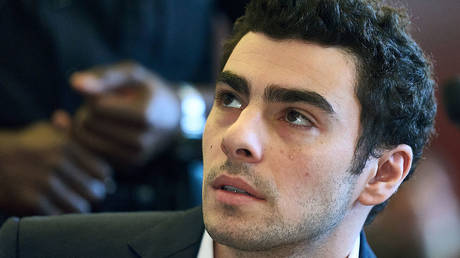
The courtroom was quiet when the sentence was read. No outburst. Just the heavy, suffocating weight of finality. A young driver, whose own life is now fundamentally broken, stood in an orange jumpsuit. The contrast between the sheer, unbridled stupidity of that single night and the agonizingly slow decades of imprisonment is a chasm too wide to bridge.
Consider what happens next for the families left standing in the wreckage. There is no parole for their grief. Birthdays arrive like hollow ghosts. Empty chairs at holiday tables shout louder than any prosecutor ever could. The driver goes to a cell, yes, but the survivors live in a permanent winter.
We need to stop treating vehicular slaughter as an accident. Accidents imply unpredictability, a falling tree, a sudden patch of black ice, a mechanical failure born of random entropy. This was not random. This was a deliberate surrender to the thrill of excess, fueled by the dangerous arrogance of youth and the terrifying disconnect between pressing a pedal and ending a lineage.
The road outside Ventura is quiet now. Cars pass by every day, drivers glancing down at their dashboards, accelerating, slowing, living. Most will reach their destinations. Most will complain about traffic or the price of gas.
Somewhere beneath the surface of those mundane routines, however, the ghosts of that double-fatal crash remain. They whisper a warning to anyone willing to listen. Speed does not set you free. It only brings you closer to the end, much faster than you ever intended to arrive.