The Weight of a Single Grain
Hold a plain wedding band in the palm of your hand. Feel the cool density of it. Gold is oddly heavy, almost unnaturally so, carrying a quiet stillness that makes human beings want to possess it.
Now, imagine where that metal was six months ago.
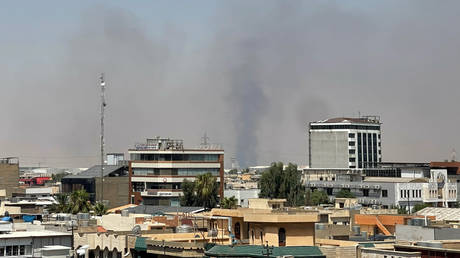
It might have come from a licensed mine in Nevada, carved out with environmental permits and heavy machinery. Or it might have come from a muddy pit gouged into the deep green canopy of the Amazon rainforest, carved out with high-pressure hoses, toxic mercury, and machine guns.
Once gold is melted into a bar, it looks identical. Gold is gold. Element 79 on the periodic table. Clean, untraceable, and blind to its own past.
For decades, that blindness was a criminal superpower. An illegal wildcat miner in the Brazilian state of Pará could tear down ancient trees, poison a river, force local indigenous families from their homes, and dig up a handful of yellow dust. By the time that dust crossed two borders and entered a refinery, a few forged papers transformed it into legitimate wealth. The blood was washed away by the simple act of melting.
Until now.
Inside a high-security laboratory in Brasília, federal scientists are reading stories written inside the metal itself. They have discovered that gold never forgets where it came from.
The Muddy Pit and the Silent River
To understand why this scientific breakthrough matters, you have to stand at the edge of the pit.
Picture a young man named Lucas. He is a hypothetical figure, but his story is repeated thousands of times across the northern Amazon. Lucas works in a illegal mining camp, a garimpo, carved illegally into Yanomami territory. The heat is thick enough to chew. The air smells of rotting leaves, diesel exhaust, and the sharp, chemical tang of elemental mercury.
Lucas stands waist-deep in brown water. He wields a high-pressure hose, blasting away riverbanks that took ten thousand years to form. The runoff flows over copper plates coated with liquid mercury. The mercury binds to tiny flecks of gold, forming a heavy amalgam.
Then comes the burn.
Lucas heats the mixture with a blowtorch. The mercury boils off into poisonous gray vapors that drift into the trees, settling into the riverways, entering the fish, and eventually causing neurological damage to children living fifty miles downstream. What remains in Lucas's iron crucible is a spongy, dull yellow nugget.
It looks crude. But in the global financial system, that crude yellow lump is liquid cash.
Lucas sells it to a local broker in a frontier town for a fraction of its market value. The broker blends it with gold from three other illegal sites, forged import documents, and ships it to an international market. By the time it reaches a showcase in Europe or North America, no purchaser can tell that this shiny object destroyed a river and poisoned a village.
Criminal networks built an empire on this anonymity. They realized that laundering gold is far easier than laundering narcotics. Cocaine is illegal everywhere. Gold is legal everywhere once it crosses the threshold of a refinery.
The entire global supply chain relied on trust. And trust was remarkably easy to buy.
The Chemical Map Written in Dirt
In 2023, Brazilian federal police officers stopped trying to catch every illegal digger in a jungle that covers two million square miles. You cannot patrol an ocean of trees with helicopter rides and raids alone. Cut down one illegal camp, and three more appear fifty miles deeper into the brush by the next full moon.
Instead, they decided to interrogate the metal.
Every gold deposit on Earth was forged billions of years ago under extreme heat and pressure. As the planet cooled, hydrothermal fluids seeped through fractures in the earth's crust, depositing gold atoms alongside minuscule amounts of other elements—silver, copper, lead, bismuth, palladium, and rare earth minerals.
No two rivers have the exact same chemical makeup. The geology of a riverbed in the Tapajós basin is distinct from the riverbed five hundred miles away in the territory of the Munduruku people.
Think of it as nature's soil fingerprint.
When an illegal miner collects gold from a riverbed, those trace impurities remain trapped inside the lattice of the metal. Even after the miner melts the gold into a crude bar, those invisible atomic passengers remain locked inside.
Brazilian scientists realized that if they could map the chemical signature of every legitimate and illegitimate mining region across the country, they would create an inescapable library of origin.
They call the initiative the Federal Police Gold Program, supported by a specialized database known as Ouro Guard.
How Science Breaks the Chain
How do you read an atomic signature?
It starts with a device no larger than a suit-case, or in more advanced setups, a massive mass spectrometer housed in a climate-controlled room.
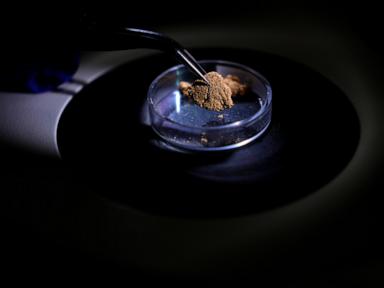
When federal officers seize a suspect shipment of gold bars at an airfield in São Paulo, they no longer rely solely on paper invoices. They take a tiny sample—sometimes using a non-destructive laser that vaporizes a microscopic point on the bar's surface—and run it through mass spectrometry.
The machine ionizes the sample, stripping electrons from atoms and flinging them through a magnetic field.
The lighter elements bend sharply. The heavier elements resist.
Within minutes, a computer screen displays a precise chemical spectrum:
- Standard gold purity: 98.2%
- Silver content: 1.1%
- Trace elements: Lead isotope ratios matching pre-Cambrian granite formations.
- Chemical marker match: Upper Uraricoera River basin.
The paperwork provided by the exporter might claim the gold was mined legally from a commercial site three states away. But the physical atoms inside the bar tell a completely different story.
The bar itself confesses.
It says: I was dug from an illegal trench inside a protected indigenous reserve three weeks ago.
[Seized Gold Bar] ──► Laser Ablation ──► Mass Spectrometer Analysis ──► Isotopic / Chemical Profile ──► Cross-Referenced with 'Ouro Guard' Database ──► Exact Geographic Origin Confirmed
This simple shift changes the entire legal equation.
In the past, prosecutors had to track financial records, trace shell companies through offshore havens, and prove that a specific individual knew the gold was stolen. Defense attorneys could easily claim their clients were unwitting buyers who purchased metal in good faith.
Now, the physical evidence is indisputable. You cannot bribe an isotope ratio. You cannot forge an atomic weight.
The Human Stakes Behind the Data
It is easy to get lost in the technical mechanics of spectrometry and geological mapping. But the real urgency of this work is measured in human heartbeats.
Consider what happens to an Amazonian river when illegal gold mining takes root.
Mercury is a insidious toxin. It does not disappear. When wildcat miners burn mercury amalgams, the element enters the atmosphere and falls back down in rain. It collects in the sediment of calm river bays. Bacteria convert it into methylmercury, a form easily absorbed by living organisms.
Small fish eat the bacteria. Bigger fish eat the small fish.
The indigenous communities who have lived along these rivers for centuries rely on fish as their primary source of protein. They do not see the poison. Mercury has no taste, no color, no smell.
Over months and years, the poison accumulates in human tissue. Pregnant mothers pass it to their unborn children. Elders develop tremors, vision loss, and cognitive decline. Whole communities suffer from a mysterious fatigue they cannot shake.
When scientists test hair samples from villages along contaminated rivers, they often find mercury levels ten times higher than the safety limit established by global health organizations.
This environmental destruction is not an accident. It is the direct consequence of an untraceable supply chain that incentivizes illegal extraction.
When we buy jewelry or invest in gold bullion without knowing its source, we are unwittingly participating in this silent crisis. The forensic science being developed in Brasília is not just an academic exercise. It is a shield designed to protect vulnerable communities from disappearing off the map.
The Catch-22 of Global Refineries
There is a catch. Science can identify where gold came from, but science cannot force international markets to care unless the law compels them to.
Gold laundering is a global business. Once an illegal bar leaves South America, it often travels through intermediary nations with lax regulatory standards. It gets mixed with scrap metal, remelted, and assigned a brand-new certificate of origin.
By the time it arrives at major gold trading hubs, it has been mixed so many times that its original chemical signature becomes a complex soup.
If you mix gold from three legal mines with gold from two illegal pits, the trace element profile becomes difficult to interpret. The criminal networks know this. They are already adapting, creating multi-origin blends specifically designed to confuse forensic databases.
This creates a cat-and-mouse game between law enforcement scientists and organized crime syndicates.
To win, Brazilian authorities are working to expand their database internationally. They are sharing geological profiles with international law enforcement agencies and urging global refineries to adopt strict forensic testing before accepting raw bullion.
The goal is simple: make untested gold unmarketable.
If a major bank or jeweler knows that buying an unverified bar carries the risk of a high-profile criminal seizure, the market for laundered gold collapses. The financial incentive to destroy the rainforest vanishes.
What Lies Beneath the Surface
We like to think of our modern world as clean, digital, and abstract. We buy stocks with a tap on a glass screen. We wear polished rings that shine under soft store lights. We store value in vault gold that we never touch.
Yet behind that smooth surface sits a raw, physical reality anchored in earth, mud, and water.
The story of Brazilian gold forensics is a reminder that everything we consume comes from somewhere. Every object carries a history, written in the indelible language of physics and chemistry.
The next time you look at a piece of gold jewelry, look beyond the shine. Consider the long, complex journey that brought those atoms to your finger.
The mud has a memory. And for the first time in history, we finally have the tools to listen.