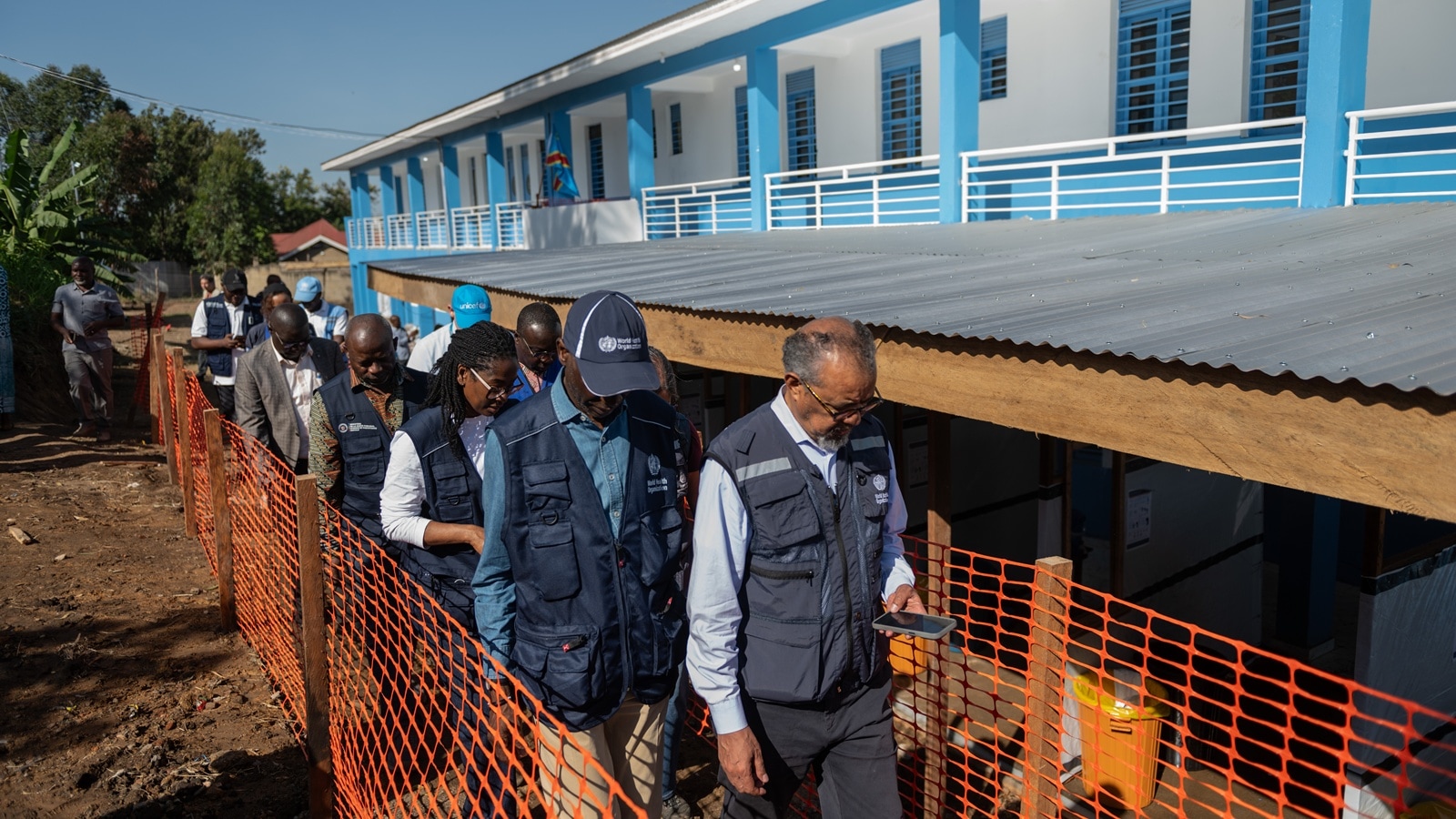
The air inside a biosecurity suit is thick, recycled, and smells faintly of bleach. Through the fogged plastic of a face shield, the world in the Democratic Republic of the Congo doesn’t look like a map of infection rates or a logistical challenge for the World Health Organization. It looks like eyes. Wide, terrified eyes staring back from behind the orange plastic fencing of a treatment center.
For weeks, the narrative out of the Beni region has been one of grim arithmetic. We count the dead. We count the days since the last contact. We count the milliliters of experimental vaccine remaining in the cold chain. but numbers are a poor shield against a virus that liquefies the internal architecture of the human body. Ebola is not just a disease; it is a social predator. It uses our most basic instincts—the urge to hold a dying child, the duty to wash a parent’s body, the need to comfort the grieving—as its primary mode of transport.
Then, the rhythm changed.
The heavy zip of a body bag is a sound that stays with you. It is final. It is the sound of a losing streak. But last week, a different sound echoed through the sterile corridors of the newly minted treatment facility in the eastern DRC. It was the sound of clapping.
Five people walked out.
They did not leave in bags. They did not leave under the cover of night. They walked through the "hot zone" exit, underwent the final, stinging spray of chlorine, and stepped back into the sunlight of a world that had already begun to mourn them. To understand the weight of these five survivors, you have to understand the specific, suffocating terror of the "EVD" label. In many villages, being taken to a treatment center is seen as a death sentence—a one-way trip to a place where masked strangers take you away from your ancestors.
These five individuals are now the most powerful weapons in the arsenal of the WHO. They are living, breathing proof that the red zone is not a tomb.
The Architecture of Hope
The opening of a new treatment center is usually reported as a line item in a bureaucratic ledger. "Capacity increased by X beds." "Logistics stabilized in sector Y." This clinical language masks the visceral reality of what it takes to build a fortress against a microscopic killer in the middle of a conflict zone.
Imagine trying to construct a high-tech medical clean room while the ground beneath you is contested by armed groups and the community looks at your thermometers with deep-seated suspicion. You aren't just fighting a virus; you are fighting the very concept of "The Outsider."
Dr. Tedros Adhanom Ghebreyesus, the man at the helm of the global response, knows that a building is just plywood and plastic until it produces a survivor. The new center in the Congo isn't just about bed space. It is a psychological bridge. By moving treatment closer to the heart of the outbreak, the response team is attempting to shorten the distance between the first fever and the first dose of help.
Speed is the only thing Ebola respects.
When a patient stays home, the virus spreads through the household like a wildfire in a library. By the time the symptoms become undeniable, the "invisible stakes" have already been lost. The new facility is designed to change that math. It offers a promise: if you come to us early, you might be the one hearing the clapping.
The Biology of the Breakthrough
We often treat medical recovery as a stroke of luck or a divine intervention. In reality, it is a brutal, calculated war fought at the cellular level. When we talk about these five recoveries, we are talking about the success of a protocol that is finally catching up to the virus's head start.
The treatment of Ebola has transitioned from "palliative care"—essentially keeping a person comfortable while they die—to active intervention. The use of monoclonal antibodies and high-grade rehydration therapy has flipped the script. Consider the way a virus operates: it hijacks your cells to build a private army. The new treatments act like a specialized police force, identifying the invaders and neutralizing them before they can trigger the catastrophic organ failure that characterizes the final stages of the disease.
But the medicine only works if the patient is there to receive it.
This is where the human element eclipses the scientific one. A mother in a rural village doesn't care about the molecular structure of an antibody. She cares if her neighbor's son came back from the tent. Trust is the lubricant that allows the gears of medicine to turn. Without it, the most "robust" (to use a word the bureaucrats love) medical intervention is just expensive equipment gathering dust in a field.
The Shadow of the Forest
There is a specific kind of silence that falls over a region gripped by an outbreak. It is the silence of stopped commerce, of closed schools, and of families sitting in rooms, wondering if the headache they woke up with is just a headache.
The Congo is a land of immense beauty and staggering complexity. To the world, it is often just a backdrop for tragedy. But for those on the ground, the stakes are deeply personal. The "five recoveries" aren't just data points for a WHO press release; they are five empty chairs at dinner tables that will now be filled. They are five people who can now tell their neighbors, "I was there. I saw the masks. I felt the needles. And I am still here."
This is how you break the back of an epidemic. You don't do it with posters or radio broadcasts alone. You do it with the physical presence of the survivors. They are the only ones who can truly debunk the rumors that the treatment centers are places of organ harvesting or dark magic. Their skin, once hot with fever, is now cool. Their eyes, once bloodshot and failing, now see the faces of their children.
The Cost of the Long Game
The WHO chief’s report comes at a time when global attention is fractured. We have grown weary of "crisis." We want to look away from the images of people in yellow hazmat suits. But the virus does not experience fatigue. It does not get bored with the news cycle. It simply waits for a gap in the fence.
The opening of this treatment center is an admission that the fight is far from over. It is a commitment to the "long game." We are investing millions of dollars and thousands of man-hours into a strip of land in the Congo because we have learned, painfully, that a fire in one house eventually threatens the entire neighborhood.
The logistical nightmare of maintaining a "cold chain" for vaccines in a tropical climate, where electricity is a luxury and roads are often impassable, is a feat of human will that borders on the miraculous. Every vial of medicine that reaches the center has traveled a path of extreme peril. It has been flown, trucked, and perhaps even carried on foot through territory where the sound of gunfire is more common than the hum of a refrigerator.
The Echo of the Exit
Success in the DRC is measured in increments. Five lives. One new building. A few more days without a reported case.
It is easy to be cynical about international health organizations. It is easy to see the press releases as a way to "foster" a sense of progress that may feel fleeting. But if you were one of those five, the perspective changes.
The moment they stepped out of the center, they became more than just former patients. They became symbols. In a region where death has been the primary narrator for too long, they are the new authors. They represent the moment where the momentum shifted.
The invisible stakes are the lives of the thousands who haven't been infected yet. By proving that survival is possible, the WHO isn't just treating a disease; they are treating a culture of fear. They are replacing the "one-way trip" narrative with a story of return.
There is a photograph of a survivor leaving a center—not necessarily one of these five, but one that captures the essence of the moment. The person is standing at the gate. They are wearing a new set of clothes because their old ones had to be burned. They look thin, a bit shaky, but their head is up. Behind them, the staff in their sweat-soaked suits are waving.
It is a small victory in a massive, sprawling war.
But for those five families, it is the only victory that matters. The virus tried to erase them, to turn them into statistics, to make them part of the "grim arithmetic." It failed. They are going home. They will sleep in their own beds tonight, far from the smell of bleach and the fogged plastic of the masks, carrying the heavy, beautiful burden of being the ones who made it out.