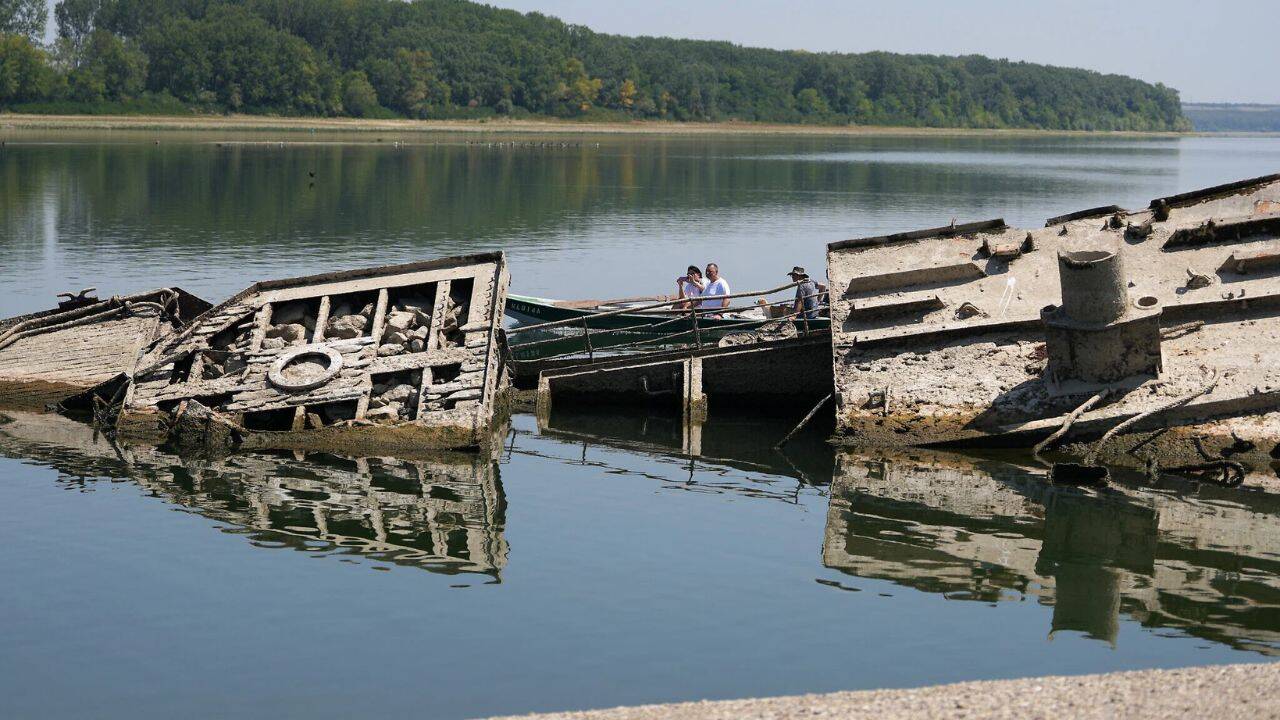
The mud does not care about your wars. It swallows iron, chokes engines, and seals steel tombs in a slow, suffocating embrace of silt. For eighty years, that mud held a secret.
Picture a river that changes color with the mood of the sky, sweeping past sleepy European towns, carrying the quiet ghosts of empires. The Danube. To anyone standing on its banks today, watching tourist barges drift by under a pale sun, it looks like a monument to peace. But water has a long memory.
In the late summer of 1944, the river was something else entirely. It was a watery highway of retreat, a liquid panic room for a collapsing regime.
Consider what happens when an army realizes the end has arrived. They do not march home with flags flying; they destroy, they abandon, and they hide. Operation Donaueschingen was not a glorious naval maneuver. It was a desperate scuttle. Scores of Nazi warships, part of the formidable Nazi Black Sea fleet, found themselves trapped. The Soviet advance was a tightening iron fist. Ahead lay blocked waters, partisan fire, and certain destruction.
So, the commanders gave the order. Open the sea-cocks. Drop the explosives. Let the river take them.
More than two hundred vessels slipped beneath the surface near Prahovo, in modern-day Serbia. They did not sink because of an epic battle. They sank because their own creators decided that if they could not rule the waters, no one would. They went down with heavy armaments, locked ammunition lockers, and decks scarred by shrapnel.
Then came the silence.
Decades passed. Governments rose and fell. The iron hulls rusted in the dark, becoming part of the riverbed itself. Fishermen occasionally snagged their nets on jagged steel teeth, cursing the unseen obstacle without knowing its name. The ships became local lore, whispered about by old men over bitter coffee, dismissed by the young as ghost stories.
Until the summer of 2022.
Nature is an uncompromising archivist. A historic drought gripped Europe. Water levels in the Danube plummeted to depths not seen in nearly a century. The river shrank, exposing sandbars, ancient roots, and something else.
Spine-chilling shapes broke the surface.
Suddenly, the ghost fleet was awake. Turrets jutted out of the shallow water like skeletal fingers pointing at the sky. Hulls once buried under meters of dark water and suffocating sediment stood exposed to the open air, weeping rust.
Standing on the shore, watching those metal carcasses emerge, you feel a profound sense of vertigo. History is not a book on a shelf. It is a physical weight sitting right beneath our feet, waiting for the right moment to surface.
The immediate reaction was a mix of awe and terror. These were not harmless museum pieces. They were loaded time capsules.
(Note: When historical experts assess wrecks of this scale, they rely on standardized marine archaeology protocols, though the sheer density of live ordnance here transformed a standard recovery mission into a high-stakes hazard.)
Buried inside those sunken hulls lay thousands of unexploded shells, torpedoes, and mines. For eighty years, they had been sitting in the dark, chemically unstable, corroding from the inside out. Every summer beachgoer, every cargo captain navigating the channel, had been floating right over a submerged minefield.
The economics of the river ground to a halt. The Danube is a vital commercial artery, carrying everything from grain to industrial machinery through the heart of the continent. When the wrecks emerged, they did more than reveal history; they choked the channel. The navigable width of the river narrowed to a treacherous bottleneck. Ships queued for miles, burning fuel they could ill afford, waiting for a path through the graveyard.
Serbia faced an impossible choice. How do you dismantle a floating arsenal when every cut of the torch could trigger a blast that would shatter nearby towns?
Experts had to move with agonizing slowness. Divers descended into the murky, zero-visibility water, feeling their way along steel plates that had not been touched since the final days of the Second World War. They used remote-controlled robotics to map the internal chambers, identifying where the explosives slumbered. It was an operation requiring the steady hands of bomb disposal technicians who knew that a single miscalculation would be their last.
Why does this matter now?
Because the past is never truly dead. We build our modern lives over the ruins of old catastrophes, pretending the foundations are solid. We pave over battlefields, we dredge rivers for commerce, and we assume that time washes away all sins.
The Danube proved us wrong.
When the metal hulls broke the waterline, they did not just show us rusted German armor. They showed us the enduring cost of human conflict. Wars do not end when the treaties are signed. They linger in the soil, in the water, and in the rusted machinery left behind by men who thought they could hide their defeat from history.
The removal of the Prahovo wrecks is ongoing, a painstaking, multi-million-dollar extraction of iron and hazard. Piece by piece, the river is being cleared. The bottleneck is widening. The cargo ships are moving again.
Yet, as the last of those steel skeletons are hoisted into the light and cut away, something fundamental has shifted. Anyone who looks out over the blue waters of the Danube will never see it the same way again. Beneath the shimmering surface, past the reflection of the clouds and the lazy drift of modern travel, lies a reminder that we walk among ghosts, and the earth always keeps the receipts.