The Sensationalist Trap
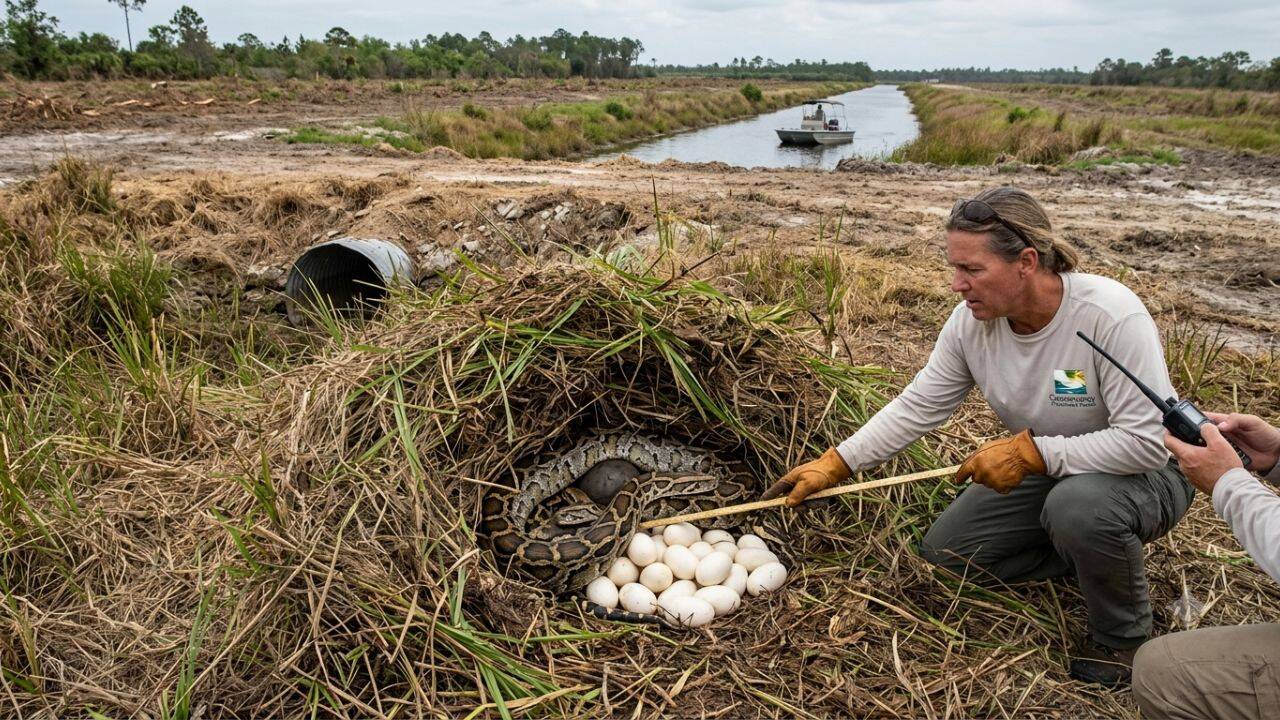
The headline machine is screaming again. Florida wildlife officials confirmed a Burmese python breeding population north of the Everglades, and predictable panic ensued. Cable news anchors talk about giant slithering monsters invading suburban backyards like a B-grade horror film.
It makes for fantastic television. It generates millions in clickbait ad revenue. It is also an absolute masterclass in missing the point.
The media wants you to believe that if we just hire enough bounty hunters, buy enough thermal drones, or run enough annual hunts, we can stop the spread. That is a fantasy. The obsession with python eradication is not an environmental strategy; it is a public relations campaign designed to appease a fearful public while ignoring the systemic ruin of Florida's ecosystems.
The Cold Logic of Invasives
Let us talk about population mechanics. When an invasive apex predator establishes a breeding population across thousands of square miles of untamed marshland, total eradication becomes biologically impossible.
I have spent years tracking how public funds get poured into environmental resource management. Time after time, agencies dump tens of millions into flashy eradication shows because dead snakes make great photo opportunities. Meanwhile, the actual mechanics of ecosystem management get quietly buried.
To understand why the panic outside the Everglades is misplaced, you have to look at the math.
- Detection Rates: In dense sub-tropical vegetation, the probability of detecting a python on any given pass is under 1%.
- Reproductive Capacity: A single female can lay between 50 and 100 eggs per clutch.
- Removal Capacity: Human hunting efforts, even with state incentives, remove a microscopic fraction of the total population every year.
You cannot hunt your way out of an exponential math problem. Trapping a few hundred snakes a year outside the Everglades feels like progress, but ecologically speaking, it is rounding error.
What the Headlines Aren't Telling You
Why is the python spreading north in the first place? The alarmist view claims the snakes are adapting to colder weather and marching upward to conquer the American South.
That theory collapses under scrutiny.
The python’s migration is not a story of predator dominance. It is a story of habitat collapse.
[Altered Water Flow & Urban Sprawl]
       │
       ▼
[Degraded Native Ecosystems]
       │
       ▼
[Python Expansion into Vulnerable Corridors]
Decades of draining wetlands, diverting natural water flows, and overdeveloping central Florida destroyed the resilience of native ecosystems. Pythons are not invading healthy, pristine habitats; they are occupying ecological voids created by human engineering.
We built golf courses, housing developments, and concrete drainage canals. We altered the hydrology of the state so severely that native fauna could no longer compete. The python is simply the symptom. Overdevelopment is the disease.
The Real Winner of the Python Panic
Follow the money. Public outrage demands action, and action requires budget allocations.
Annual python hunts and high-tech tracking initiatives receive millions in state funding. They draw international media coverage and paint government agencies as heroic defenders of the wilderness.
Meanwhile, addressing the real threats requires standing up to industrial agriculture, stopping real estate developers from paving over wetlands, and spending billions on true hydrological restoration.
- Paving over wetlands: Highly profitable.
- Restricting agricultural runoff: Politically dangerous.
- Paying contractors to wrestle snakes on camera: Cheap, popular, and politically risk-free.
The python panic provides perfect cover for policy inaction. Every minute spent debating python expansion north of Lake Okeechobee is a minute not spent discussing toxic algae blooms, vanishing aquifers, and the destruction of critical buffer zones.
Dismantling the Myths
Are Pythons Going to Wipe Out All Wildlife in North America?
No. Pythons are tropical reptiles. Physiological limits exist. A single hard freeze in South Florida drastically reduces python numbers, as demonstrated during the severe cold snaps of the past. While climate shifts may alter these boundaries, thermal mechanics still dictate where these animals can survive long-term. They will not be setting up breeding colonies in Georgia or North Carolina.
Doesn't Every Snake Caught Help the Everglades?
Removing an individual predator stops that specific snake from eating local fauna today. But on a landscape level, it makes zero difference to the ecosystem's trajectory. Biological carrying capacity dictates that remaining individuals will simply experience less competition for resources, allowing survival rates of juveniles to rise.
Facing the Trade-Offs
Admitting that eradication is a pipe dream requires uncomfortable honesty.
If we accept that pythons are a permanent feature of Florida's novel ecosystem, our management priorities must shift dramatically.
Instead of burning capital on impossible eradication quests outside the Everglades, resources should be concentrated exclusively on defending high-value ecological sanctuaries. We must build physical barriers around critical breeding grounds for endangered bird species, invest in genetic control research, and focus ruthlessly on restoring historical water flows to give native species a fighting chance.
Restoration makes ecosystems resilient. Resilience keeps invaders from dominating.
Continuing to treat this issue as a military campaign against a single species ensures we lose the larger battle. Stop staring at the snake in the grass and start looking at the bulldozers behind it.