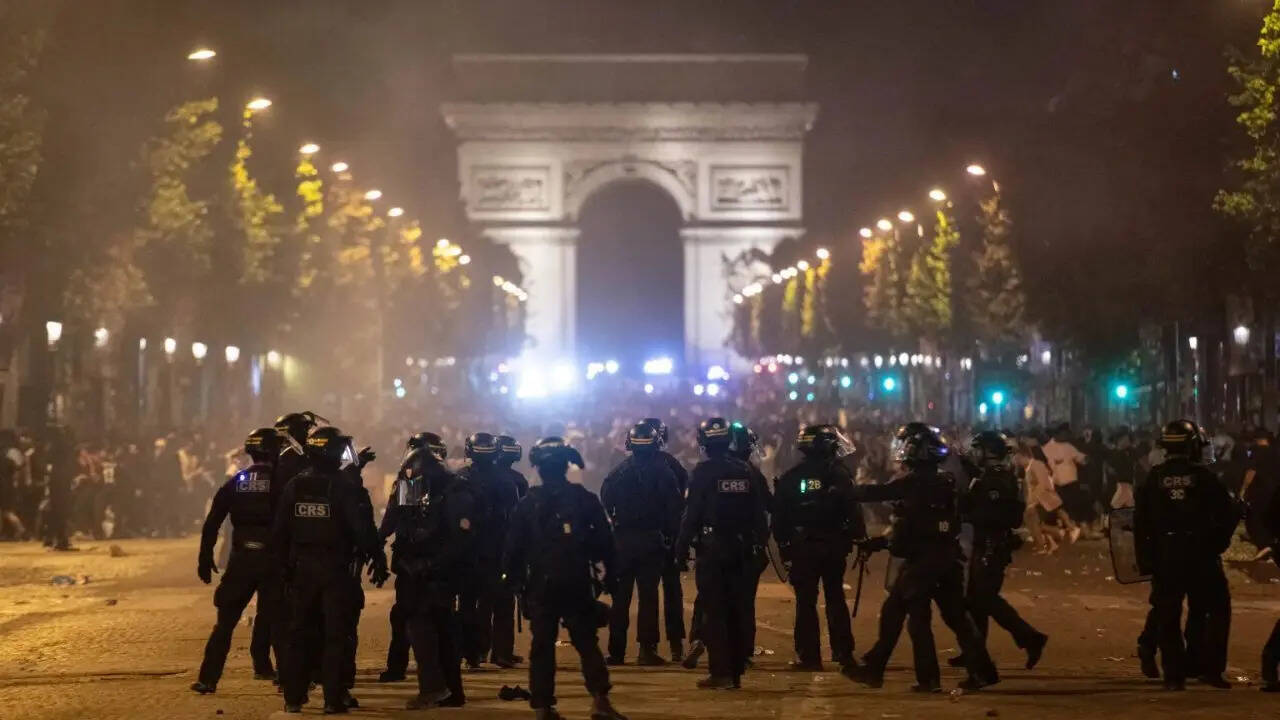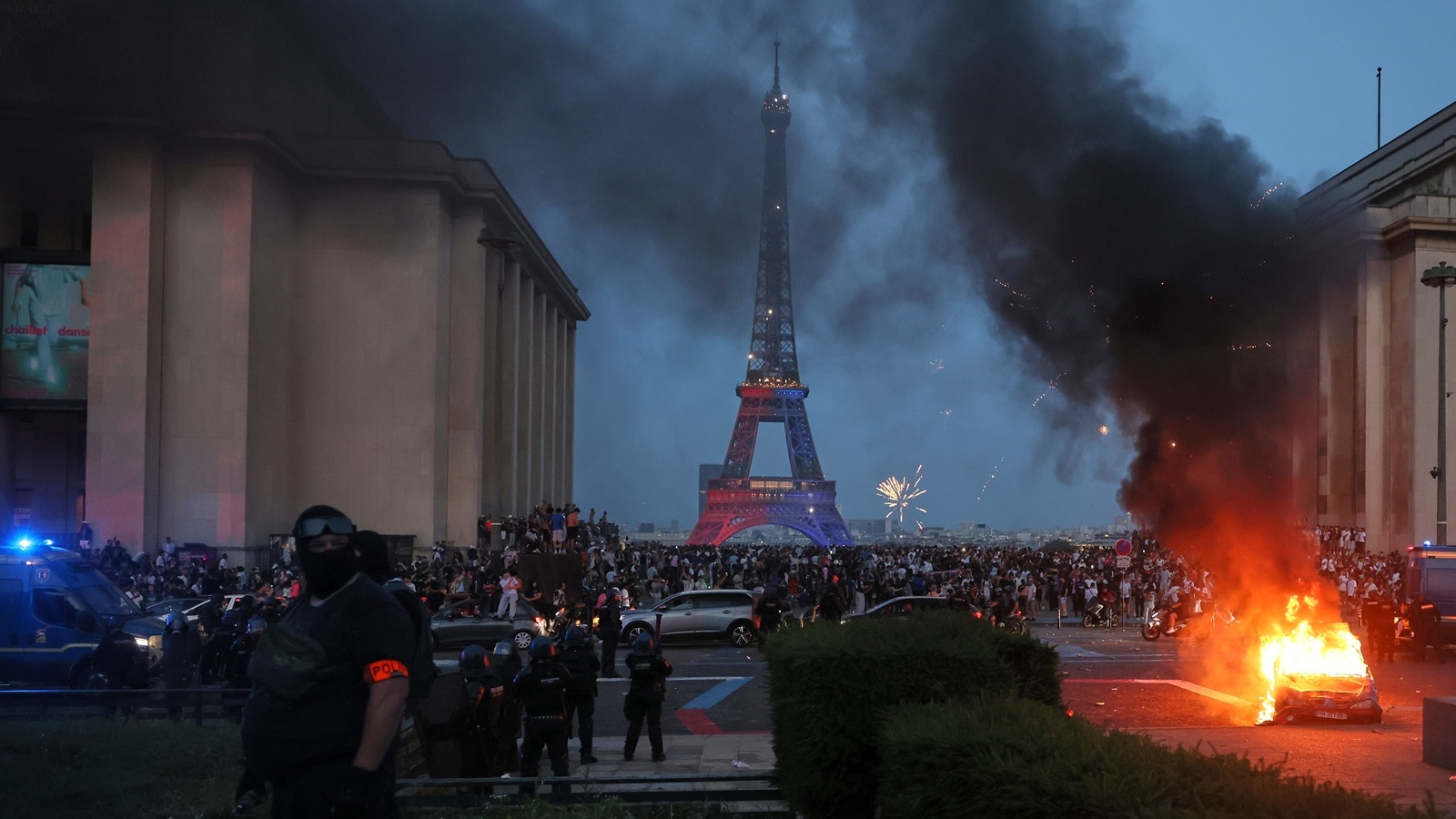
Winning Europe's biggest football trophy should be a moment of pure joy. Instead, parts of the French capital looked like a battle zone.
When the final whistle blew in Budapest, history was made. Paris Saint-Germain clinched their second consecutive Champions League title, defeating Arsenal in a heart-stopping penalty shootout. Gabriel missed his crucial spot-kick for the Gunners, sending PSG fans into a frenzy.
But what started as a jubilant outpouring of emotion quickly curdled into targeted violence. Tens of thousands of genuine supporters filled the streets to celebrate. Yet, a destructive minority used the football triumph as an excuse to clash with law enforcement, vandalize local businesses, and bring chaos to the city.
By the time the smoke cleared, French authorities reported that 416 people had been detained nationwide. A staggering 283 of those arrests took place right in the heart of Paris.
The Anatomy of a Paris Football Riot
You would think the city was prepared. Memories of last year's chaotic celebrations—where over 200 people were injured and 500 arrested after PSG’s inaugural Champions League title—were fresh in everyone's mind.
The French Interior Ministry deployed 22,000 police officers across the country. Eight thousand of them were stationed in Paris alone. Business owners along the famous Champs-Elysees had spent the afternoon boarding up windows, bracing for the worst.
It wasn't enough to stop the destruction.
Chaos on the Champs-Elysees
About 20,000 fans converged on the historic avenue near the Arc de Triomphe. Car horns blared, red and blue flares illuminated the night sky, and chants echoed through the streets. But within hours, isolated groups began smashing storefronts, setting fire to rubbish bins, and torching parked cars. Six vehicles were completely destroyed on the main thoroughfares.
Storming the Eighth Arrondissement
In one of the night’s most brazen escalations, a mob tried to storm a police station in the upscale 8th Arrondissement. Officers had to deploy tear gas to push back the crowd and secure the building.
The Blockade on the Peripherique
A group of rowdy individuals managed to briefly block traffic on the peripherique, the main ring road surrounding Paris. Standing in the middle of the highway, they set off industrial-grade fireworks and flares, bringing transit to a sudden halt before riot police moved in to clear them out.
Clashes at Parc des Princes
The tension wasn’t just in the city center. Outside PSG's home stadium, where thousands gathered to watch the game on giant screens, things boiled over. A group of roughly 150 people tried to force their way through one of the stadium gates. When police intervened, they were pelted with projectiles and fireworks.
Fringe groups even tried to build makeshift barricades across the streets using rental bicycles. Nearby businesses, including a local bakery and a restaurant, suffered extensive property damage before order was restored.
Why Football Success Spark Riots in France
Honestly, it is a pattern we see far too often, and it leaves many wondering why a sporting victory immediately triggers urban warfare.
Political figures wasted no time pointing fingers. Far-right leader Marine Le Pen took to social media, stating that "only in France does a football club's victory spark riots." While that statement ignores football hooliganism across Europe, it highlights a deep-seated frustration with how public order is maintained in the country.
Interior Minister Laurent Nunez defended the security apparatus, insisting that the 8,000 officers in Paris represented a solid system that successfully contained what could have been a much larger disaster. Still, seven police officers were injured during the skirmishes. Nunez labeled the violence as "absolutely unacceptable."
The reality is that these large-scale sporting events create a perfect storm for opportunists. When 20,000 people flood a single avenue, policing becomes incredibly difficult. It takes only a few dozen bad actors to turn a peaceful crowd into a volatile mob.
Staying Safe During Major Footy Events
If you plan to head into Paris—or any major European city—during a massive football celebration, you need a strategy to stay safe. Things turn south incredibly fast.
- Avoid the bottlenecks: The Champs-Elysees and the areas directly surrounding Parc des Princes are always the primary flashpoints. Stick to smaller fan zones or local pubs away from the main squares if you want to avoid the crowds.
- Watch the transport updates: During the unrest, authorities shut down multiple metro stations, tram lines, and bus routes without warning to stop crowds from mobilizing. Always check live RATP updates before you head out.
- Identify an exit route early: If you see people starting to light industrial fireworks or donning face masks, that’s your cue to leave. Don't wait for the tear gas to start flying.
Despite the ugly scenes overnight, the official club celebrations are still scheduled to move forward. PSG players are slated to take part in a massive victory parade near the Eiffel Tower, where up to 100,000 fans are expected to gather. Following the parade, the squad will be received by French President Emmanuel Macron at the Elysee Palace.
If you are planning to attend the parade, expect heavy security screenings, closed-off streets, and a massive police presence. Stick to the designated fan areas, keep an eye on local news alerts, and move away from the perimeter if the mood begins to shift.