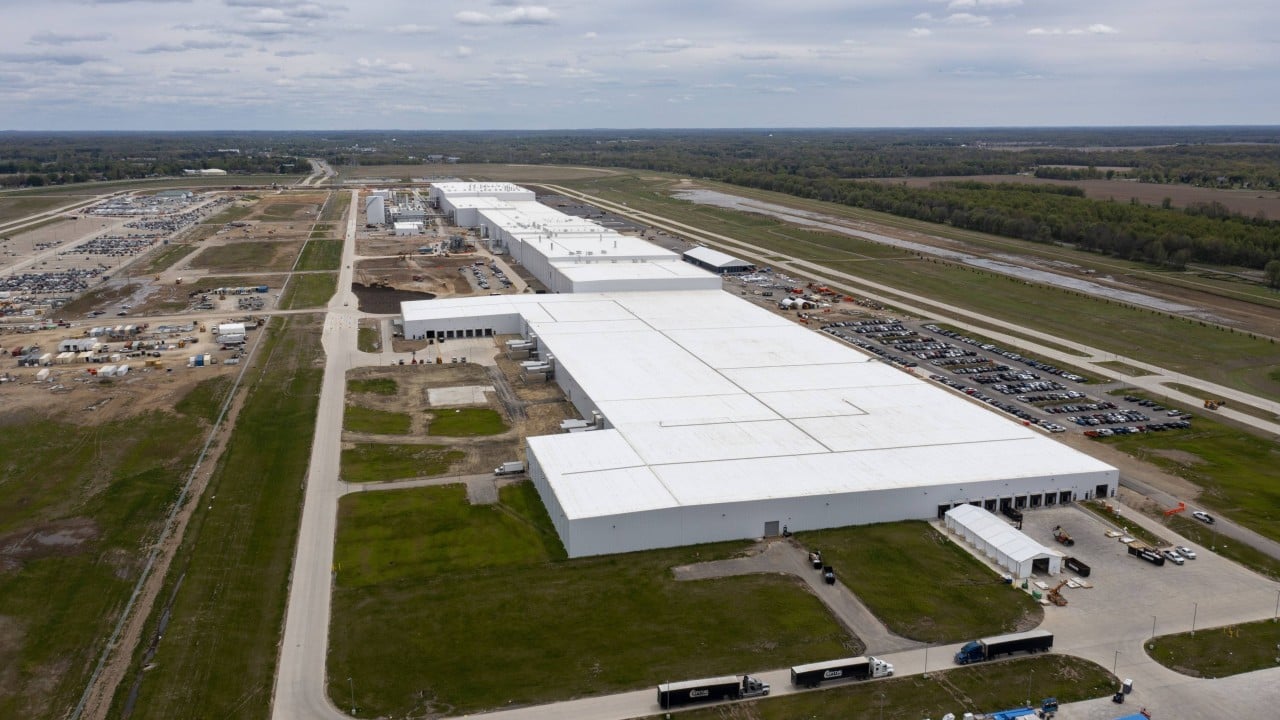
The idea that American carmakers can simply "out-innovate" China on their own is a fantasy. If you want proof, look at Marshall, Michigan. There, Ford is finishing its BlueOval Battery Park, a $3.5 billion project that isn't just about jobs or trucks—it's a massive admission that the U.S. auto industry is stuck. To build the future, Detroit has to rent it from Beijing.
As President Donald Trump lands in Beijing today for a high-stakes summit with Xi Jinping, this Michigan factory is the elephant in the room. It’s a project built on a licensing deal with CATL, the Chinese giant that essentially owns the global market for lithium iron phosphate (LFP) batteries. While politicians scream about "foreign entities of concern," Ford is quietly proving that without Chinese tech, the American EV transition is basically dead on arrival.
The Tech Gap Detroit Can't Ignore
Ford isn't partnering with CATL because it wants to. It's doing it because it has no choice. For years, Western companies focused on nickel-cobalt batteries because they offered more range. But they’re expensive and prone to "thermal events" (a polite way of saying they catch fire).
Meanwhile, China perfected LFP. These batteries are cheaper, safer, and last for decades. CATL and BYD now control over 60% of the world's battery supply, with LFP tech accounting for a staggering 81.5% of the Chinese market as of last month. Ford's CEO Jim Farley has been blunt about this: Ford couldn't legally use this tech without a license. It’s better to build it in Michigan with American workers than to keep importing boxes from Fujian forever.
Why the Licensing Model is the New Trade War Front
The Marshall plant uses a clever, if controversial, legal loophole. Ford owns the building and the land. They hire the workers. But the "brain" of the factory—the chemistry and the manufacturing process—belongs to CATL. This setup was designed to bypass strict federal rules that bar Chinese-made components from receiving lucrative $7,500 consumer tax credits.
But it’s a fragile peace. Congressional leaders like Representative John Moolenaar are already breathing down Ford's neck, questioning if this deal is just a Trojan horse for Chinese influence. The tension is real:
- The Economic Reality: LFP batteries are essential for the $30,000 electric trucks Ford needs to sell to stay relevant.
- The Political Reality: Any deal involving a Chinese company is a target in an election cycle or a trade war.
- The Strategic Reality: If Ford doesn't do this, Tesla or Hyundai will.
Trump and Xi's "Grand Reset" in Beijing
The timing of the May 14 summit couldn't be weirder. Only weeks ago, the U.S. was slapping "Liberation Day" tariffs of 145% on Chinese goods. Now, we're seeing signs of a "Total Reset." Trump’s second-term strategy is increasingly looking like a high-stakes poker game where he uses massive tariffs as a blunt instrument to force China into buying more U.S. soybeans and Boeing jets.
In exchange, there's talk of loosening the leash on tech. Rumors from the summit suggest the U.S. might remove Huawei from the entity list if China plays ball on Iranian oil or the trade deficit. If that happens, Ford’s partnership with CATL goes from a "controversial loophole" to a "blueprint for cooperation."
The 20-Year Bet on Energy Storage
Ford isn't just thinking about the F-150 Lightning anymore. Just this week, they launched "Ford Energy," a new subsidiary focused on grid-scale battery storage. They're planning to turn their Michigan and Kentucky plants into hubs for massive 20-foot container units that keep data centers and power grids running.
These units, like the new FE-450, rely on the same 512Ah LFP cells Ford is learning to make from CATL. This isn't just about cars; it's about the entire American energy infrastructure. If the U.S. wants to lead in AI and data centers, it needs batteries. And right now, the best batteries are Chinese.
Why You Should Care About the Marshall Plant
Most people think this is just a corporate squabble. It’s not. It’s about whether you’ll ever be able to buy an affordable EV that doesn't feel like a luxury toy. Without the CATL tech being implemented in Michigan, the "Made in America" label comes with a price tag that most families can't afford.
The Michigan plant is scheduled to start production within months. It will employ 1,700 people. If the Trump-Xi summit ends with a "Grand Reset" on trade, expect more of these deals. We might see a world where the hardware is American, but the "intellect" inside the battery remains Chinese.
Practical Next Steps for the Industry
If you're an investor or a policy watcher, stop looking at the tariff headlines and start looking at the licensing agreements. That’s where the real power is shifting.
- Watch the Tax Credit Guidance: The Treasury Department’s final rules on "Foreign Entities of Concern" will determine if the Marshall plant is a gold mine or a multi-billion dollar paperweight.
- Monitor the "Ford Energy" Pivot: Moving into stationary storage is a hedge against slow EV adoption. If car sales lag, the grid will still need those CATL-licensed cells.
- Follow the IP, Not the Factory: The value in 2026 isn't in owning the machines; it's in owning the chemistry. Until a U.S. startup can beat LFP on cost and safety, Detroit is effectively a tenant in China’s technological house.
The summit in Beijing might lower the temperature, but it won't change the math. Ford needs CATL. America needs batteries. And for now, those two facts are inextricably linked.