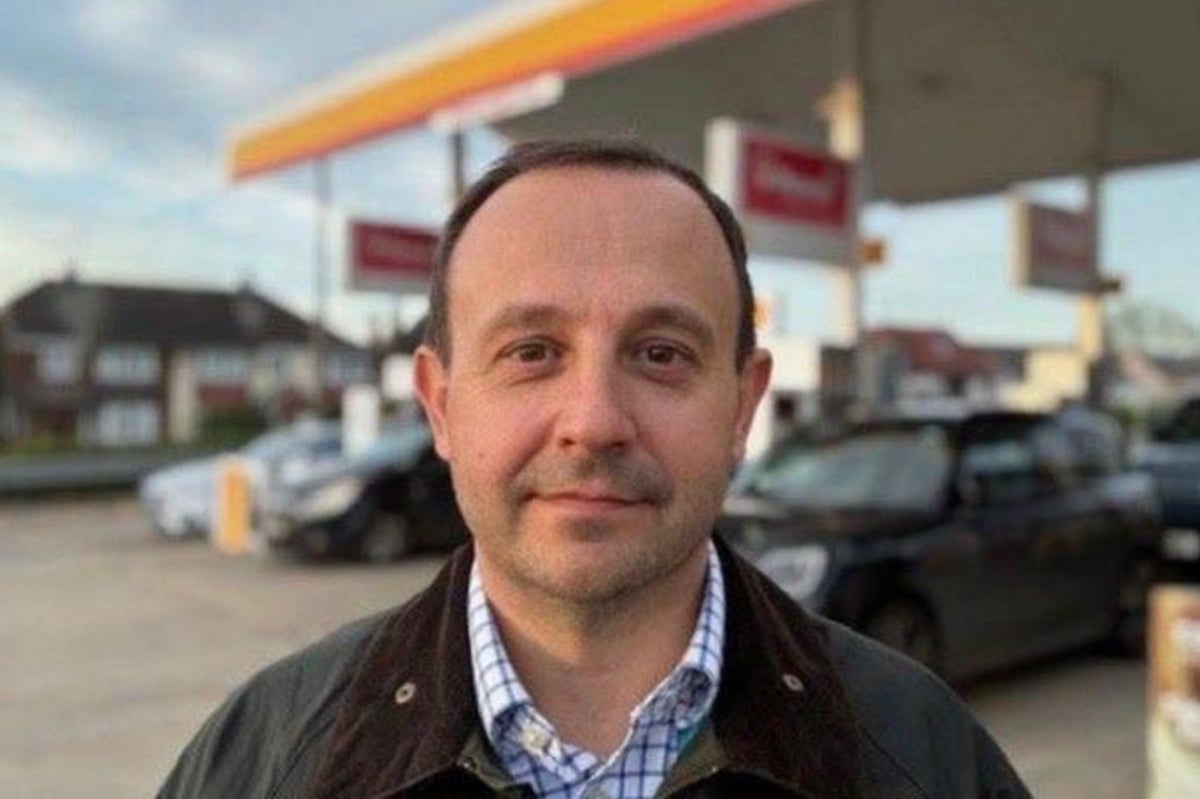
The bell above the door doesn't ring like it used to. For thirty years, that little brass chime was the heartbeat of our family business, signaling a neighbor stopping for a morning paper or a traveler needing a KitKat and a tank of unleaded. Now, every time it dings, my stomach tightens. I find myself looking at the monitors before I look at the customer’s face. I am searching for a specific kind of shadow.
We call them the "drive-offs."
In the trade, it is technically "Making Off Without Payment." To the person behind the wheel of the silver hatchback currently idling at Pump 4, it probably feels like a victimless gamble against a faceless corporation. But we aren’t a corporation. We are the Ahmeds. We are three generations of tired eyes, stained aprons, and a ledger that is currently bleeding out.
Since the geopolitical tremors in the Middle East sent the global oil market into a fever dream, our tiny forecourt has become a theater of desperation and opportunism. When war breaks out thousands of miles away, the shockwaves don't just hit the stock market. They hit the local petrol station in a quiet suburb of England. They hit us to the tune of £2,000 in just a few months.
That number might seem small to a bank. To us, it is the difference between replacing the broken refrigerator in the back or telling my daughter she has to wait another year for her university laptop.
The Mechanics of a Disappearing Act
The theft usually follows a rhythm. It starts with the price on the big digital totem out front. When that number climbs—when it jumps from 145.9 to 152.9 in a single afternoon—the atmosphere on the forecourt shifts. People become frantic. They look at the pump display with a mix of horror and resentment.
Most people pay. They grumble, they swipe their cards, and they leave. But a growing number have decided that the social contract is optional.
Consider a Tuesday evening. A man in a high-visibility jacket pulls up. He looks like any other tradesman heading home after a long shift. He fills up—60 liters, nearly £100 worth of fuel. He hangs the nozzle back up. He looks at the shop window. He knows I am watching. He even nods. Then, he gets in his van and accelerates.
By the time I’ve rounded the counter, he’s a smudge of red taillights on the dual carriageway.
The police tell us the same thing every time. Unless there is a clear shot of the driver’s face and the plates aren't cloned, there is very little they can do. It’s a low-priority crime in a high-pressure world. But for us, that £100 isn't just "lost revenue."
To understand why, you have to understand the razor-thin margins of selling fuel. Most people assume that if petrol is expensive, the station owner is getting rich. The opposite is true. We make pennies on the liter. Our real profit comes from the bags of crisps, the overpriced motor oil, and the Costa Express machine. When someone steals £100 of fuel, I have to sell roughly 800 Snickers bars just to break even on that one theft.
The Weight of the Invisible Bill
My father started this station in the nineties. Back then, if someone forgot their wallet, they’d leave their watch or their phone as collateral and come back an hour later. There was a baseline of trust.
That trust has been eroded by a global instability that feels too big to grasp. When the conflict in Iran intensified, the markets reacted with their usual cold efficiency. Crude oil prices spiked. The wholesalers passed that cost to us. We passed it to the consumer. But the consumer has reached a breaking point.
Inflation isn't just a statistic in a Sunday broadsheet. It is a physical weight. I see it in the way people count out copper coins for a liter of milk. I see it in the way they stop the pump at exactly £10.01 and look panicked that they went over by a penny.
The tragedy is that the theft creates a cycle of suspicion. I now find myself profiling my neighbors. Is that car too old? Why is he wearing a hoodie when it’s 20 degrees out? Why is she keeping the engine running while her partner fills up? This suspicion is a poison. It turns a community hub into a fortress. We’ve discussed moving to a "pre-pay only" model, but that requires an investment in new pump technology that we simply don't have. It would also alienate the elderly regulars who struggle with the card readers and rely on us to help them.
We are caught between a rock and a hard place, and the rock is made of rising Brent Crude prices while the hard place is a local population that can no longer afford to commute to work.
The Human Toll Behind the Ledger
Last week, my mother sat in the small, windowless office we use for bookkeeping. She had the receipts spread out like tarot cards, trying to make the math work. She didn't cry. She just stared at the security footage of a woman who had driven off without paying for £40 of diesel.
"She looked so tired," my mother whispered.
That is the part the news reports miss. Not every thief is a criminal mastermind or a joyriding teenager. Some are parents who are choosing between "fuel to get to the job" and "food to put on the table."
Does that justify the theft? No. Because when they steal from us, they aren't stealing from Shell or BP. They are stealing from a family that stays open until 11 PM on Christmas Eve. They are stealing from the person who swept the forecourt at 5 AM.
The £2,000 we’ve lost isn't a nebulous cloud of cash. It is tangible. It is the repair for the car wash that we’ve had to cancel. It is the seasonal staff member we couldn't hire this year. It is the mounting stress that makes my father’s hands shake when he tries to log into the business banking app.
The Fragility of the Forecourt
The petrol station is a strange, liminal space. It is where the global economy meets the local pavement. It is the front line of every energy crisis.
When the news cycle moves on from the latest conflict, the prices might dip slightly, but the damage to our business is already etched into the accounts. We are operating on a "just about managing" basis. Each drive-off feels like a personal betrayal, a tiny fracture in the foundation of our lives.
The most galling part is the silence. People talk about the cost of living, but they rarely talk about the cost of surviving as a small business in an era of lawlessness. We are expected to absorb the blows of international warfare, domestic inflation, and local crime, all while smiling and asking if you’d like a receipt.
Yesterday, a young man stopped at the pump. He filled up, walked inside, and realized his card was declined. He looked like he wanted the floor to swallow him whole. He stayed. He called his mother. He waited forty minutes until she could transfer him the money.
When he finally paid, I wanted to thank him. Not for the money, but for being a human being. For acknowledging that the person behind the counter is real.
But as he drove away, I saw another car pull up. Tinted windows. No front plate.
My heart climbed into my throat. I reached for the "stop" button on the console, my finger hovering over the plastic. I watched. I waited. I held my breath.
This is no way to live. This is no way to run a business. We are standing on a sea of fuel, and yet we are parched. The world is on fire, and we are just trying to keep the lights on for one more night.
The silver hatchback at Pump 4 finally finished. The driver hung up the nozzle. He paused. He looked at the shop. Then, slowly, he walked toward the door.
I let out a breath I didn't know I was holding.
The bell chimed.
I looked at his face, not the monitor. Not this time. But the fear stayed, a cold, oily residue that no amount of industrial soap can ever quite wash away.