The coffee in the cupholder is still scalding. You are late.
Your phone buzzes in the console, a relentless reminder of a meeting that started three minutes ago across town. The Crowchild Trail traffic in Calgary is a sluggish, metallic river, but suddenly it breaks. The asphalt opens up. Your foot instinctively heavyon the gas pedal, eager to reclaim those lost minutes. For a deeper dive into this area, we suggest: this related article.
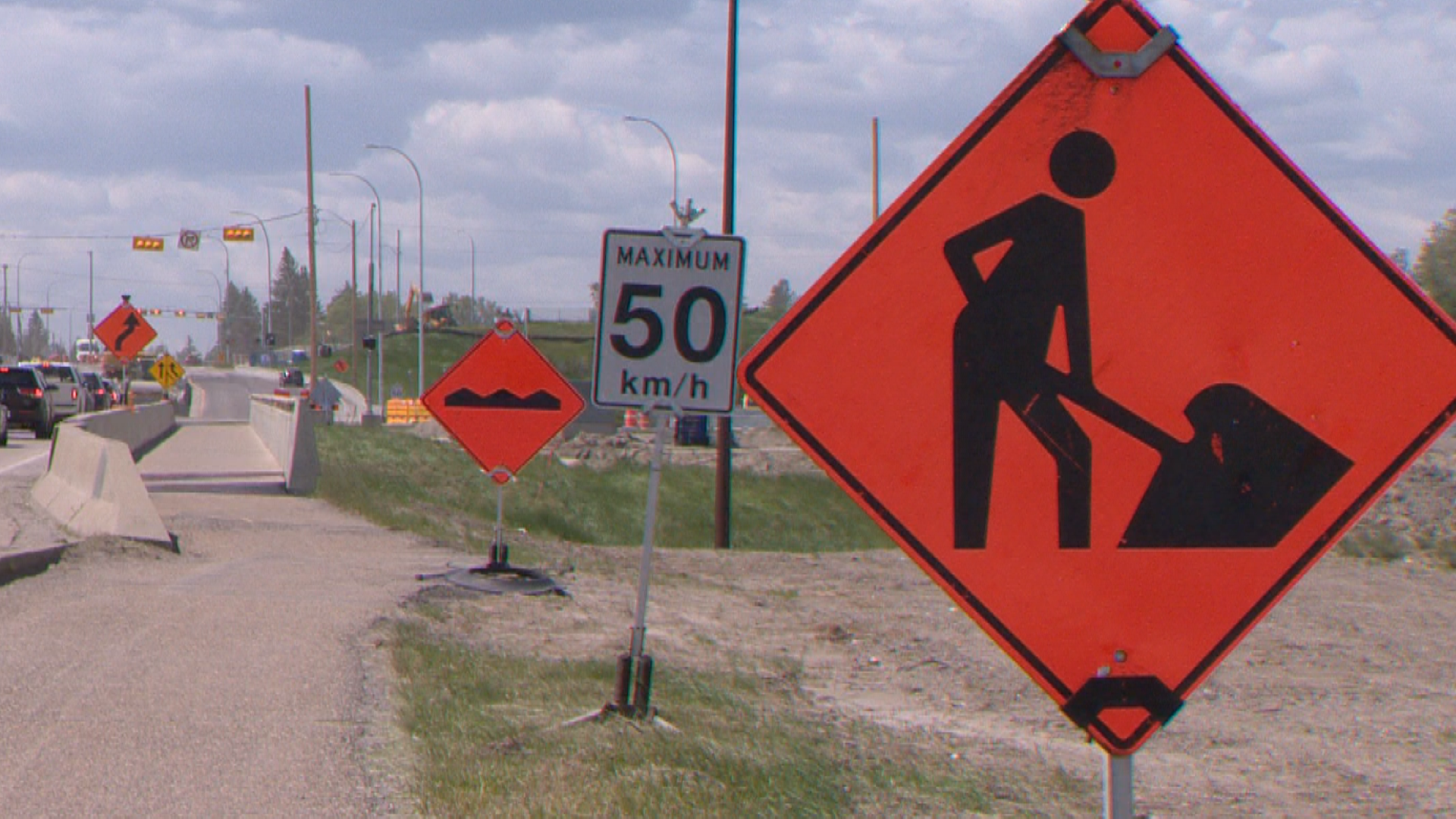
Then come the signs. Bright, obnoxious orange. Construction Zone: 50 km/h.
You slow down, but only a little. You coast at 70. Everyone else is doing it, right? It feels safe inside the quiet, climate-controlled sanctuary of your SUV. The engine hums. The stereo plays softly. Outside, the world passes by in a blur of dust and concrete barriers. For further background on this issue, extensive reporting can be read at BBC News.
But outside that window, the reality is entirely different.
To understand what is actually happening on Calgary roads this year, you have to step out of the driver's seat and stand on the gravel. Feel the ground shake. Listen to the deafening roar of a diesel engine passing just two feet from your shoulder.
The Velocity of Indifference
Calgary Police Service recently dropped a quiet bomb of a statistic. Within just the first few months of the year, traffic officers issued hundreds of speeding tickets specifically within designated construction zones. Hundreds. And those are just the drivers who got caught.
Think about that number for a second. It represents thousands of tons of metal moving at lethal speeds through what is, essentially, someone else's office.
Let us construct a hypothetical scenario to ground this math in flesh and bone. Meet Sarah. She is a flagger, twenty-four years old, working her way through a degree at Mount Royal University. Her uniform is neon vestments and steel-toed boots. Her workspace is a two-meter strip of dirt separated from commuter traffic by nothing more than plastic pylons and hope.
When a vehicle passes Sarah at 80 kilometers per hour in a 50 zone, it is not just a statistical infraction. It is a physical assault on the senses.
The air pressure drops violently as the car cuts through the atmosphere, creating a wake that tugs at her clothing. The gravel under her boots shifts. The noise is a sudden, terrifying crack. For Sarah, every single shift is an eight-hour exercise in hyper-vigilance. She has to trust that the stranger behind the wheel of that speeding sedan is paying attention.
Lately, that trust is wearing thin.
The Illusion of the Bubble
Why do we do it? Why do otherwise decent, law-abiding citizens transform into existential threats the moment they hit a construction zone?
The answer lies in behavioral psychology and the deceptive design of modern automobiles.
When you slide into a contemporary vehicle, you enter a sensory deprivation chamber. Acoustic glass dampens the scream of the wind. Advanced suspension masks the sensation of velocity. You do not feel like you are piloting a two-ton kinetic weapon; you feel like you are sitting on your living room couch watching a movie of the road play out on your windshield.
This insulation creates a dangerous cognitive disconnect. Drivers become blind to the vulnerability of the people outside.
Consider the physics of a sudden stop. If a driver traveling at the posted 50 km/h detects danger, their total stopping distance—including reaction time—is roughly 25 meters. Increase that speed to 80 km/h, and the stopping distance more than doubles to nearly 58 meters.
That extra 33 meters is the difference between a close call and a tragedy. It is the distance that Calgary police officers see disappearing every single day when they set up laser speed traps in the orange zones.
The excuses given to officers at the driver's side window are wearyingly predictable. I didn't see the signs. I was just keeping up with the flow of traffic. I'm late for daycare pickup. The radar gun does not care about excuses. Neither does gravity.
The Human Cost Behind the Fines
The financial penalties for speeding in a Calgary construction zone are severe. Fines double when workers are present. A single moment of impatience can easily cost a driver several hundred dollars and a handful of demerit points that will haunt their insurance premiums for years.
But focusing on the wallet misses the point entirely.
The real cost is measured in adrenaline and anxiety. Talk to any veteran road crew worker in Alberta, and they will tell you about the "near misses." The side mirrors that brushed past their tool belts. The screech of locking brakes that made their hearts violently skip a beat.
They talk about the text messages they send to their partners at the end of a shift: Home safe. It is a message that shouldn't need to be sent, yet it is standard practice for families of roadside laborers.
The hundreds of tickets issued by the Calgary Police Service this year are not a revenue generation scheme, despite what disgruntled internet forums might claim. They are a desperate, reactionary boundary line. They are an intervention.
Every ticket is a forced pause. It forces a driver to look past their steering wheel, past their dashboard clock, and look at the human beings working in the dirt.
Redefining the Commute
We view roads as conduits. They are the gray spaces between where we are and where we want to be. Construction zones are viewed as personal insults—temporary inconveniences designed to sabotage our schedules and ruin our mornings.
But what if we flipped the perspective?
What if we viewed a construction zone not as a delay, but as a community asset under maintenance? The men and women standing in the dust are repairing the bridges we take for granted, filling the potholes that damage our rims, and expanding the lanes that ease our winter commutes. They are working to make our city functional.
They deserve to go home to their dinners.
The next time the orange signs appear on the horizon of the Deerfoot or the Stoney Trail, watch what happens to your body. Notice the spike in irritation. Feel the urge to maintain your momentum, to squeeze through the narrowing lane before the concrete barriers close in.
Then, take a breath. Drop the foot. Look for the vests.
The meeting can wait. The coffee can cool. The line between a normal Tuesday and a shattered life is often nothing more than thirty kilometers per hour and a brief moment of shared humanity.