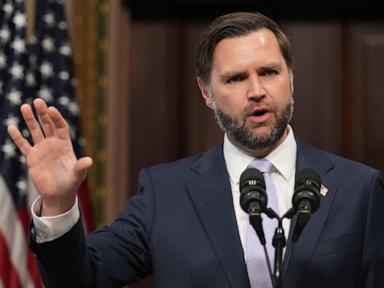
The political theater currently unfolding in Maine—with Vice President JD Vance landing in Bangor to champion an "anti-fraud" crusade—is a masterclass in misdirection. While the mainstream press treats this visit as a standard pre-primary campaign stop, anyone paying attention to the machinery of government understands exactly what is happening. They are betting you are too exhausted by the cost of living and global instability to ask one simple question: What does "anti-fraud" actually solve for your bank account?
The lazy consensus is that this is about election integrity or perhaps Medicare accountability. It is neither. This is a weaponized buzzword designed to frame structural economic failure as a moral failing of the "other side."
I have watched enough political campaigns to know that when an administration stops talking about growth and starts shouting about "fraud," the internal polling on the economy is catastrophic. When the price of heating oil and groceries is suffocating a state, talking about "corrective action" on government health programs is a calculated pivot. It is not a policy solution; it is a defensive shell game.
The Myth of the Fraud Crusader
We need to define what these investigations actually are. In the federal bureaucracy, "fraud task forces" are often bloated, slow-moving entities that produce headlines far faster than they produce meaningful recoveries. They operate in the margins. If you want to move the needle on a state economy, you change tax policy, you incentivize infrastructure, or you aggressively lower energy costs. You do not tour airports to talk about auditing Medicare claims in a specific region during an election cycle.
Imagine a scenario where a company is losing billions of dollars due to an outdated business model and poor market positioning. Now, imagine that company’s leadership spends their time firing office managers for using the company printer for personal documents. That is the "anti-fraud" strategy being deployed here. It feels good to say you are "stopping the theft," but it ignores the hemorrhaging of the actual capital base.
The administration’s pitch has become noticeably sharper because the Iran war has turned the economy into a liability. High gas prices and food inflation are not caused by Medicare billing errors in Maine. They are caused by macro-economic shockwaves that no amount of task force rhetoric can smooth over. By focusing on fraud, they are attempting to shift the narrative from "we cannot manage the economy" to "we are the only ones standing between you and the bad guys stealing your money."
Understanding the Tactical Distraction
Why Maine? Why now? The state’s primary isn’t just a localized test for governor and congressional seats; it’s a bellwether for how effectively the "fraud" frame can be used to hold onto suburban and rural voters who are feeling the squeeze.
When you see headlines about fraud, stop and ask what is being hidden behind the curtain:
- The Deflection of Responsibility: If an official blames "fraud" for government health program shortfalls, they are absolving themselves of the difficult work of reforming the underlying system.
- The Mobilization of the Base: Fear is a more potent motivator than fiscal responsibility. By framing the opposition as enabling "stolen tax dollars," they activate a base that might otherwise be tempted to stay home due to economic dissatisfaction.
- The Erasure of Nuance: Fraud is an administrative reality in any large organization. Framing it as a political war is a choice, not an necessity.
The political opposition in Maine, including figures like Secretary of State Shenna Bellows, understands this game perfectly. They aren’t just protesting a visit; they are trying to point the spotlight back toward the cost-of-necessity record. But they too often fall into the trap of debating the "fraud" issue on the administration’s terms, legitimizing a debate that shouldn't even be happening.
How To See Through The Smoke
If you want to actually understand what is happening in your state, ignore the "anti-fraud" press releases. Look at the data that matters:
- Net In-Migration and Out-Migration: Are people leaving because of fraud, or because they can’t afford to stay?
- Energy Costs vs. Wage Growth: This is the only ratio that determines quality of life for the average voter. Everything else is secondary noise.
- Budget Allocation: How much of the state’s actual budget is being lost to "fraud" compared to the cost of current tax, debt, and spending policies?
The reality is that "fraud" is a convenient villain because it doesn’t require a debate about core ideology. It doesn't require answering for war-induced inflation or failing trade policies. It requires only a megaphone and a target.
I’ve seen administrations across the political spectrum burn through goodwill by focusing on these performative crusades. It never ends well for the economy. When the smoke clears and the primary is over, the people who actually need assistance will still be paying too much for heat, and the "fraud" fighters will have moved on to the next convenient narrative.
Do not let them turn your financial anxiety into a tool for their political survival. Demand to know why the cost of living is rising, and watch how quickly they pivot back to talking about something—anything—else. The obsession with fraud is a symptom of a government that has run out of real solutions.