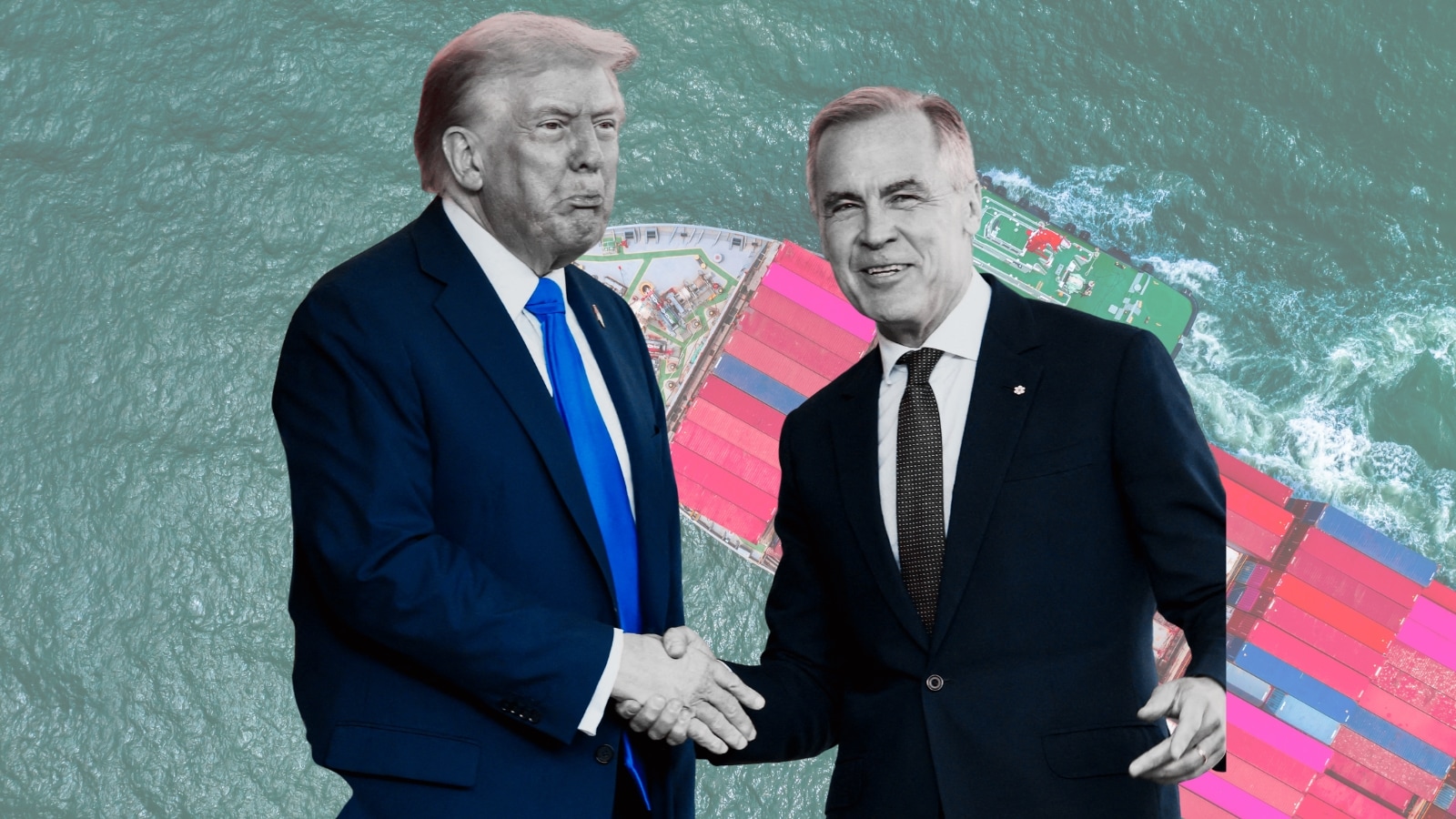
Walk down to any major commercial port at dawn, and you will hear a sound that defines the modern world. It is a hollow, metallic clang. It happens when a crane drops a thirty-ton steel shipping container onto the deck of a cargo ship. The sound echoes across the water like a distant gunshot. For forty years, that sound was the heartbeat of an unquestioned religion called global trade. The rules were simple. Buy it where it is cheapest. Build it where labor costs the least. Trust that the ocean will always be a peaceful, open highway.
We grew comfortable. We surrounded ourselves with cheap televisions, instant deliveries, and smartphones that arrived like magic from factories ten thousand miles away.
Then the highway began to fracture.
To understand why the Western world is currently trying to tear up the global rulebook and rewrite it from scratch, you have to look past the dense policy papers coming out of Washington and Brussels. You have to look at something much smaller. Consider a hypothetical mid-sized manufacturing plant in Ohio or western Germany—let us call the manager Thomas. For two decades, Thomas ran his factory on a razor-thin margin, surviving by outsourcing his most complex electronic components to suppliers in Shenzhen. It was efficient. It was profitable.
But efficiency is a fragile god. When a single geopolitical tremor—a closed strait, a sudden export restriction, a pandemic, or a quiet threat of conflict—delays those components by six months, Thomas’s assembly line stops dead. His workers sit idle. His business bleeds cash. Multiply Thomas by ten thousand, across aerospace, pharmaceuticals, microchips, and electric vehicles, and you begin to see the outline of a profound collective panic.
The West is terrified because it realized it no longer controls the plumbing of civilization.
The Illusion of the Level Playing Field
The rules we are currently trying to rewrite were drafted in a moment of extreme optimism. When the World Trade Organization welcomed China into the global trading system in 2001, the assumption was that economic integration would breed political alignment. The theory went that as a nation grew richer through global commerce, it would naturally adopt the market-driven, transparent rules of the West.
It was a beautiful theory. It was also completely wrong.
Instead of adapting to the Western model, Beijing pioneered a system that merged hyper-capitalist manufacturing speed with absolute state control. Western companies found themselves competing not just against foreign rivals, but against the bottomless treasury of a superpower. If a Chinese factory making solar panels or lithium-ion batteries faced bankruptcy, the local government stepped in with cheap land, subsidized electricity, and state-directed bank loans.
Western executives looked at their balance sheets and realized they were bringing a knife to a battleship fight.
This is not a abstract debate about economic philosophy. It is a structural crisis. When one nation subsidizes an industry so heavily that it can produce goods at a price lower than the raw materials cost anywhere else, it creates a global monopoly. The technical term for this is overcapacity. The human term is an industrial vacuum cleaner. It sucks the factories, the skills, and the engineering know-how out of every other country on earth, leaving behind communities that feel abandoned by the promise of globalization.
We are told that competition makes everyone better. But true competition requires a shared understanding of reality. When the rules allow one player to operate outside the laws of profit and loss, the market ceases to be a market. It becomes an instrument of statecraft.
The Quiet Panic in the Boardrooms
For a long time, Western leaders ignored the warning signs because consumers were happy. Cheap goods acted as an economic sedative, masking the slow erosion of domestic manufacturing. But the vulnerability is no longer just economic. It is existential.
Think about the battery that powers an electric vehicle, or the magnets inside a wind turbine, or the foundational semiconductors that run everything from your refrigerator to a guided missile tracking system. If the processing of ninety percent of the rare earth elements required to build those technologies happens within a single jurisdiction, you do not have a supply chain. You have a chokehold.
The realization of this vulnerability has triggered an agonizing reassessment in the boardrooms of Detroit, Paris, and Tokyo. Executives who spent their entire careers maximizing "just-in-time" logistics are suddenly scrambling to build "just-in-case" redundancies.
It is an incredibly painful process. Building a semiconductor fabrication plant or a lithium processing facility takes years and costs billions of dollars. It requires specialized labor that, in many cases, has not been trained domestically for a generation. More than that, it requires a complete rejection of the old corporate mantra that the lowest price always wins.
This is where the collective anxiety of the West turns into action. Leaders have realized they cannot persuade private companies to build expensive domestic factories if they are constantly undercut by subsidized foreign imports. To protect these new investments, the old rules of free trade must be dismantled.
The New Tools of Economic Warfare
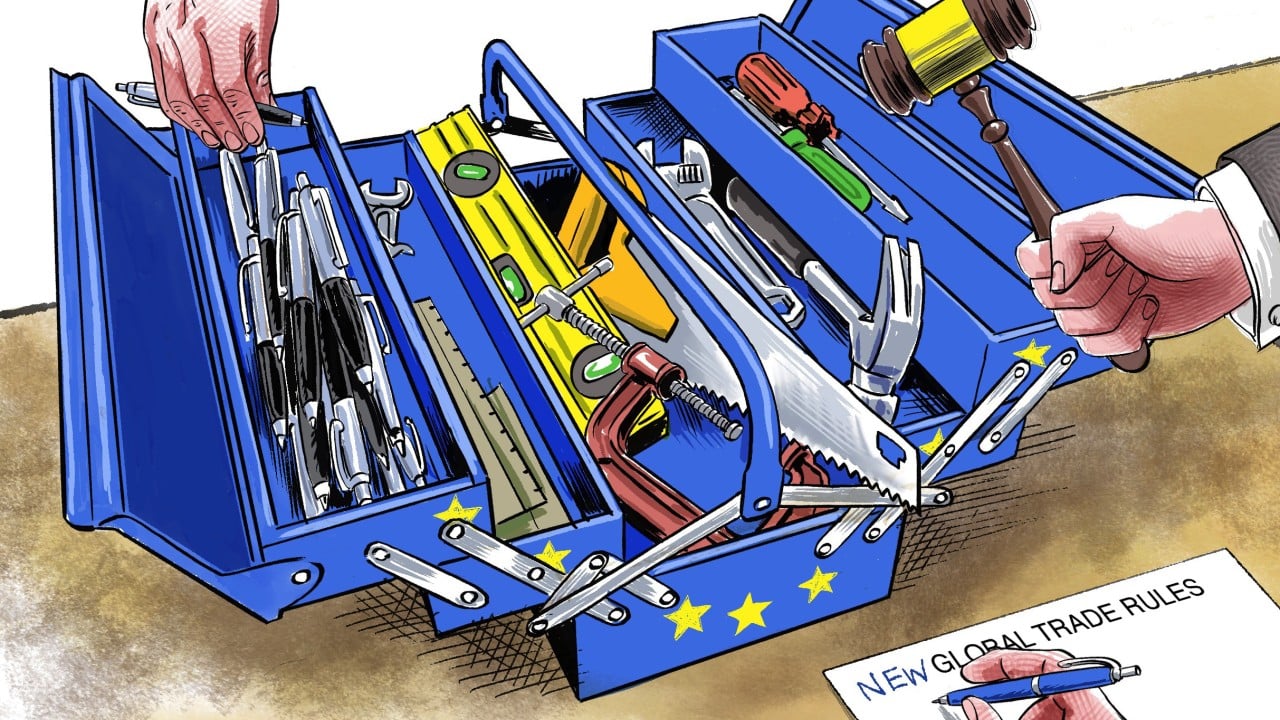
We are witnessing the birth of a aggressive, protective era of economic policy, though it is disguised in the polite language of diplomacy. When you hear terms like "de-risking," "friend-shoring," or "leveling the playing field," what you are actually witnessing is the construction of economic fortresses.
The strategy is unfolding in three distinct ways:
- Surgical Tariffs: These are no longer broad taxes designed to protect domestic agriculture. They are precisely targeted strikes aimed at strategic sectors—electric vehicles, semiconductors, and green technology—intended to make heavily subsidized foreign goods artificially expensive.
- Strategic Subsidies: The West has decided that if you cannot beat state capitalism, you must copy parts of it. Massive government spending programs are pouring hundreds of billions of dollars into domestic chip production and renewable energy infrastructure.
- Localized Supply Alliances: Nations are forming exclusive trading clubs, rewriting agreements so that critical components must be sourced from countries that share identical geopolitical values.
This shift is incredibly messy. It flies in the face of everything taught in business schools for the last half-century. It threatens to make things more expensive for the average consumer. A smartphone built entirely within a network of politically aligned, high-wage nations will inevitably cost more than one put together under the old, hyper-efficient global system.
But the architects of this rewrite are betting that citizens will be willing to pay a premium for security. They are betting that we would rather pay more for a car than live with the knowledge that a single political dispute could turn our transport infrastructure into useless metal overnight.
The Cost of the Clean Break
It is easy to feel a sense of whiplash watching this transformation. The very institutions that spent decades preaching the gospel of borderless commerce are now the ones designing the barriers. It requires an admission of vulnerability that feels deeply uncomfortable for societies accustomed to setting the global agenda.
We are entering an era of friction. The smooth, frictionless world we took for granted was an anomaly born of a specific historical moment that has passed. The future looks fragmented, divided into spheres of economic influence where trust matters far more than efficiency.
The real danger is not that this rewrite will fail, but that it will succeed too well. If the global economy splits cleanly into competing blocs, the guardrails that prevented conflict for seventy years begin to drop away. When nations stop trading with each other, they lose their financial stake in each other’s survival.
Go back to that manufacturing plant in Ohio or Germany. Thomas is trying to find a new supplier for his components, someone located closer to home, perhaps in Mexico or eastern Europe. His costs are rising. His emails are filled with anxious questions from clients who want to know if his prices are about to jump. He looks out the window of his office at a storage yard where a row of older shipping containers sits rusting in the rain. They are relics of an era when the world felt smaller, simpler, and far less dangerous. They are monuments to a gamble that failed, left behind as the rest of the world hurries to rewrite the terms of its survival.