The transition from full-scale theater warfare to a brokered truce rarely yields an immediate cessation of kinetic activity. In the Gaza Strip, where a U.S.-brokered ceasefire agreement was established in October, the total Palestinian fatality count has reached 73,001, according to records maintained by Gaza's Health Ministry. Concurrently, the wounded metric has climbed to 173,200. These figures underscore a fundamental structural reality of asymmetric conflicts: a formal diplomatic agreement does not eliminate local military engagements when the underlying core operational disputes remain unresolved.
The primary structural bottleneck preventing a complete transition to stability is a profound divergence in tactical and strategic objectives between the combatants. The current security environment operates under a distinct cost function where low-intensity attrition has replaced high-tempo offensive maneuvers. Analyzing the mechanical breakdown of this post-ceasefire phase reveals the specific policy variables, operational frictions, and strategic gridlocks that perpetuate localized combat despite a nominal truce.
The Strategic Gridlock Matrix
The durability of any ceasefire relies on a shared baseline of execution. The current agreement succeeded in its initial phase, terminating broad-scale offensive maneuvers and facilitating the return of all remaining hostages captured during the October 7, 2023, attacks—which resulted in approximately 1,200 Israeli fatalities and 251 individuals taken hostage. The secondary phases of the agreement have stalled completely due to an irreconcilable policy mismatch:
- The Disarmament Clause: International mediators have tied long-term stabilization, reconstruction capital, and the formation of a unified Palestinian governing entity to the total disarmament of Hamas.
- The Territorial Security Vector: The Israeli Defense Forces (IDF) have maintained and, in specific sectors, advanced geographic positions within the Gaza Strip rather than executing a systemic withdrawal.
Because Hamas rejects unilateral disarmament, viewing its kinetic capability as its primary political leverage, a security vacuum persists. This structural deadlock incentivizes both parties to interpret the rules of engagement permissively.
The Attrition Function: Post-Ceasefire Kinetic Mechanics
The continuation of localized violence during a formal truce is driven by specific operational mandates. Since the October accord, nearly 1,000 Palestinians have been killed in localized engagements, alongside five Israeli military fatalities. This post-ceasefire attrition is governed by two distinct tactical frameworks.
The Preventive Strike Doctrine
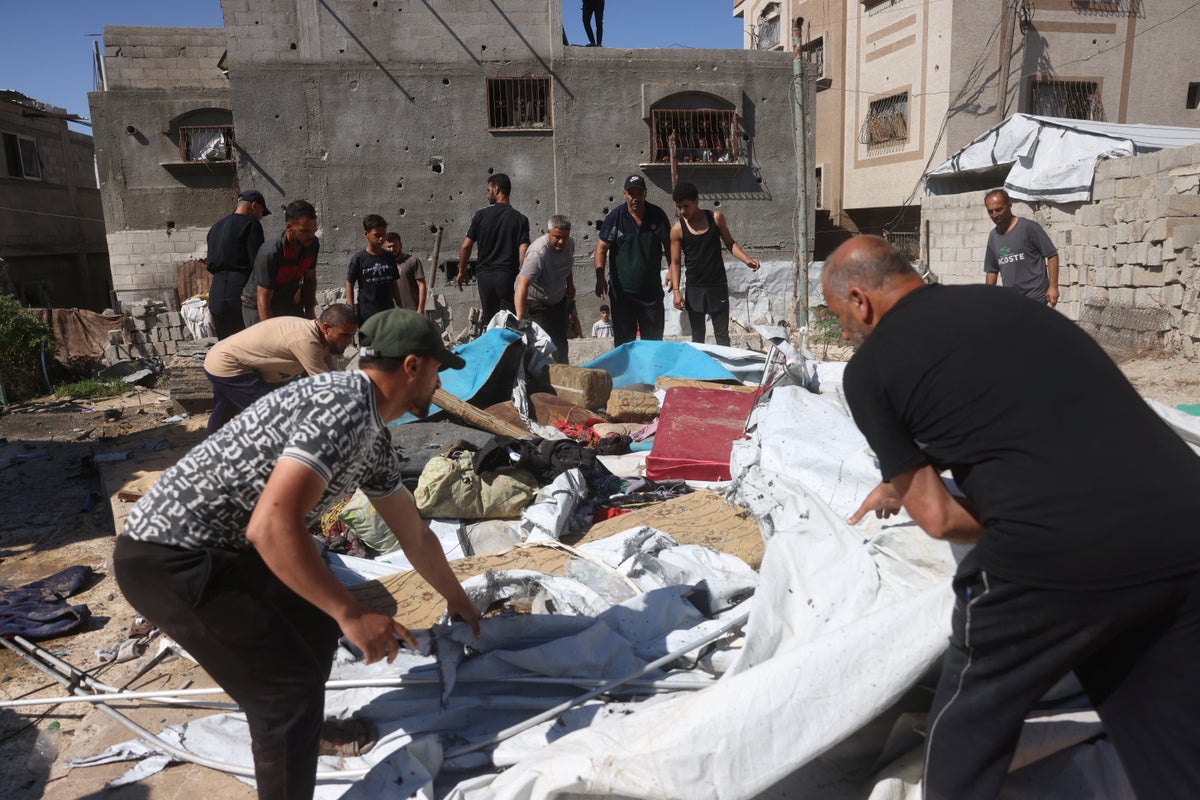
The Israeli military apparatus operates on a policy of active threat mitigation. Under this framework, intelligence-driven operations target specific high-value personnel or localized infrastructure clusters. The IDF categorizes these actions as defensive responses to ceasefire violations or preemptive maneuvers against immediate threats. For example, recent strikes targeting the Jabaliya refugee camp and locations within Khan Younis were officially designated as actions neutralizing active militant cells.
Densely Populated Combat Enclaves
The high ratio of non-combatant exposure is fundamentally tied to geography and operational deployment styles. Gaza’s population of over two million remains highly concentrated, with a significant majority displaced into heavily constrained sectors. When military assets are positioned within dense urban infrastructure, the collateral damage function scales non-linearly.
The Health Ministry—staffed by medical personnel whose data collection methods are historically utilized by United Nations agencies and independent demographic auditors—notes that women and children comprise approximately half of the aggregate fatalities. The reporting system records absolute mortality metrics through institutional tracking via the records department, directed by Zaher al-Waheidi, though it does not explicitly differentiate combatant status in its immediate public releases.
Logistical Strangulation and Direct Systemic Risks
The attrition of human life in this theater is not exclusively a function of direct kinetic impacts. A secondary, compounding variable is the degradation of basic life-support architecture due to border closures.
[Border Crossings Restriction]
       │
       ▼
[Logistical Bottleneck: Food, Medicine, Water Infrastructure]
       │
       ▼
[Systemic Vulnerability: High Casualty-to-Fatality Conversion Rate]
With all but one border crossing under strict external regulatory control, the input volume of humanitarian cargo, medical supplies, and reconstruction materials remains severely restricted. This operational constraint means that the 173,200 wounded individuals face a severely degraded healthcare delivery system. Minor or moderate trauma injuries carry a significantly higher probability of converting into fatalities due to shortages of basic surgical consumables, sterilization equipment, and broad-spectrum antibiotics.
The Stabilization Horizon
Achieving a absolute cessation of hostilities requires shifting the strategic calculations of both leadership structures. As long as the diplomatic framework demands complete disarmament prior to addressing territorial withdrawal or governance normalization, the conflict will remain trapped in this low-intensity, high-fatality equilibrium.
The tactical forecast points toward a sustained baseline of localized friction. The military command on both sides will continue to utilize tactical pressure to test the boundaries of the October agreement. Consequently, minor localized skirmishes will routinely trigger localized airstrikes and counter-engagements, steadily driving up the aggregate casualty metrics despite the formal existence of a diplomatic truce.