The return of direct kinetics between Israel and Iran exposed the systemic fragility of the Washington-brokered security architecture. A sequence of cross-border strikes dismantled the tactical pause established under the April 8 framework, forcing a re-evaluation of structural leverage in the region.
The escalatory loop began with Israeli airstrikes targeting Hezbollah command centers in Beirut's Dahiyeh district, which triggered a retaliatory Iranian ballistic missile barrage. Israel's Subsequent counter-strikes hit surface-to-air missile launchers and petrochemical infrastructure inside western Iran.
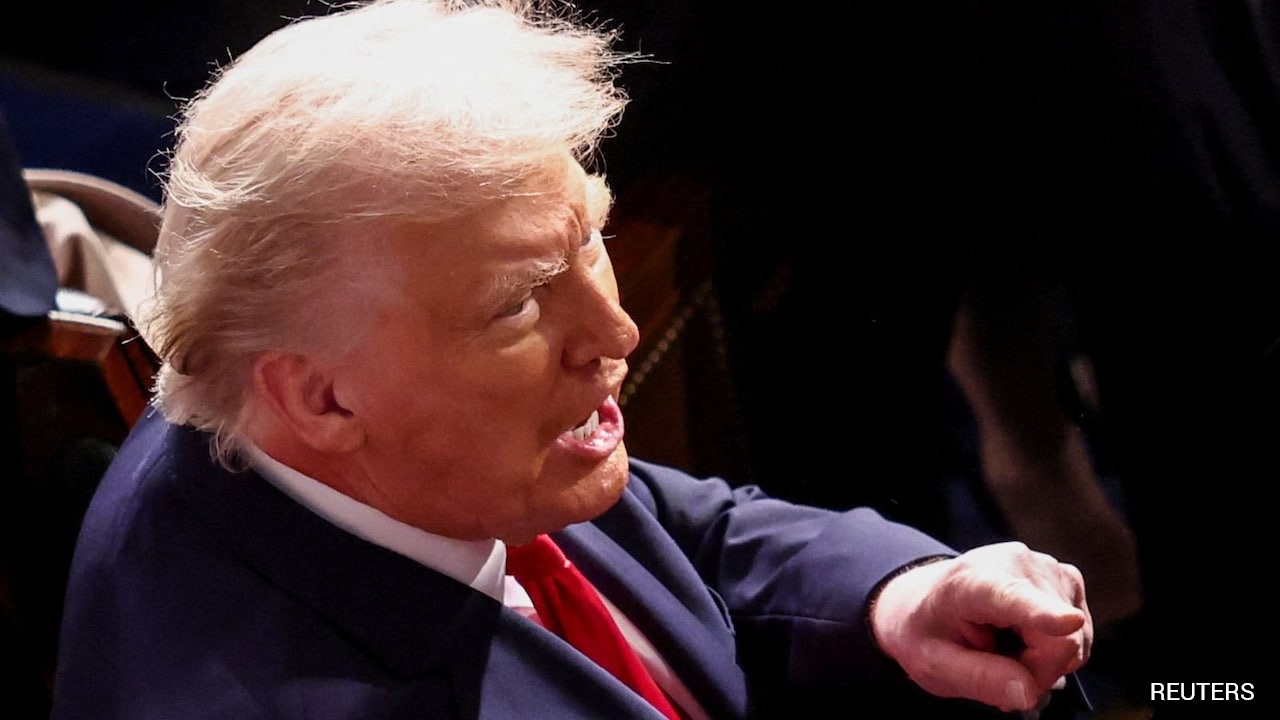
The executive response from Washington was immediate. Utilizing public platforms, Donald Trump asserted that both states were actively finalizing a comprehensive peace settlement, stating that an immediate ceasefire was imminent, subject only to "ignorance or stupidity getting in its way." This transactional approach to geopolitical mediation rests on specific assumptions regarding economic leverage, bilateral deterrence, and executive influence.
Analyzing the structural breakdown reveals why transactional diplomacy struggles against ideological and asymmetric warfare.
The Strategic Trilemma of Middle Eastern Containment
The current diplomatic impasse can be quantified through three mutually exclusive operational goals: absolute regional deterrence, economic normalization via the opening of the Strait of Hormuz, and the preservation of allied strategic autonomy. Washington's current policy attempts to optimize all three variables simultaneously, creating an unstable security paradigm.
                  [ Absolute Deterrence ]
                           /  \
                          /    \
                         /      \
                        /        \
                       /          \
[ Allied Autonomy ] ------------------ [ Economic Normalization ]
1. The Deterrence Variable
The United States attempts to enforce a strict boundary on Iranian kinetic projection by maintaining a naval blockade on Iranian ports. The objective is to deplete Tehran’s fiscal reserves to the point where asymmetric proxy funding becomes untenable. The breakdown occurs because Iran views its proxy network—specifically Hezbollah in Lebanon and the Houthis in Yemen—not as discretionary foreign policy tools, but as primary layer deterrence against regime decapitation.
2. The Economic Variable
The closure of the Strait of Hormuz by Iran remains the primary point of global macroeconomic vulnerability. Because approximately 20% of the world's petroleum liquids pass through this maritime chokepoint, the closure introduces a permanent risk premium into global energy markets. Washington’s leverage relies on promising sanctions relief and maritime access in exchange for a permanent cessation of Iranian regional projection.
3. The Allied Autonomy Variable
The primary structural friction point is Jerusalem’s independent security calculus. While Washington treats the conflict as a discrete macro-negotiation to be settled via a single transaction, Israel views the threat as existential and continuous. The Israeli defense establishment operates under a doctrine that forbids the toleration of precision-guided missile build-ups on its borders, regardless of the status of broader Washington-Tehran negotiations.
The core assumption of executive transactionalism is that a superpower can force compliance by controlling external economic variables. The events of early June demonstrate that local security realities routinely override external economic pressure.
The Mechanics of the Deterrence Breakdown
The collapse of the April 8 truce was not an accident of timing, but a predictable failure mode of an asymmetric deterrence framework. The breakdown follows a specific, repeatable kinetic cycle.
[Phase 1: Israeli Cross-Border Interdiction]
                   │
                   ▼
[Phase 2: Iranian Symmetrical Escalation Threshold]
                   │
                   ▼
[Phase 3: Asymmetric Proxy Activation (Houthis/Hezbollah)]
                   │
                   ▼
[Phase 4: Global Economic/Maritime Chokepoint Disruption]
This cycle functions through explicit strategic imperatives:
- Israeli Cross-Border Interdiction: Israel executed strikes in Beirut to disrupt Hezbollah's logistical realignment. From the perspective of Israeli military doctrine, utilizing the quiet period of a ceasefire to allow an adversary to restock precision munitions violates fundamental national defense principles.
- The Iranian Symmetrical Escalation Threshold: Iran responded by launching an 11-missile salvo directly at Israeli military targets, framing the strike as an explicit warning under Operation Nasr. Tehran's doctrine dictates that failing to respond directly to strikes on its primary proxy would signal systemic weakness, degrading its overall deterrence posture.
- Asymmetric Proxy Activation: Following the direct exchange, the Houthi movement in Yemen launched auxiliary missile strikes and reinstated an embargo on Israel-linked shipping in the Red Sea. This multi-axis coordination shows that Iran can project power across multiple theaters simultaneously without expending its own conventional military assets.
The diplomatic assertion that a deal is close ignores this fundamental operational feedback loop. The structural incentives for both combatants to alter the status quo remain higher than the incentives to maintain an un-enforced truce.
The Asymmetry of Leverage in Transactional Diplomacy
The claim that negotiations are in the final stages assumes that both actors respond rationally to the same set of economic incentives and penalties. A rigorous assessment of the bargaining positions reveals a deep structural mismatch.
| Variable | Washington / Trump Assumptions | Regional Operational Reality |
|---|---|---|
| Primary Leverage | Comprehensive economic blockade and port closures. | Sanctions resistance, ideological resilience, and informal oil supply chains. |
| Enforcement Mechanism | Direct executive intervention and public signaling. | Kinetic facts on the ground established by military field commanders. |
| End State Definition | A signed, comprehensive agreement opening trade routes. | A dynamic, armed truce that allows localized freedom of action. |
| Proxy Control | Tehran can directly command proxies to permanently disarm. | Proxies possess local autonomy and independent political survival instincts. |
The primary flaw in the transactional model is the belief that political leaders exercise total control over their domestic security architectures. While Trump asserted that he "calls all the shots" regarding Israeli defense policy, Lieutenant General Eyal Zamir signaled that the Israel Defense Forces would strike when tactical conditions required, independently of external political timelines.
The structural mismatch is equally stark on the Iranian side. The Islamic Revolutionary Guard Corps operates a highly decentralized command structure designed to survive external diplomatic interventions. When the Iranian Foreign Ministry blames Washington for escalation, it reflects a structural reality: Tehran cannot decouple American diplomatic initiatives from unilateral Israeli kinetic operations.
Structural Bottlenecks to a Permanent Settlement
For a definitive ceasefire to stabilize, any proposed framework must resolve two deep structural bottlenecks that a standard transactional agreement cannot address.
The first bottleneck is the verification problem of asymmetric disarmament. A treaty can monitor conventional military movements or state-level industrial output. It cannot easily verify the covert transfer of solid-fuel rocket components across porous borders into southern Lebanon or western Yemen. Because Israel cannot accept an unverified pause that allows its adversaries to rearm, any ceasefire without intrusive, ground-level verification mechanisms contains an automatic expiration date.
The second bottleneck is the decoupling of regional actors. The conflict is no longer a localized bilateral dispute; it has evolved into an interconnected system where a strike in Beirut triggers a launch from Tehran, which activates a maritime interdiction in the Bab el-Mandeb strait. A bilateral agreement between Washington and Tehran that fails to account for the political survival of Hezbollah and the Houthis will be instantly bypassed by local actors seeking to protect their own security interests.
Future Strategic Projections
The regional security matrix points toward three potential trajectories, each dictated by how the underlying structural tensions are handled.
The Cyclical Truce Paradigm
The most probable near-term outcome is an alternating sequence of brief, un-enforced ceasefires followed by sudden kinetic resets. This pattern satisfies the immediate political needs of external mediators who require public diplomatic victories, while allowing local combatants to periodically recalibrate their military postures, replenish stockpiles, and test enemy air defense networks.
Systemic Escalation via Chokepoint Contraction
If Washington maintains its strict blockade on Iranian ports without providing viable economic off-ramps, Iran will likely increase pressure on the Strait of Hormuz and the Red Sea. Rather than capitulating to economic demands, Tehran's historical doctrine suggests it will attempt to export its economic distress globally by forcing energy prices upward, testing the political endurance of Western states.
The Unilateral Security Autonomy Shift
Israel may increasingly decouple its operational execution from Western diplomatic tracks. If Jerusalem concludes that Washington’s desire for a rapid diplomatic transaction compromises its long-term security, it will establish an independent security perimeter through preemptive kinetic action, rendering external diplomatic frameworks obsolete.
Given these dynamics, the optimal strategic approach requires moving past the rhetoric of imminent breakthroughs. Stabilizing the region depends on replacing broad political declarations with granular, enforceable containment protocols that account for the real security needs of local actors on the ground.