We worship the freak until the freak becomes a corporate billboard.
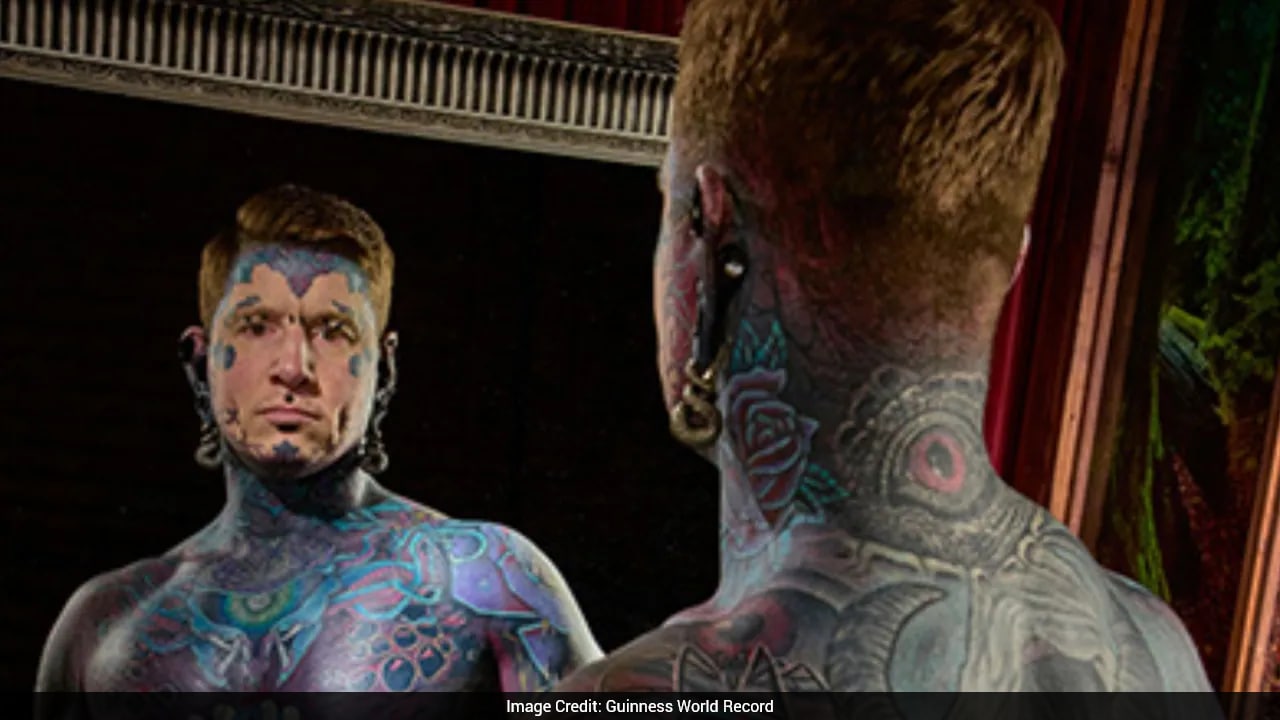
Every time another headline drops about a Canadian man wrapping ninety percent of his skin in ink to chase a Guinness world record, the cultural commentariat rushes to the same lazy talking point. They call it rebellion. They call it a striking assertion of individual autonomy, a middle finger to the corporate grid, a bold reclamation of the human vessel.
They are wrong.
Covering ninety percent of your dermis in permanent pigment is not an act of radical defiance. It is the most hyper-standardized, algorithmic form of visual conformity available in the modern attention economy. When every square inch of your epidermis screams for attention through standardized tribal bands, biomechanical sleeves, and facial work, you have stopped expressing your inner self. You have simply outsourced your personality to a tattoo needle and begged the algorithm for a participation trophy.
Let us dismantle the mythology of the walking canvas.
The Metrics of Mediocrity
Guinness World Records built an empire on quantifying marginal anomalies. Needlessly large pizzas, excessively long fingernails, and individuals who turned their bodies into walking coloring books. The media treats these milestones as avant-garde breakthroughs.
I have spent decades watching subcultures get swallowed, digested, and spat out by the mainstream. I have watched punk rock become a department store aesthetic and body modification transform from a marker of societal marginalization into a middle-class consumer hobby. When tattooing was genuinely dangerous—when walking into a shop meant risking hepatitis, social ostracization, and permanent unemployment—it carried weight. It meant something to wear your outsider status under your skin because the cost was absolute.
Today? You can sit in an ergonomic studio in Toronto, sip artisanal matcha while listening to a curated playlist, drop twenty grand over three years, and walk out looking like a rejected graphic novel villain. The physical pain is real, sure. But physical endurance is not philosophy. Running a marathon hurts. Eating a ghost pepper hurts. Neither qualifies as a profound socio-political statement.
The lazy consensus claims that massive body coverage represents freedom from societal norms. Look closer at the mechanics of modern extreme modification. It is driven by the exact same psychological impulses as luxury watch collecting or supercar ownership: conspicuous consumption, status signaling, and the desperate need to manufacture an interesting identity out of sheer volume.
"True non-conformity does not require a Guinness adjudicator to validate its existence."
The Illusion of Autonomy
Let us address the psychological driver behind this specific brand of record-chasing.
Psychologists call it the uniqueness paradox. In a world where every baseline behavior is tracked, cataloged, and commodified, people feel profoundly invisible. To combat this vertigo of mediocrity, individuals escalate. If a standard sleeve makes you look like a hipster barista, you need two sleeves. If sleeves are common, you need your neck done. If neck tattoos are on corporate middle managers now, you need your face, your scalp, and the webbing between your fingers blacked out.
It is an escalating arms race of aesthetic shock value. But shock value is a depreciating asset. The first time someone sees a ninety-percent covered individual, they stare. By the fifth time, they register it the same way they register a billboard for a mattress company—visual noise to be filtered out.
The irony is crushing. By permanently marking ninety percent of your body to stand out, you lock yourself into a rigid, inescapable visual identity. You become a cartoon character trapped in a single frame for the rest of your natural life. You cannot pivot. You cannot blend in. You have handcuffed your future self to the aesthetic impulses of your twenties and thirties. That is not freedom. That is a life sentence served in black ink and grey wash.
The Economics of Shock
Behind every world record submission lies an ecosystem of capital. Premium tattoo artists charge hundreds of dollars an hour. Large-scale bodysuit projects require hundreds of hours. We are talking about luxury investments that rival the cost of a luxury vehicle or a down payment on a home.
This brings us to the class dynamics that the mainstream press conveniently ignores. True working-class rebellion has historically been quiet, desperate, and practical. Spending the GDP of a small town on decorative skin modifications is a distinctly bourgeois luxury. It is the playground of people who have the financial safety net, the remote desk job flexibility, or the independent income to absorb the social and economic friction of extreme visual deviance.
When a media outlet praises a full-body tattoo milestone as a triumph of the human spirit, they are running PR for the lifestyle branding industry. They are telling you that identity can be purchased by the square inch if you just endure enough needle drops.
What People Get Wrong About Body Modification
People often ask: "Doesn't covering your body in art protect you from societal judgment?"
The honest answer is an aggressive no. And the attempts to pretend otherwise are cowardly.
Advocates love to claim that society has evolved past tattoo discrimination. They point to corporate executives with half-sleeves or tech founders with subtle hand pieces. But there is a massive gulf between a tasteful forearm piece and a ninety-percent saturation bodysuit that includes facial and cranial work.
To pretend that extreme body modification has zero professional or social friction is gaslighting. It does carry consequences. My argument is not that these consequences are fair—it is that adults engaging in extreme modification need to own the reality of their choices instead of hiding behind faux-revolutionary martyrdom. You did not get your face tattooed to smash the patriarchy. You did it because you wanted to look striking, or because you liked the art, or because you wanted the dopamine hit of turning heads at the grocery store. Stop dressing up personal aesthetic choices as civil rights heroism.
The Unconventional Playbook
If you want to actually challenge cultural norms today, do something revolutionary.
Be aggressively normal in your appearance while holding radically dangerous, independent thoughts. In an era where everyone is screaming for attention through visual hyper-inflation—bright hair, face tattoos, maximalist streetwear, curated digital personas—silence and visual restraint are the ultimate counter-culture.
If you already have tattoos, good for you. Wear them because you like the art, not because you think you are a modern-day freedom fighter holding the line against Victorian prudishness. Drop the narrative of struggle. Own the vanity.
We need to stop confusing self-decoration with self-actualization. Slapping a fresh coat of ink over every square inch of your flesh does not fix an unexamined life, nor does it rewrite the social order. It just makes you harder to scan at the dermatologist.