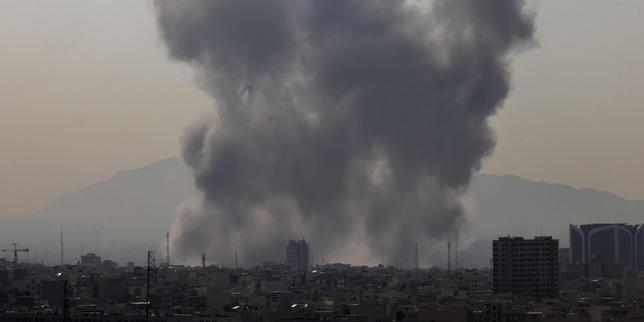
The ink on a legal brief rarely smells like gunpowder, but for Matthew Duss, the two are inextricably linked. When the former foreign policy advisor to Bernie Sanders looks at the satellite imagery of charred Iranian soil, he doesn’t see a "surgical strike" or a "measured response." He sees the fraying edges of a global blueprint that was supposed to prevent the world from sliding back into the chaos of the early twentieth century.
We have grown accustomed to the vocabulary of the "shadow war." It is a lexicon of drones, cyber-intrusions, and deniable assassinations. But when the United States and Israel transitioned from the shadows into the blinding light of direct kinetic strikes on Iranian territory, they didn't just change their tactics. They crossed a threshold that transformed a regional grudge match into what Duss identifies as a "crime of aggression."
To understand why a seasoned political strategist is using the language of Nuremberg trials, we have to look past the missiles and into the quiet rooms where the rules of civilization are actually written.
The Invisible Guardrails
Imagine a neighborhood where two residents have been feuding for decades. They shout over the fence. They occasionally throw rocks at each other's windows. It’s ugly, but the neighborhood remains standing because everyone agrees on one fundamental rule: you don’t kick down your neighbor's front door and set fire to the living room.
The United Nations Charter was designed to be that front door.
After the carnage of World War II, the world’s powers sat down and agreed that "might makes right" was a recipe for extinction. They established a baseline: you cannot invade or strike another sovereign nation unless it is in immediate self-defense or authorized by the Security Council.
When Duss labels these strikes as a "crime of aggression," he is pointing to the fact that the "self-defense" justification has been stretched until it is transparent. If a nation can strike another because of what might happen next month, or because of a proxy's actions three borders away, then the rule of law is no longer a shield. It is a suggestion.
The danger isn't just in the explosion itself. The danger is in the precedent. If the U.S. and Israel can decide that international law is an optional accessory, they lose the moral and legal standing to tell any other nation—be it Russia in Ukraine or China in the South China Sea—that they must follow the rules.
The Human Cost of the Abstract
It is easy to debate the legality of a missile strike from a leather chair in Washington or a studio in Tel Aviv. The maps look clean. The targets are identified by cold alphanumeric codes. But beneath those codes are people who have spent forty years living in the pressure cooker of a "maximum pressure" campaign.
Consider a hypothetical family in Isfahan. They aren't Revolutionary Guard commanders. They are teachers, mechanics, and students. When the sky lights up, they don't reach for a law book. They reach for their children.
For these people, the "crime of aggression" isn't a legal theory; it is the sudden realization that their lives are being used as currency in a high-stakes poker game they never asked to join. The psychological toll of living in a state of permanent "pre-war" is a tax that is never recorded in military budgets. It breeds a specific kind of resentment—not just against the attackers, but against a global system that claims to value human rights while looking the other way when the "right" people are doing the bombing.
The Ghost of 2003
Matthew Duss isn't shouting into the wind because he is a pacifist. He is shouting because he remembers the smell of 2003.
The invasion of Iraq was sold on the same logic we see today: preemptive action, the necessity of stopping a "gathering threat," and the idea that international law was too slow for the modern world. We know how that story ended. It ended in hundreds of thousands of lives lost, trillions of dollars vanished, and a Middle East more volatile than the one the intervention sought to stabilize.
The strikes on Iran feel like a rhythmic echo of that era. By bypassing the constitutional requirement for Congressional approval in the U.S., and by ignoring the sovereign boundaries of international law, the current administration is leaning into a "standardized" lawlessness.
Duss argues that this isn't just a policy error; it's a structural failure. When we allow the executive branch to bypass the legislature to conduct acts of war, we aren't just speeding up the process. We are removing the brakes from a vehicle heading toward a cliff.
The Architecture of a New Order
What happens when the world’s most powerful democracies decide that the UN Charter is an antique?
We enter an era of "ad hoc" justice. In this reality, the definition of an "aggressor" depends entirely on who has the best PR department and the most sophisticated drones. This is the "law of the jungle" dressed in a suit and tie.
The irony is that the United States spent seventy years building the very institutions it is now undermining. Those institutions—the UN, the International Criminal Court, the frameworks of sovereign integrity—were designed to protect the U.S. as much as anyone else. They were meant to ensure that when conflicts arose, there was a roadmap for de-escalation that didn't involve total war.
By normalizing strikes on Iran, we are effectively burning the map.
The Weight of the Silence
There is a specific kind of silence that follows a massive explosion—a ringing in the ears that makes it hard to hear anything else. Washington is currently in the grip of that silence. There is a bipartisan consensus that Iran is a "bad actor," and therefore, any action taken against them is inherently "good."
But Duss’s critique forces us to confront a more difficult truth: you cannot defend a "rules-based international order" by breaking the rules whenever they become inconvenient.
If we accept that these strikes are legal, we are accepting a world where any nation can claim "preemption" to settle a score. We are validating a future where the sky is constantly filled with the hum of drones, and where the concept of a "border" is nothing more than a line on a map that the powerful are free to erase.
The real tragedy isn't just the damage done to Iranian infrastructure. It’s the damage done to the idea that we can be better than our ancestors. We are trading the slow, frustrating work of diplomacy and international law for the instant gratification of a successful strike.
It feels like strength. It looks like resolve. But beneath the surface, it is the sound of a foundation cracking.
The gavel has fallen, and the verdict is clear: we are choosing the chaos we once promised to outgrow.
The drones are still in the air. The lawyers are still drafting their justifications. And somewhere, in the quiet corridors of power, the ghost of 2003 is smiling, watching us make the same mistakes all over again, convinced this time the ending will be different.
Would you like me to analyze the historical parallels between the legal justifications for the Iraq War and the current tensions with Iran?


