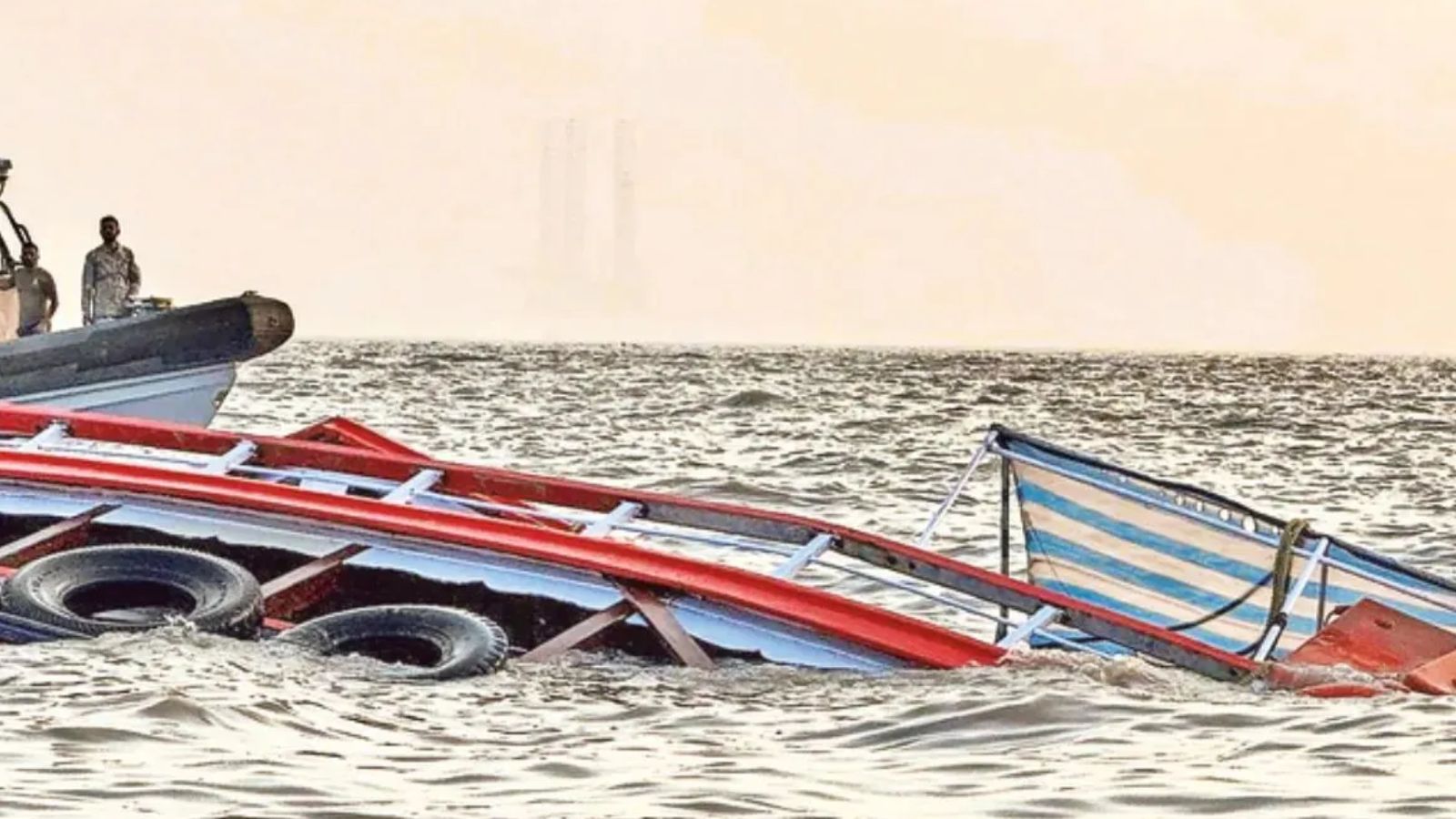
A holiday weekend on the water shouldn't end in a nightmare. Yet, a sudden summer storm on Geneva Lake turned a family Friday into a scene of absolute devastation. Ten people set out on a recreational boat, but only seven made it back alive. Three children, all under the age of 13, drowned after their vessel took on water, capsized, and sank during a fast-moving bout of severe weather.
This wasn't a case of basic negligence. Local authorities confirmed that all four children on board were wearing life jackets. They did what the rules required, but the violence of the storm simply overpowered the boat. This tragedy exposes a brutal truth about summer boating. Sometimes, standard safety gear isn't enough when you're caught in the wrong place at the wrong time. For a closer look into this area, we recommend: this related article.
If you spend time on the water, you need to understand exactly what went wrong on that Wisconsin lake and how quickly a routine afternoon can turn fatal.
Inside the Geneva Lake Boat Capsizing
The tragedy unfolded right around lunchtime on Friday, July 3. Geneva Lake is a massive draw for summer tourists, especially those driving up from the Chicago area. Over a holiday weekend, the local population in Walworth County easily doubles. For further details on this development, detailed analysis can also be found at Reuters.
Six adults and four children were out on a privately owned recreational vessel when the sky turned dark. According to the Geneva Lake Law Enforcement Agency, the operators recognized the danger and tried to navigate back to safety as the weather deteriorated.
They didn't make it.
A squall line packed with heavy rain and wind gusts hitting roughly 65 mph slammed into the area. The storm generated massive waves that hammered the boat, forcing it to take on water rapidly before flipping completely over. Emergency crews rushed to the scene near Big Foot Beach, pulling the six adults and one surviving child from the water.
The survivors immediately told rescuers that three children were still missing. Following an intensive search by local rescue teams and the Wisconsin Department of Natural Resources, the three young boys were pulled from the water. Emergency medical technicians administered lifesaving measures on the scene and rushed them to local medical facilities, but it was too late. All three were pronounced dead.
The Illusion of the Life Jacket Safety Net
The most jarring detail of the Geneva Lake boat capsizing is that the victims wore life jackets. We are told from day one that life vests save lives, and they do. But they aren't an invincible shield against a capsized boat in a major storm.
When a boat flips in 65 mph winds, several things happen at once that can render a life jacket ineffective for small children.
- Entrapment Under the Hull: If a boat flips quickly, passengers can get trapped underneath the upside-down vessel. A life jacket’s buoyancy can actually work against a victim in this scenario, pinning them against the under-decking and making it incredibly difficult to swim down and out to open water.
- Water Ingestion from Waves: High winds create severe chop and whitecaps. A child floating in a standard life vest can still be overwhelmed by continuous waves breaking over their head, leading to secondary drowning or swift water inhalation.
- Hypothermia and Exhaustion: Panic accelerates physical exhaustion. In turbulent water, keeping your head clear of waves requires significant physical effort, even while wearing a vest.
Boating safety experts emphasize that personal flotation devices are designed to keep you afloat until rescue arrives, but they cannot control the chaos of a chaotic environment.
When Emergency Response Gets Slipped Up by Chaos
When a storm like this hits, you can't assume help will arrive in minutes. The same weather system that flipped the boat absolutely ravaged Walworth County. It snapped mature trees, downed live power lines, and damaged buildings, trapping people inside structures across the region.
Walworth County Undersheriff Tom Hausner noted that the influx of 911 calls was overwhelming. Deputies responded immediately to the capsized boat report, but they faced severe delays just trying to reach the water.
Fallen trees and live wires completely blocked the local roads. Emergency crews had to navigate a literal obstacle course while minutes ticked away for the children in the water. Lake Geneva Mayor Todd Krause declared a local state of emergency as power went out across large swaths of the city.
This details a critical lesson for anyone on the water. When a severe storm hits your boating area, the infrastructure on land is often failing at the exact same time. You are truly on your own until emergency crews can physically clear a path to get to you.
How to Read a Microburst and Escape a Fast-Moving Squall
The National Weather Service had issued a severe thunderstorm watch for the region, but summer squalls are notoriously erratic. They can look like a standard rain shower on a radar screen until they suddenly drop out of the sky with the force of a mini-tornado.
If you are operating a boat this summer, relying solely on your phone's weather app is a mistake. Cell service can drop, and radar images can lag by 5 to 10 minutes. You need to read the physical signs of the sky.
Watch the Horizon for the Shelf Cloud
A shelf cloud is a low, horizontal wedge-shaped cloud that appears on the leading edge of a storm front. If you see a dark, sinister-looking line of clouds that seems to plow across the sky, that is the gust front. The wind will arrive long before the rain does. The moment you spot a shelf cloud, your time for a casual cruise is over. You need to head for the nearest shore immediately.
Look for the Color Shift
A green or deeply bruised purple tint in the sky means the clouds contain massive amounts of water and potentially hail. This coloration indicates intense updrafts and downdrafts. If the sky changes color, the storm is mature and capable of producing the exact type of 65 mph straight-line winds that flipped the boat on Geneva Lake.
Monitor the Commotion on the Water
If you notice the wind suddenly die down to a dead calm while the sky darkens, don't relax. This is often the calm before the downdraft hits. Look across the lake. If you see whitecaps forming in the distance or a line of mist moving across the water toward you, that's the wind front ripping across the surface. It will reach your position in seconds.
Your Immediate Protocol When Caught on the Water
If you misjudge the timing and a storm catches you far from the boat ramp, you must switch from transit mode to survival mode instantly.
First, get everyone into the lowest, most central part of the boat. Do not let passengers sit on the bow or the edges where a sudden lurch can throw them overboard.
Second, angle your boat correctly into the waves. Never let the waves hit your boat from the side (the beam). This is the fastest way to capsize. Instead, steer the boat at a 45-degree angle into the wind and waves. This allows the bow to cut through the chop safely without taking on excessive water over the front.
Third, manage your speed. You need enough throttle to maintain steerage and keep the bow pointed into the weather, but not so much speed that you dive the nose of the boat into the next wave.
If the engine fails or the waves become too large to manage, drop an anchor from the bow. This will naturally force the front of the boat to face into the wind, keeping you in the safest possible orientation while you ride out the worst of the squall. Keep your bilge pumps running constantly to clear out any water that splashes over the gunwales.