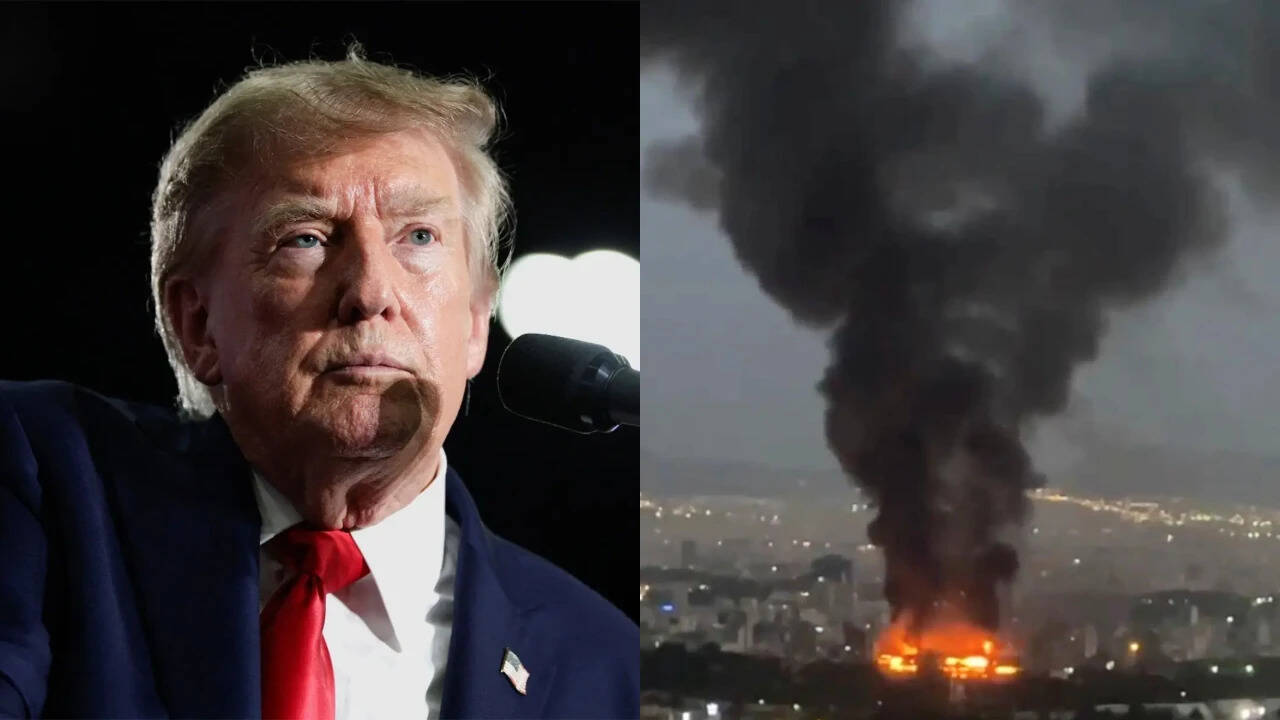
The desk in the West Wing is mahogany, scarred by decades of coffee rings and the heavy, invisible weight of decisions that alter the orbit of nations. At midnight, the air smells of old paper, floor wax, and the dry hum of secure telephone lines. Across that desk sits a dossier. Inside are satellite photographs of concrete bunkers buried deep beneath the arid Iranian plateau, intercepted communications crackling with static, and casualty projections rendered in cold, sterile spreadsheets.
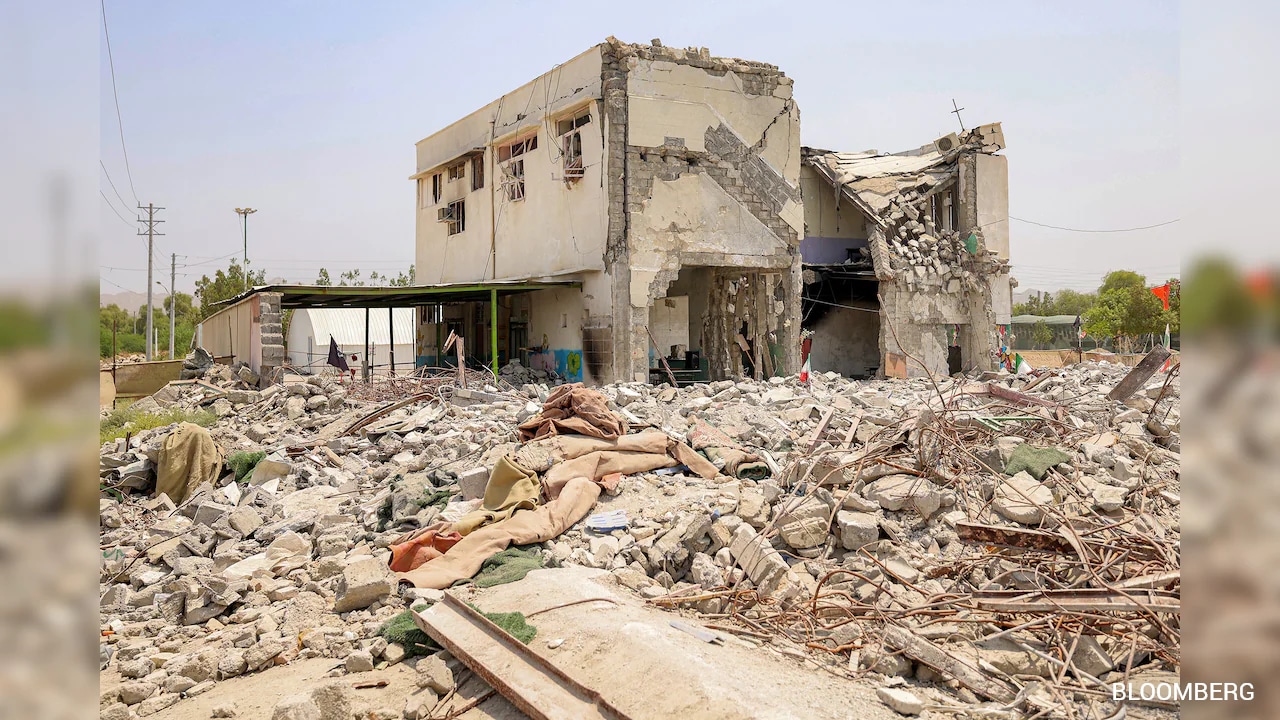
To a man standing in a basement in Tehran or a café in Isfahan, the map of the world looks entirely different. There, the impending clash is not a tactical chess move discussed over briefing binders. It is the rhythmic, sickening drop in the local currency's value, the sudden tightness in a mother's chest as she watches military transports rumble past her window, and the quiet, persistent dread of a sky that might catch fire before dawn.
We have been here before. Every generation builds its own altar to crisis, convincing itself that this time, the geometry of destruction is somehow different, cleaner, more controllable.
Consider what happens when a president weighs the threshold between deterrence and annihilation. The phrase itself—annihilation—slides off the tongue with a cinematic sleekness, stripped of its noise and its blood. But language in high-stakes strategy is a narcotic. It numbs the speaker to the physical reality of what follows a single signed directive.
In a hypothetical situation modeled after decades of Pentagon simulations, picture a subterranean command center sixty feet underground. Fluorescent panels flicker with a tired, electric hum. Junior analysts, their eyes bloodshot from three consecutive shifts on Red Bull and cold pizza, stare at glowing terminals tracking air defense radar cross-sections. They are mapping the arteries of an ancient civilization—power grids, communications hubs, centrifuge cascades—translating human lives into blinking green and red hex codes.
When the commander-in-chief looks at those maps, the temptation is always the same: the illusion of the surgical strike. The belief that modern ordnance can decapitate a regime without crushing the society beneath it. History offers a brutal rebuttal to that fantasy. Wars do not unfold like precision surgical procedures. They cascade. They shatter infrastructure, displace millions, and unleash economic shockwaves that ripple from the Strait of Hormuz to a gas station counter in Ohio.
To understand the current calculus within Washington, we have to look past the bluster of podium statements and social media posts. Beneath the performative posturing lies a genuine, paralyzing anxiety. The architects of American foreign policy know that a full-scale regional conflict in the Middle East would dwarf the protracted quagmires of Iraq and Afghanistan. Iran is not a failed state waiting for a gentle push; it is a nation of nearly ninety million people, steeped in a deep, defiant historical memory, possessing an asymmetric arsenal capable of choking global oil supply lines and igniting proxy fires from Lebanon to the Persian Gulf.
Yet, restraint is often misread as weakness in the capital. That is the trap. A leader feels the fierce gravitational pull of toughness, the relentless pressure to prove resolve, to avoid looking hesitant while adversaries watch from Beijing and Moscow.
Walk through the narrow, vaulted alleys of the Grand Bazaar in Tehran, and you will hear a different kind of calculus. Here, merchants who survived the Iran-Iraq war of the 1980s—a conflict that consumed hundreds of thousands of lives in brutal trench warfare—speak in hushed, pragmatic tones. They do not romanticize martyrdom. They fear inflation, scarcity, and the sudden, violent disruption of their children's futures. They are caught between a repressive domestic apparatus that demands ideological purity and an external superpower whose threats feel as unpredictable as a summer storm.
This is the human cost of geopolitical brinkmanship. It is not fought on parchment maps or inside sterile briefing rooms. It is measured in the quiet desperation of ordinary people hoarding staples, bracing for a night when the power might go out and never come back on.
The paradox of modern power is that the weapons at our disposal have become so catastrophically effective that using them destroys the very strategic objectives they were designed to secure. To obliterate an adversary's nuclear capability through massive air campaigns would likely guarantee the very regional conflagration Washington desperately wants to avoid. It is a terrifying paradox: the more absolute your capacity for destruction, the more constrained you are in how you use it.
We watch the news cycles churn, treating these geopolitical standoffs like reality television or sporting events, tracking poll numbers and rhetorical escalations. But every threat uttered in a press briefing translates into real-world panic. Every troop movement shifts the psychological baseline of a generation.
The desk in the West Wing remains heavy. The dossier remains open. And somewhere in the dark, beneath the mountains of the Middle East, a radar screen sweeps in a slow, hypnotic circle, waiting for a decision that will write its next chapter in ash.