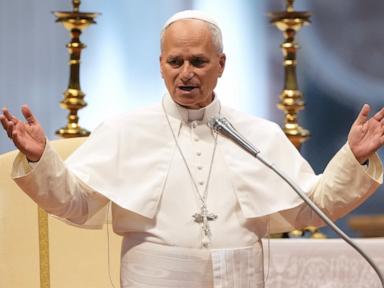
Pope Leo XIV will embark on his inaugural apostolic journey to Latin America this November, touching down in Uruguay, Argentina, and Peru for an intense eleven-day tour that maps out the strategic priorities of the young pontificate. Announced officially by the Vatican, the itinerary covers ten cities from November 6 to 17, serving as a critical stress test for a pope whose background bridges North American administrative corridors and decades of grassroots missionary work in the Global South.
For veterans of Vatican press briefings, the choice of nations is hardly incidental. It represents a deliberate calibration of pastoral diplomacy, regional mending, and personal history.
Mapping the Itinerary
The journey begins in Uruguay, a nation long characterized by its distinct secular identity and progressive social policies, before moving into the high-stakes political theater of Argentina, and finally culminating in Peru, where the pontiff spent formative decades of his ministry and holds dual citizenship.
- Uruguay (November 6–8): Stops include Montevideo, Paysandú, and Florida, engaging a secularized urban populace and traditional coastal communities.
- Argentina (November 8–11): Includes Buenos Aires, Córdoba, and the crucial Marian sanctuary of Luján, addressing a fractured national flock that watched its previous native-born shepherd, Pope Francis, avoid a homecoming throughout his entire twelve-year papacy.
- Peru (November 11–17): Spans Lima, Chiclayo, Cusco, and Pucallpa, cutting across coastal deserts, Andean peaks, and the Amazon basin to honor deep personal roots.
This multi-stop schedule is designed to maximize visibility across disparate demographic and economic strata. Yet, beneath the logistics lies a deeper ecclesiastical calculation.
The Argentine Absence and the Burden of Inheritance
The glaring omission of a papal visit during the tenure of Pope Francis left a raw nerve in Argentina. Millions of faithful struggled to reconcile global travels with a persistent refusal to cross the Río de la Plata back home. Pope Leo XIV stepping onto Argentine tarmac in Buenos Aires and journeying to the basilica in Luján is an explicit attempt to close that chapter.
It is an act of institutional repair. The pontiff must navigate an economy gripped by volatility and a polarized citizenry hungry for validation from Rome. By bypassing political grandstanding and focusing on pilgrimage sites, the Vatican hopes to de-escalate domestic tensions while reasserting the Church's presence among the working poor.
At the same time, the brief stop in Uruguay tests the limits of dialogue in a fiercely secular state. Uruguay does not operate with the same cultural Catholicism seen elsewhere on the continent. The approach here requires intellectual engagement rather than emotional fervor, mirroring the academic and Augustinian temperament that defines Leo XIV.
Returning to the Peruvian Heartland
If Argentina represents political mending, Peru represents home. Long before his election as the 267th pontiff, Robert Francis Prevost spent years embedded in Peruvian communities, rising to become the Bishop of Chiclayo and acquiring naturalized citizenship.
When he visits Pucallpa in the Amazon basin or navigates the altitude of Cusco, he is not a foreign dignitary inspecting a distant province. He is a local son returning to parishes that shaped his theology. This familiarity changes the dynamic of the crowds. Latin American audiences possess an acute radar for authenticity. They can spot institutional tourism instantly.
Leo XIV avoids this trap because his pastoral credentials in Chiclayo and Trujillo were forged decades before a white cassock ever entered the equation. This trip is built upon relationships older than his papacy, granting him a moral authority that administrative Vatican officials often struggle to project abroad.
Confronting Regional Realities
Latin America remains a continent caught in systemic friction. Liberation theology's legacy, the rapid expansion of evangelical Protestantism, and deep-seated institutional corruption form the backdrop of this November tour. The Catholic Church has bled adherents across the region for three decades, losing ground in urban slums and rural outposts alike.
A whirlwind eleven-day tour cannot reverse demographic hemorrhage on its own. What it can do is alter the visual vocabulary of the pontificate. By placing an American-born pope—who speaks fluent Spanish and understands the nuances of local ecclesiastical politics—directly into the path of marginalized indigenous communities and restless urban youth, the Vatican is betting on personal resonance over bureaucratic directives.
The success of the journey will not be measured by stadium attendance or media applause. It will be judged by whether the shepherd's return halts the quiet drift of the faithful toward the exits.
November approaches quickly, bringing with it the dust of the Argentine pampas, the chill of the Andean winds, and the humidity of the Amazonian lowlands. The itinerary is set. The crowds will gather. The true test of Leo XIV's capacity to unify a fractured continental church begins beneath the Southern Cross.