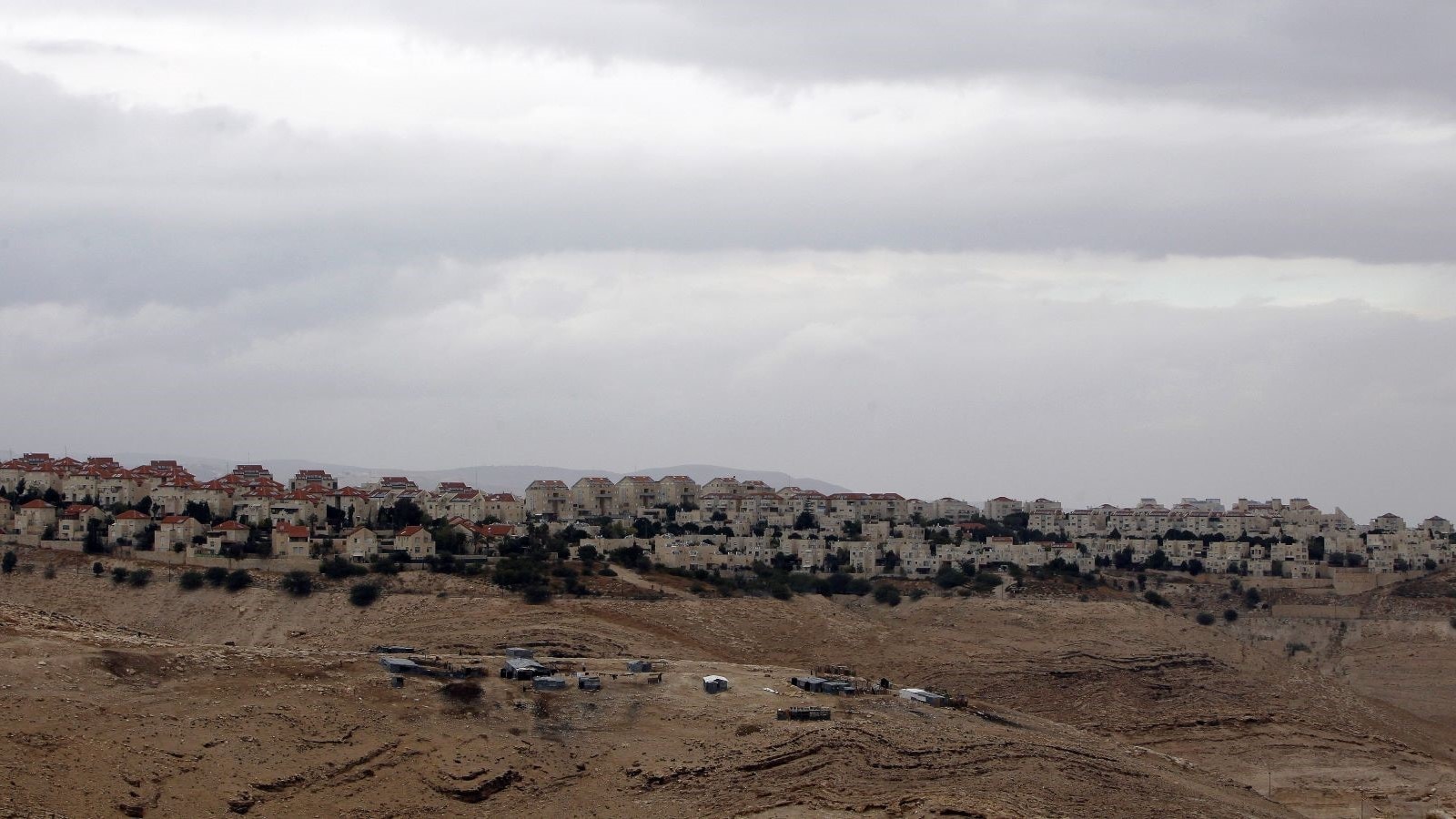
The E1 settlement corridor represents a structural breakpoint in territorial contiguity between the northern and southern West Bank. When regional powers including the United Arab Emirates, Saudi Arabia, Qatar, and Turkiye issue joint condemnations regarding the advancement of this planning zone, the diplomatic signaling transcends routine rhetoric. It reflects an intersection of legal exposure, regional security calculations, and long-term economic architecture.
Deconstructing the mechanics behind the E1 project reveals why an administrative planning designation inside municipal boundaries generates immediate cross-border friction across the Middle East.
The Spatial Mechanics of the E1 Corridor
The designation known as E1 covers approximately twelve square kilometers of land situated directly between Jerusalem and the Maale Adumim settlement block. Territorial continuity depends on lateral movement between Ramallah in the north and Bethlehem and Hebron in the south.
- The topographical pinch point creates an absolute barrier to East Jerusalem integration.
- Urban development within this tract severs the West Bank into two distinct geographic enclaves.
- Logistics corridors and municipal expansion plans rely on this specific axis for economic viability.
Geopolitical strategy relies heavily on spatial control. By placing high-density residential and commercial infrastructure inside the E1 corridor, municipal planners alter the physical baseline of any future negotiated border. This prevents the emergence of a contiguous urban Palestinian space, shifting the baseline from a two-state configuration to a system of isolated enclaves.
Regional State Calculus and Diplomatic Friction
States such as the United Arab Emirates, Saudi Arabia, Qatar, and Turkiye evaluate the E1 project through divergent domestic and international risk matrices. The alignment of these states in condemnation highlights a shared assessment that the advancement of E1 inflicts systemic damage on regional stability frameworks.
The economic and diplomatic integration agreements forged under the Abraham Accords and wider regional normalization channels face operational headwinds when settlement expansion accelerates. For Riyadh and Abu Dhabi, public posture on territorial integrity functions as a necessary domestic stabilizer.
- The Domestic Legitimacy Axis: Public sentiment across Gulf states remains anchored to the Palestinian issue, creating a ceiling for bilateral integration with Israel absent territorial freezes.
- The Multilateral Security Matrix: Doha and Ankara utilize diplomatic opposition to position themselves as defenders of multilateral norms, countering regional rivalries through advocacy.
- The Legal Exposure Vector: International court opinions regarding the illegality of settlements create secondary compliance risks for foreign ministries engaging in trade or security pacts with states altering occupied territory.
When multilateral bodies and key capital cities register formal objections, they signal that administrative changes in E1 cross a threshold from internal civil planning to violations of international legal frameworks. This increases the friction coefficient for trade agreements, defense partnerships, and intelligence-sharing initiatives.
The Economic and Logistical Cost Function
Territorial fragmentation carries measurable economic costs. Economic development in the West Bank requires integrated labor markets, uninhibited supply chains, and predictable access to regional transport nodes.
Fragmenting the territory into northern and southern zones introduces structural inefficiencies:
- Transaction costs for internal cargo transport escalate due to checkpoints and circuitous routing around restricted zones.
- Labor mobility between major commercial hubs drops, depressing productivity across manufacturing and service sectors.
- Capital investment stagnates as institutional investors price in the high probability of civil unrest and regulatory volatility driven by territorial disputes.
These economic penalties reverberate outward. Regional trade partners face depressed market output in the Palestinian territories, reducing potential export volumes and cross-border commercial ventures. The opportunity cost of perpetual friction outweighs any short-term domestic political gains achieved by advancing municipal zoning permits.
Strategic Trajectory
The advancement of the E1 settlement corridor operates as a stress test for regional architecture. Administrative actions that alter geographic facts on the ground force regional partners to weigh tactical alliances against structural commitments to international law.
Future state behavior will be dictated by the velocity of actual construction versus diplomatic moratoriums. If the planning phase transitions into physical ground-breaking, bilateral frameworks across the region will face structural decay, compelling states to recalibrate their diplomatic postures from engagement to active containment.


