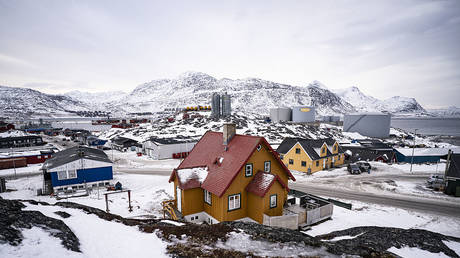
The modern conversation surrounding Greenland ignores the underlying mechanics of sovereign acquisition, resource scarcity, and logistical friction. Headlines frequently frame foreign interest in the island through sensationalized narratives of annexation or hostile resource grabs. This perspective misdiagnoses the situation. What is occurring is a complex exercise in strategic positioning, driven by changing climatic realities, critical mineral demands, and shifting maritime choke points.
Evaluating this scenario requires stripping away rhetorical hyperbole and replacing it with structural economic and geopolitical analysis. The Arctic region is no longer a peripheral frozen wasteland; it is an emerging theater for great power competition where physical access dictates long-term economic security. Understanding why superpowers cast an eye toward Nuuk requires examining the interaction between mineral supply chains, defense architecture, and the prohibitive cost of northern infrastructure development.
The Mineral Economics and Supply Chain Vulnerabilities
Rare earth elements and critical transition minerals form the foundational justification for external interest in Greenland. Industrial supply chains depend heavily on processed materials that face severe geographic concentration risks. Deposits of neodymium, praseodymium, dysprosium, and uranium sit embedded within Greenlandic geological formations, alongside substantial reserves of zinc, nickel, and iron ore.
Extracting these resources presents a distinct economic bottleneck. The primary constraint is not geological availability, but the total cost function of extraction in an extreme environment.
- Capital Expenditure Outlays: Mining operations require massive upfront capital investments for power generation, housing, and port facilities where none currently exist.
- Environmental Mitigation Costs: Short operating windows due to sea ice and permafrost fragility require specialized engineering standards that inflate operational expenses.
- Refining Infrastructure Deficits: Raw extraction has minimal strategic value without downstream processing capabilities, which Greenland entirely lacks and which external powers are hesitant to build locally due to environmental regulations and labor shortages.
External states do not need to annex territory to secure these commodities. Global markets operate through concession bids, equity stakes in mining ventures, and bilateral trade agreements. Framing resource acquisition through the lens of military annexation or territorial takeover misunderstands how modern extraction works. Corporations and state-backed syndicates utilize commercial diplomacy and foreign direct investment to lock in offtake agreements long before physical extraction begins.
The Strategic Geography of the High North
Security architecture provides the second major variable in the geopolitical calculus of the region. Greenland occupies a vital position within the GIUK gap, the maritime chokepoint spanning Greenland, Iceland, and the United Kingdom. During the Cold War, this corridor represented the primary barrier preventing Soviet naval forces and strategic bombers from entering the open Atlantic.
That defensive imperative has intensified with the opening of Arctic shipping routes. As polar ice recedes, the Northwest Passage and the Transpolar Sea Route transition from theoretical pathways to viable commercial shipping lanes. These routes dramatically reduce transit times between East Asian ports and European markets.
Control or influence over Greenland translates directly into early warning capability and maritime domain awareness. The United States maintains a permanent military footprint at Pituffik Space Base, formerly known as Thule Air Base, which houses critical radar systems for ballistic missile early warning and space surveillance.
Military projection in this environment operates under severe physical constraints.
- Logistical Isolation: Supply lines stretch thousands of miles, making operational sustainability dependent on specialized ice-strengthened vessels and resilient aviation infrastructure.
- Communication Degradation: High-latitude satellite communication suffers from orbital geometry gaps and atmospheric interference, necessitating redundant terrestrial and polar orbit relay systems.
- Personnel Constraints: Harsh meteorological conditions limit human endurance and complicate continuous mechanical maintenance schedules.
Any attempt at territorial annexation would instantly trigger severe diplomatic fracturing among NATO allies, destroying the very intelligence-sharing and defensive cooperative agreements that make the region secure in the first place. The marginal utility of physical sovereignty is vastly outweighed by the diplomatic and economic costs of violating international norms.
The Autonomy Paradox and Fiscal Sustainability
Greenland operates under a system of self-government established through acts of devolution from Denmark, culminating in the Self-Government Act of 2009. This legal framework grants the Naalakkersuisut, the Greenlandic government, control over domestic affairs, natural resources, and the eventual path toward full independence.
Independence remains a stated political objective for many domestic political factions. The primary barrier to this transition is fiscal viability. The Greenlandic economy relies heavily on an annual block grant from the Danish government, which accounts for a substantial share of public sector revenue.
[Domestic Tax Base] + [Export Revenue (Fishing)] + [Danish Block Grant] = Public Sector Budget
Fishing and seafood exports constitute the vast majority of private sector export revenue, exposing the economy to marine stock fluctuations and international market price volatility. Without external financial inputs or a massive, highly successful mining sector, full fiscal independence would lead to an immediate contraction in public services, healthcare, and infrastructure maintenance.
This economic reality creates a triangular dynamic among Nuuk, Copenhagen, and external powers seeking influence.
- Copenhagen maintains a stabilizing financial role while managing foreign policy and defense on behalf of the kingdom.
- Nuuk leverages its strategic position and resource potential to maximize financial autonomy and extract concessions from both Denmark and international investors.
- External Superpowers offer capital, infrastructure investment, and diplomatic backing as a mechanism to secure long-term access and displace rival influence.
When foreign actors express heightened interest in the island, they are generally responding to Nuuk's efforts to diversify its international partnerships. This is economic statecraft, not territorial conquest.
Assessing the Annexation Hypothesis
The concept of a modern state forcibly annexing Greenland collapses under rigorous scrutiny. Territorial expansion among advanced economies and allied nations is an obsolete model of resource and security acquisition. The international system penalizes overt sovereignty violations through trade sanctions, diplomatic isolation, and the collapse of multilateral security pacts.
Strategic objectives are achieved through institutional capture and economic integration. By embedding supply chains, financing critical infrastructure, and maintaining intelligence cooperation, a dominant power secures its long-term interests without firing a shot or rewriting administrative borders.
The future of the region will be determined by corporate balance sheets, engineering innovations in cold-weather resource extraction, and the diplomatic agility of the Greenlandic government as it navigates the competing ambitions of external capitals. The primary theater of competition is not military occupation; it is the silent, ongoing negotiation over capital allocation, resource concessions, and the structural control of high-latitude trade routes.