Strategic positioning in vital maritime choke points rarely reduces to binary outcomes of peace or total conflict. When public commentary frames resource-rich corridors through rhetorical exaggerations like territorial acquisition claims, analysts must isolate the underlying variables driving state behavior. The underlying mechanics governing maritime transit lanes, energy security, and military deployment thresholds involve a precise calculus of economic friction, logistical vulnerability, and deterrence theory.
Evaluating strategic risk in the Persian Gulf requires breaking down the core drivers that dictate state posture. Official rhetoric often masks the structural constraints limiting actual escalation. Three fundamental pillars anchor the reality of modern maritime security in this sector: the physical logistics of energy transport, the economic elasticity of global crude markets, and the asymmetric military doctrines designed to preserve deterrence without triggering catastrophic loss.
The Logistics of Transit Bottlenecks
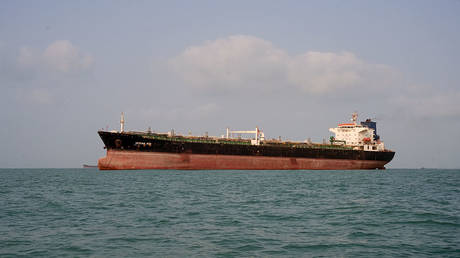
The Strait of Hormuz functions as a structural constraint for global energy supply chains. Approximately a fifth of the world's petroleum consumption passes through a shipping channel barely twenty-one miles wide at its narrowest point, with inbound and outbound traffic separated by two two-mile-wide lanes. This physical constriction creates an acute point of failure.
When political actors threaten closure or re-characterization of the corridor, the primary mechanism of leverage is not permanent territorial annexation, which remains logistically and legally untenable under international maritime law. Instead, the mechanism is the generation of uncertainty. Insurance premiums for commercial tankers operating in the region spike instantly upon the perception of kinetic risk. Shipowners factor these elevated war-risk insurance costs directly into freight rates, which immediately propagates into the landed cost of crude oil and liquefied natural gas.
The physical architecture of the corridor prevents rapid substitution. Pipelines exist that bypass parts of the Persian Gulf, specifically infrastructure connecting Middle Eastern producers to Red Sea terminals, but their spare capacity remains insufficient to absorb the total volume moving through the strait. Consequently, any disruption alters the global supply curve before alternative logistics can scale.
The Economic Cost Function
State actors operating in this theater weigh actions through a strict cost-benefit framework. For exporting nations bordering the Gulf, closing or severely restricting the waterway is an economically self-defeating maneuver. National budgets depend almost entirely on hydrocarbon export revenues. Halting maritime traffic starves the domestic economy of foreign currency reserves, collapsing local currency values and triggering internal instability within weeks.
Conversely, importing economies face structural inflation shocks when transit friction increases. Central banks track petroleum price volatility as a primary driver of headline inflation. A sustained supply constriction forces industrial consumers to draw down strategic petroleum reserves while absorbing higher operational expenses.
To quantify this risk, analysts utilize a friction coefficient based on three inputs:
- The daily volume of crude and condensate transiting the channel.
- The immediate availability of global strategic reserve inventories.
- The time required for alternate supply routes to reach market equilibrium.
The intersection of these variables reveals that neither a major power nor a regional state benefits from prolonged kinetic disruption. The economic feedback loops are rapid and punishing across all participating entities.
Asymmetric Deterrence and Naval Posture
Military posturing in the Gulf relies heavily on asymmetric capabilities. Major external powers maintain a persistent naval presence to protect freedom of navigation, relying on surface combatants, airborne early warning systems, and regional alliance networks. Regional actors counter this conventional dominance through distributed anti-access area denial strategies. These tactics emphasize fast attack craft, coastal cruise missile batteries, naval mines, and uncrewed surface vehicles designed to complicate the operational calculus of a superior naval force.
This dynamic creates a stable stalemate defined by calibrated provocation. Incidents involving commercial vessels, drone surveillance, or intercepted communications are tactical maneuvers designed to test red lines rather than initiate total war. The cost of full-scale conflict involves severe economic devastation for all parties, ensuring that military engagement remains restricted to gray-zone operations, cyber interference, and proxy friction.
Deploying significant military assets into a constrained maritime theater incurs high operational maintenance costs. Navies must account for force protection against asymmetric threats in a congested environment where reaction times are measured in minutes. This operational reality imposes strict discipline on command structures, reducing the likelihood of accidental escalation while maximizing the utility of diplomatic signaling.
Structural Constraints on Territorial Claims
Rhetoric concerning territorial re-designation or the annexation of strategic transit zones ignores the institutional and legal framework governing the global commons. The United Nations Convention on the Law of the Sea establishes transit passage regimes through international straits used for international navigation. Attempting to alter these legal definitions unilaterally invites coordinated economic sanctions, secondary penalties, and total diplomatic isolation.
Furthermore, regional powers possess significant sovereign agency. They reject external assertions of sovereignty over shared or international waters, utilizing diplomatic coalitions and localized military patrols to assert sovereignty. The friction between external ambitions and regional deterrence creates a permanent state of diplomatic tension, where words consistently outpace operational capabilities.
Long-term stability in the corridor depends on maintaining predictable rules of engagement. Commercial shipping relies on certainty above all else. As long as insurance markets can price the operational risk and naval escorts maintain baseline security, the physical flow of energy will continue despite hostile rhetoric from political figures.
Maritime security strategies must focus on hardening supply chains against localized disruptions, diversifying export routes to reduce single-point-of-failure exposure, and maintaining open intelligence-sharing channels between commercial operators and naval command centers to prevent miscalculation during periods of heightened political friction.