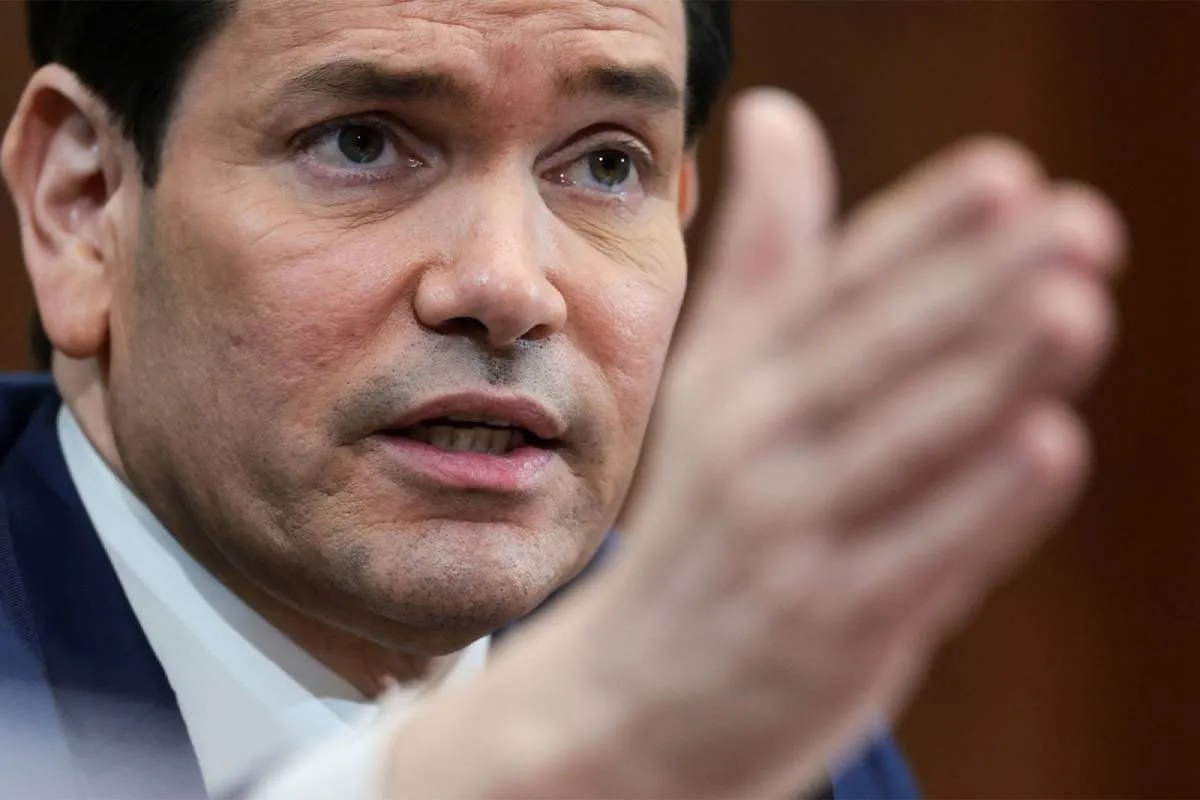
The transition of US foreign policy under the Trump administration, specifically driven by Secretary of State Marco Rubio’s legislative and diplomatic track record, signals a shift from rhetorical partnership to structured institutional alignment with India. The public declarations emerging from congressional briefings regarding an imminent bilateral agreement are not sudden diplomatic breakthroughs. Instead, they represent the operationalization of a multi-year convergence framework designed to counter regional hegemony in the Indo-Pacific.
To understand the trajectory of this alignment, the relationship must be stripped of diplomatic platitudes and analyzed through its primary operational pillars: technology transfer friction points, maritime security architecture, and the restructuring of global supply chains.
The Tri-Border Security Framework in the Indo-Pacific
The immediate catalyst for the accelerated diplomatic engagement is the formalization of a maritime security architecture. This structure operates on a three-axis security model where the United States and India attempt to create a synchronized containment strategy.
- Axis One: Maritime Domain Awareness (MDA). The integration of real-time data feeds between the US Indo-Pacific Command (INDOPACOM) and India’s Information Fusion Centre – Indian Ocean Region (IFC-IOR) serves as the technical baseline. The objective is to convert raw telemetry into an actionable, shared operational picture.
- Axis Two: Logistics Interoperability. The utilization of the Logistics Exchange Memorandum of Agreement (LEMOA) has moved from occasional refueling exercises to systematic, high-frequency operational deployment. This reduces the logistical tail for US naval assets in the Indian Ocean while granting Indian assets reciprocal access in Western Pacific nodes.
- Axis Three: Sub-Surface Warfare Collaboration. The Indian Ocean's underwater topography represents the primary theater of strategic vulnerability. Joint exercises now prioritize anti-submarine warfare (ASW) tracking matrices, specifically targeting acoustic signatures of non-partner state vessels navigating deep-sea channels.
The strategic friction here lies in India's historical doctrine of strategic autonomy. While New Delhi seeks the technology and intelligence access provided by Washington, it actively resists entering a formal, treaty-bound alliance. The Rubio doctrine recognizes this limitation, shifting the objective from a "mutual defense pact" to a "cooperative intercept capability."
Overcoming Technology Transfer Bottlenecks
The structural bottleneck of US-India relations has consistently been the International Traffic in Arms Regulations (ITAR) and the Export Administration Regulations (EAR). Historically, India has been classified as a non-allied state, subjecting procurement requests to prolonged congressional review cycles and strict end-user monitoring.
The impending agreement aims to establish a regulatory bypass via the Initiative on Critical and Emerging Technology (iCET). This framework functions as an institutional accelerator by targeting four specific technology vectors:
Co-Development of Jet Propulsion Systems
The transfer of General Electric F414 engine manufacturing technology to India represents a fundamental shift in defense industrial cooperation. This is not a simple purchase; it involves the transfer of precise metallurgical data and manufacturing processes. The strategic payoff for the United States is the long-term decoupling of the Indian defense establishment from Russian supply lines, which currently sustain a significant portion of India's legacy air fleet.
Unmanned Aerial Systems (UAS) Integration
The procurement and subsequent localized assembly of MQ-9B SeaGuardian drones establish a persistent surveillance layer over the northern Indian Ocean. The operational significance lies in the software integration: these platforms must communicate securely across shared data links without compromising India’s sovereign command-and-control networks.
Semiconductor Supply Chain Redundancy
The vulnerability of advanced node semiconductor fabrication in East Asia requires a geographic redistribution of assembly, testing, and packaging (ATP) facilities. The strategic framework incentivizes US technology firms to establish secondary and tertiary infrastructure within the Indian subcontinent. This mitigates the risk of a single-point-of-failure in global electronics manufacturing during a cross-strait contingency.
Quantum and Cyber Defense Coordination
The militarization of space and cyberspace requires a standardized cryptographic protocol. Joint development under iCET focuses on securing communications networks against quantum-enabled decryption methods, ensuring that tactical data shared during crises remains uncompromised.
The Economic Re-Shoring Calculus
The economic rationale underpinning the Trump administration’s engagement with India deviates from traditional free-trade philosophy. The strategy is grounded in "friend-shoring"—a deliberate policy of shifting supply chains to nations with shared strategic anxieties, even if production costs are marginally higher than in the primary manufacturing hub.
[Global Supply Chain Disruption]
       │
       ▼
[Tariff & Regulatory Barriers on Hegemonic Power]
       │
       ▼
[Capital Reallocation to Alternative Hubs] ──► [India's Production Linked Incentive (PLI)]
                                                              │
                                                              ▼
                                              [Infrastructure & Labor Bottlenecks]
This economic migration faces immediate structural headwinds within India's domestic ecosystem. The Indian state relies heavily on tariffs to protect domestic industries, a policy that directly conflicts with the Trump administration's reciprocal tariff agenda. The success of the economic pillar depends on a Grand Bargain: India must lower specific market-access barriers for US agricultural goods, medical devices, and digital services in exchange for preferential access to US technology transfers and capital investment guarantees.
Furthermore, India’s infrastructure deficit—specifically in logistics velocity and power grid stability—acts as a drag on rapid manufacturing scaling. The Production Linked Incentive (PLI) schemes initiated by New Delhi are designed to offset these systemic inefficiencies, but the real-world deployment of capital remains slower than the geopolitical timeline demands.
Strategic Divergences and Systemic Risks
An objective assessment of the US-India relationship requires analyzing the systemic points of divergence that could stall or reverse the projected alignment.
The first limitation is India’s relationship with Russia. New Delhi's dependence on Moscow for military spare parts, combined with its ongoing purchase of discounted Russian crude oil, runs counter to Washington’s broader European sanctions framework. While the US executive branch has historically utilized Countering America's Adversaries Through Sanctions Act (CAASPA) waivers for India, a future escalation in Europe or a hardening of US sanctions could eliminate this political flexibility.
The second limitation is the divergence in regional priorities. Washington views the partnership primarily through the lens of maritime containment in the Western Pacific and South China Sea. New Delhi, conversely, faces immediate continental threats along its northern mountainous borders. This geographic divergence means that while the US seeks Indian naval projection eastward, India’s primary allocation of military resources will remain defensive and land-centric.
Finally, the domestic political alignment presents a volatile variable. Trade friction can quickly trigger nationalist political rhetoric in both capitals. If the Trump administration enforces blanket reciprocal tariffs without exempting strategic partners, the economic foundation of the relationship could erode, leaving only the security pillar to support the entire bilateral architecture.
Operational Execution Matrix
To translate the impending congressional agreements into sustained strategic advantage, the operational execution must prioritize clear, measurable milestones rather than symbolic summits.
- Establish Permanent Joint Command Cells: Transition from periodic military exercises to a permanently staffed, combined operational planning cell at INDOPACOM. This cell must be authorized to coordinate maritime patrolled routing and shared intelligence analysis in real time.
- Harmonize Export Control Regimes: The US Congress must grant India a specific statutory exemption within ITAR regulations, akin to the National Technology and Industrial Base (NTIB) status held by Five Eyes partners. Without this legislative modification, administrative delays will continue to neutralize the intent of iCET.
- Execute Sector-Specific Tariff Phase-Outs: Rather than attempting a comprehensive Free Trade Agreement (FTA), negotiators should pursue a series of narrow, high-value mini-agreements. These must tie tariff reductions in specific sectors directly to technology transfer milestones—for example, lowering Indian duties on US ICT components in lockstep with the establishment of operational wafer fabrication facilities in Gujarat or Tamil Nadu.
- Synchronize Strategic Energy Reserves: As maritime chokepoints face increased risk of closure, a coordinated mechanism for releasing strategic petroleum and gas reserves between the two nations must be codified. This ensures that an energy blockade or supply shock in the Strait of Malacca does not immediately cripple the industrial output of either partner.
The upcoming diplomatic declarations will likely celebrate the proximity of a deal. However, the true metric of success will not be the signing ceremony, but the speed at which bureaucratic friction is removed from the technology transfer and military logistics pipelines. The strategic alignment is structurally logical, but its execution remains vulnerable to the tactical realities of domestic politics and trade protectionism.