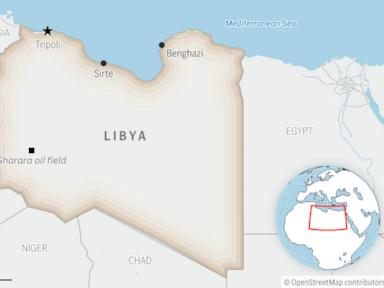
The international prosecution of non-state actors operating within failing states is historically treated as a localized issue of human rights enforcement. When the International Criminal Court (ICC) initiated proceedings against Khaled Mohamed Ali El Hishri—a senior commander of the Mitiga detention facility in Tripoli—the conventional media narrative framed it as an isolated milestone in international criminal justice. This framing ignores the systemic economic structure that sustains these operations.
The Mitiga facility, operated by the state-sanctioned Special Deterrence Force (SDF, or Rada), does not exist in an institutional vacuum. It represents a highly optimized node within a transnational economic value chain that converts human migration flows into sovereign leverage and liquid capital. By analyzing the structural mechanics of this system, we can map how localized atrocities are directly incentivized by international border-externalization policies. Recently making news in this space: The Rooms Where the World is Being Quietly Redrawn.
The Tri-Centric Extraction Architecture
The business model of a Libyan detention facility relies on a reliable input stream of human capital and three distinct, self-reinforcing revenue generation mechanisms. The operational efficiency of a commander like El Hishri is measured by their ability to maximize yields across these three vectors.
       [ Human Capital Input: Migrant Flows ]
                         │
                         ▼
        ┌──────────────────────────────────┐
        │  Mitiga Detention Facility Node  │
        └──────────────────────────────────┘
                         │
         ┌───────────────┼───────────────┐
         ▼               ▼               ▼
   [ Pillar 1 ]    [ Pillar 2 ]    [ Pillar 3 ]
   Arbitrary       Asymmetric      Geopolitical
   Extortion       Forced Labor    Subsidization
Pillar 1: Arbitrary Discretionary Extortion
The baseline revenue model is built on arbitrary detention without legal recourse. Upon entering the facility, detainees are stripped of legal status and transformed into economic leverage. Staff use systematic physical coercion—including torture, starvation, and isolation—not merely as punitive measures, but as active mechanisms to compel communication with external family networks. Revenue is extracted through international remittances paid to secure a detainee's survival or conditional release. More details into this topic are covered by BBC News.
Pillar 2: Asymmetric Forced Labor and Trafficking
When external financial networks cannot fulfill extortion demands, the asset is diverted into secondary labor markets. Detainees are deployed as an uncompensated workforce for local commercial enterprises or infrastructure projects managed by affiliated militia leadership. Alternatively, individuals are re-monetized by being sold back into commercial human smuggling rings, creating a cyclical capture-and-release loop that generates recurring transactional velocity from the identical human unit.
Pillar 3: Geopolitical Subsidization and Rent-Seeking
The most sophisticated revenue stream is derived directly from sovereign actors seeking to mitigate migrant arrivals on European shores. The European Union and specific member states, primarily Italy, provide substantial financial, technical, and material resources to the UN-recognized Government of National Unity (GNU) in Tripoli and its affiliated coast guard entities.
Because the western Libyan security apparatus is structurally decentralized, these official maritime units are inextricably linked with the militias running the onshore detention centers. Consequently, international funds intended for border containment function as state-level rent payments. This creates an economic paradox: the international community subsidizes the infrastructure of the very militias whose human rights abuses it purports to legally investigate.
The Asymmetry of Sovereign Jurisdictions
The legal friction generated by this system became clear during the January 2025 arrest and subsequent release of another high-ranking Mitiga official, Ossama Anjiem (also known as Ossama al-Masri), by Italian authorities. Anjiem, the head of the Tripoli branch of the Reform and Rehabilitation Institution, was detained in Turin on an active ICC warrant charging him with war crimes and crimes against humanity.
Within forty-eight hours, the Rome Court of Appeals ordered Anjiem’s immediate release and repatriated him to Tripoli via Italian intelligence aircraft. The official justification cited a procedural error—specifically, a failure to notify the Justice Ministry prior to execution of the warrant. However, a structural analysis reveals a deeper conflict of interest between international legal obligations and immediate state security priorities.
The Italian state faces a strict operational trade-off between international legal compliance and domestic migration containment. The militias controlling western Libya possess significant asymmetric leverage over southern European states. If Italy or any other primary EU state fully complies with ICC warrants against high-ranking militia leaders, the targeted armed groups retain the capacity to intentionally suspend maritime enforcement operations.
By withholding maritime interdictions, these groups can rapidly increase the volume of migrant departures toward European waters, triggering immediate political instability within domestic European electorates. The rapid repatriation of Anjiem demonstrates that the short-term stability of border containment agreements frequently overrules long-term international accountability frameworks.
Institutional Fragmentation and Accountability Arbitrage
The transfer of Khaled El Hishri to The Hague—following his arrest in Germany on a sealed ICC warrant—reveals a clear structural divide in how different European states handle international justice. Unlike frontline states like Italy, which are highly vulnerable to migration leverage, jurisdictions like Germany can execute warrants with minimal risk of immediate operational retaliation from Libyan non-state actors.
This environment allows commanders to exploit a systemic vulnerability: accountability arbitrage. Militia leaders operate across three distinct legal frameworks to shield themselves from prosecution:
- Domestic Judicial Impunity: The Libyan domestic judiciary lacks the coercive power to investigate or prosecute powerful armed groups that are nominal components of the state's security apparatus.
- Functional Integration: Entities like the Special Deterrence Force hold official government mandates to combat high-profile crime and illegal migration. This official status allows them to reframe illegal detention facilities as state-approved border control infrastructure.
- Transnational Mobility: Shielded by domestic institutional protection, these actors frequently travel to Europe for medical care, leisure, or business, exploiting the administrative friction that exists between local police forces and international tribunals.
Strategic Forecast
The ICC proceedings against El Hishri will likely establish an important legal precedent, but their structural impact on the ground will remain limited. As long as the underlying economic incentives remain unchanged, removing individual commanders will simply trigger internal leadership adjustments within the militias rather than degrading their operational capacity.
The operational architecture of Libyan detention centers will continue to adapt. If international legal pressure increases on top-tier leadership, armed groups will likely decentralize their operations by shifting to smaller, covert processing sites that are harder for international monitors to track.
Sovereign European funding for maritime containment will persist because political leadership prioritizes visible border enforcement over institutional reform in transit states. Consequently, the detention economy will continue to function as a highly profitable enterprise. Its survival is fundamentally guaranteed by the international community's ongoing willingness to trade human rights accountability for externalized border control.