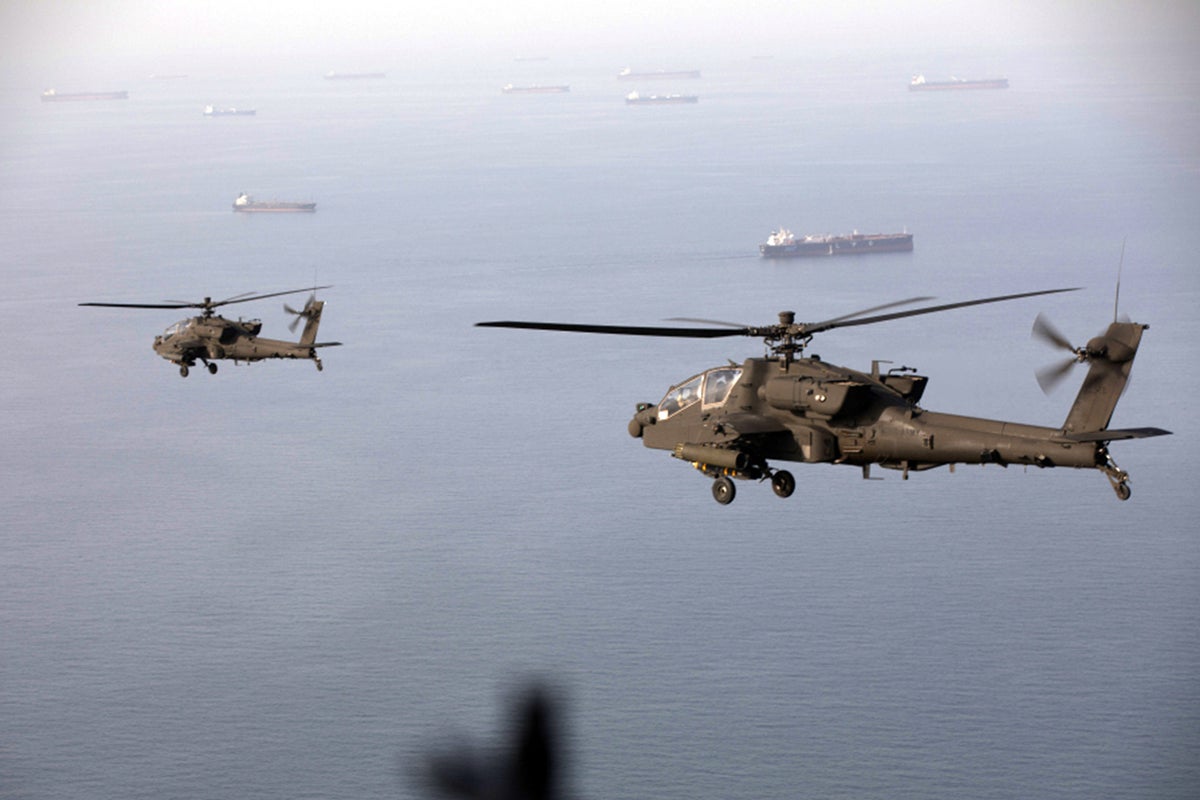
The stability of global energy markets hinges on a 21-mile-wide chokepoint where geopolitical posturing meets the cold mathematics of maritime logistics. When Tehran characterizes a U.S.-led blockade as "stupid," they are not merely engaging in rhetoric; they are identifying a fundamental mismatch between conventional naval doctrine and the asymmetric realities of the Persian Gulf. The collapse of peace negotiations is not an emotional failure but a structural one, driven by the divergent cost-functions of the United States and the Islamic Republic of Iran.
The Kinetic Geometry of the Strait of Hormuz
The Strait of Hormuz serves as the jugular of the global economy, facilitating the passage of roughly 20% of the world's total oil consumption. To understand the viability of a blockade or its counter-measures, one must analyze the physical constraints of the waterway.
The shipping lanes consist of two-mile-wide channels for inbound and outbound traffic, separated by a two-mile buffer zone. Because these lanes reside within the territorial waters of Oman and Iran, any "blockade" is not a simple matter of parking ships in a line. It is a high-stakes exercise in Anti-Access/Area Denial (A2/AD).
Iran’s tactical advantage stems from three geographic variables:
- Proximity: The Iranian coastline parallels the entire length of the transit route, allowing for land-based anti-ship cruise missile (ASCM) batteries to cover the width of the Strait.
- Bathymetry: The shallow waters of the Gulf limit the maneuverability of deep-draft U.S. carrier strike groups (CSGs) while providing ideal environments for Iran’s fleet of Ghadir-class midget submarines.
- Swarm Dynamics: The use of hundreds of fast inshore attack craft (FIAC) creates a "target saturation" problem for Aegis combat systems.
The Economic Attrition Model
The U.S. strategy centers on a "maximum pressure" blockade—not necessarily a physical barrier, but a financial and logistical embargo. This creates a specific Cost Function for both actors.
For the United States, the cost is primarily Market Volatility. A 1% disruption in global oil supply does not lead to a 1% price increase; because demand is inelastic in the short term, price spikes are exponential. If the Strait is closed, the immediate loss of 20 million barrels per day (bpd) could theoretically drive Brent crude prices toward $200 per barrel.
For Iran, the cost is Internal Social Cohesion. The blockade targets the Iranian Rial's exchange rate and the state’s ability to subsidize basic goods. Tehran’s "stupid" rebuttal refers to the U.S. assumption that economic pain will lead to regime capitulation. History suggests that in centralized, ideologically driven states, external pressure often consolidates domestic power rather than fracturing it.
The Failure of Diplomacy as a Game Theory Problem
The breakdown of peace deals is the logical outcome of a Zero-Sum Game where neither side can verify the other's compliance without compromising their own security.
The Credibility Gap
Washington requires "permanent and verifiable" cessation of nuclear enrichment and regional proxy support. For Tehran, these assets are their only leverage. To surrender them before sanctions are lifted is to trade a tangible defense for an intangible promise—one that can be reversed by the next U.S. administration.
The Asymmetric Escalation Ladder
When peace deals fail, both sides move up the escalation ladder. However, they do so using different currencies:
- The U.S. escalates via Sanctions and Cyber-Warfare: These are "cleaner" but take months to manifest results.
- Iran escalates via Kinetic Harassment: Seizing tankers, deploying mines, or utilizing proxies (the Houthis in the Red Sea, for example) creates immediate, high-visibility crises.
This mismatch creates a dangerous feedback loop. The U.S. applies a "slow" pressure (economic), and Iran responds with "fast" pressure (tactical), forcing the U.S. to choose between an embarrassing retreat or a full-scale kinetic intervention.
Technical Limitations of Naval Interdiction
A blockade in the Strait of Hormuz is technically distinct from historical precedents like the 1962 Cuban Missile Crisis. In the Gulf, the technical challenges are manifold.
Mine Warfare Deficits
The U.S. Navy’s mine counter-measure (MCM) capabilities are aging. Iran possesses an estimated 3,000 to 5,000 naval mines, including sophisticated "smart" mines that can be programmed to ignore escort ships and target specific acoustic signatures of oil tankers. Clearing these in a contested environment where the clearing vessels are under fire from coastal batteries is a logistical nightmare.
The Speed of Missiles vs. The Speed of Decisions
Modern ASCMs like the Noor or Ghadir (based on C-802 designs) travel at subsonic or supersonic speeds. From launch to impact in the narrow Strait, a ship’s crew may have less than 30 seconds to identify, track, and engage. This reduces the human element of command and forces a reliance on automated systems, increasing the risk of accidental escalation or catastrophic failure.
Strategic Divergence in Proxy Management
The competitor's narrative focuses on the direct "Trump vs. Tehran" dynamic, but this ignores the Networked Strategy that makes a blockade ineffective. Iran’s influence is decentralized. Even if the U.S. successfully "blocks" the Strait of Hormuz, Iran can exert pressure through its "Axis of Resistance."
- The Bab el-Mandeb Chokepoint: By supporting Houthi rebels, Iran creates a secondary chokepoint. If both Hormuz and the Red Sea are contested, the global supply chain for all goods—not just oil—is severed.
- Infrastructure Sabotage: Regional oil pipelines, such as the East-West Pipeline in Saudi Arabia, are vulnerable to drone strikes. These pipelines were designed to bypass the Strait, but they are static targets that are difficult to defend over thousands of miles.
The U.S. strategy assumes that the Strait is a standalone problem. Iran treats it as one node in a larger, interconnected web of regional influence.
Probability of High-Intensity Conflict
While the rhetoric is heated, a full-scale war remains a low-probability, high-impact event (a "Black Swan"). Both parties are operating under the Rational Actor Model, despite the inflammatory language used in public.
- The U.S. Constraint: Total war in the Middle East would require a multi-year commitment of ground troops and a massive shift in the domestic budget, which is politically unviable in the current polarized climate.
- The Iranian Constraint: A direct war with the U.S. would result in the destruction of Iran’s conventional military infrastructure and oil refineries—the very assets the regime needs for survival.
The most likely outcome is not a "peace deal" or a "world war," but a state of Permanent Gray Zone Conflict. This is characterized by:
- Sustained cyber-attacks on critical infrastructure.
- Occasional, deniable sabotage of energy assets.
- Increased use of "shadow fleets" (unregistered tankers) to circumvent blockades.
- Incremental nuclear enrichment used as a bargaining chip for specific, short-term sanctions waivers.
Tactical Recommendation for Energy Security
Stakeholders must move away from the binary "peace or war" mindset. The current impasse is a stable equilibrium of instability.
The strategic priority for global energy consumers is the de-risking of transit routes. This involves the rapid expansion of the Abu Dhabi Crude Oil Pipeline (ADCOP) and the Saudi Petroline, alongside the hardening of these facilities against unmanned aerial vehicle (UAV) attacks. For maritime operators, the integration of unmanned surface vessels (USVs) for reconnaissance will be necessary to provide the early warning required to counter swarm attacks and mine-laying operations in the Strait’s littoral zones.
The blockade is not "stupid" in its intent, but it is "incomplete" in its execution. Without a viable plan to address the asymmetric advantages Iran holds in its own backyard, a blockade remains a blunt instrument in a theater that requires a scalpel. The path forward is not a new treaty, but a new architecture of regional containment that accounts for the physical and technical realities of 21st-century naval warfare.