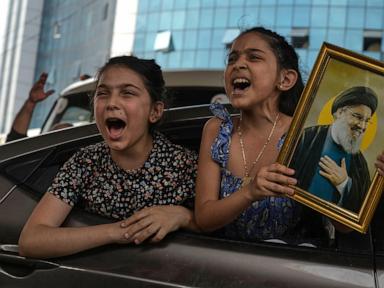
The cessation of hostilities between Israel and Hezbollah, mediated by United States and French diplomacy, does not represent a resolved conflict but rather a transition from kinetic warfare to a high-stakes verification phase. The immediate return of displaced populations to Southern Lebanon creates a "human shield" of reconstruction that serves as a primary deterrent against the resumption of short-term strikes. However, the durability of this arrangement is strictly governed by three independent variables: the Lebanese Armed Forces (LAF) deployment capacity, the integrity of the 60-day withdrawal window, and the internal political friction within the Lebanese state regarding the implementation of UN Security Council Resolution 1701.
The Mechanics of the 60-Day Implementation Window
The truce operates on a structured timeline where risk is front-loaded. During this 60-day interval, the Israeli Defense Forces (IDF) are scheduled to withdraw in phases, synchronized with the northward movement of Hezbollah's heavy weaponry and personnel beyond the Litani River. This is not a static retreat but a dynamic spatial reordering.
The success of this phase relies on a specific sequence of enforcement:
- Territorial Vacuity: The creation of a zone between the Blue Line and the Litani River that is free of any non-state armed presence.
- State Reassertion: The deployment of approximately 5,000 to 10,000 LAF troops. This deployment faces a significant bottleneck: the LAF’s existing resource deficit. Years of economic collapse in Lebanon have degraded the LAF's operational readiness, meaning their presence is initially symbolic rather than tactical.
- Monitored Verification: The establishment of a US-led monitoring committee. Unlike previous iterations of UNIFIL oversight, this committee is designed to have more direct intervention capabilities, though the exact parameters of its "right to act" remain a point of legal and sovereign contention.
The Cost Function of Displacement and Return
The rapid influx of civilians back to border villages like Marjayoun, Khiam, and Bint Jbeil is a calculated social phenomenon. For the returning population, the objective is the re-establishment of land claims and the prevention of a permanent "buffer zone" similar to the one maintained by Israel between 1982 and 2000.
From a strategic standpoint, this mass return changes the IDF’s target acquisition calculus. The presence of non-combatants raises the political and international cost of renewed airstrikes. However, this creates a secondary risk: the intermingling of returning civilians with Hezbollah’s covert infrastructure. If the Lebanese state fails to prevent the reconstruction of military tunnels and depots under the guise of civilian rebuilding, the truce enters a "decay state" where a return to war becomes mathematically inevitable once the IDF perceives the threat level has hit its pre-October 7th threshold.
Three Pillars of Truce Failure Risk
The stability of the current calm can be evaluated through three distinct risk pillars.
I. The Enforcement Asymmetry
Israel maintains a self-declared right to strike if it detects "imminent threats" or violations of the agreement. Lebanon views this as a violation of sovereignty. This creates a feedback loop where an Israeli "preemptive" strike—even if technically justified by a Hezbollah violation—triggers a retaliatory cycle that the LAF is powerless to stop. The asymmetry lies in the fact that while Israel can enforce the deal through kinetic means, the Lebanese government can only enforce it through political negotiation, which has historically failed to disarm Hezbollah.
II. The Infrastructure Paradox
The destruction of Southern Lebanon’s infrastructure (roads, water, electricity) is so extensive that the "return" is currently a humanitarian crisis in the making. Without a massive infusion of international capital, the southern region remains a vacuum. Historically, Hezbollah and its affiliates have filled such vacuums through "reconstruction diplomacy," providing social services where the state is absent. If the international community does not route aid strictly through state channels, the truce will inadvertently strengthen the very non-state structures it seeks to dismantle.
III. The Tehran-Tel Aviv Connection
The truce is a localized ceasefire in a regional "gray zone" war. The decision-making process for Hezbollah is inextricably linked to Iran’s broader strategic posture. If tensions between Iran and Israel escalate regarding the former's nuclear program or its proxies in Syria and Iraq, the Lebanese border will likely serve as the primary pressure valve. The truce is therefore a dependent variable of regional escalation, not an independent peace treaty.
Verification Logistics and the Role of UNIFIL
The United Nations Interim Force in Lebanon (UNIFIL) remains in a precarious position. The new agreement attempts to bolster the verification mechanism by introducing a more robust oversight role for the United States.
The operational challenge is the "visibility gap." Hezbollah’s assets are frequently embedded in private property or underground. Under the current terms, the LAF is the only entity with the legal authority to conduct searches of private residences or land. If the LAF lacks the political will or the physical hardware to conduct these searches, the monitoring committee becomes a reporting body rather than an enforcement body. The "transparency" required for a long-term peace is currently blocked by the legal protections afforded to private property in Lebanon, which Hezbollah uses as a tactical shield.
Economic Constraints on Military Persistence
The economic exhaustion of both primary actors serves as the strongest temporary glue for the truce.
- Israel's Economic Burden: The cost of maintaining a multi-front war, including the mobilization of reservists and the suspension of economic activity in the north, has placed a significant strain on the Israeli treasury. A period of "tactical patience" allows for the rotation of troops and the replenishment of Iron Dome interceptors and precision munitions.
- Lebanon’s Terminal State: Lebanon is experiencing one of the most severe economic depressions in modern history. The state literally cannot afford a full-scale invasion or the total destruction of its remaining ports and airports.
This mutual exhaustion creates a "stabilization period," but it does not address the underlying ideological or territorial disputes. It is a peace of necessity, not a peace of conviction.
The Strategic Threshold for Renewal
The transition from a fragile calm to a sustainable peace requires a shift in the Lebanese political architecture. The primary bottleneck is the vacant presidency and the inability of the Lebanese Parliament to form a government capable of making sovereign security decisions.
In the absence of a president, the LAF operates in a command vacuum, making it susceptible to local political pressures. The strategic play for the international community is to link reconstruction funds directly to the successful election of a non-aligned president and the verifiable deployment of the LAF to every square inch of the south.
The current calm is a high-frequency signal in a low-frequency conflict. The 60-day window is the "stress test." If the withdrawal is completed without a major exchange of fire, the conflict moves into a cold-war phase characterized by electronic surveillance and political maneuvering. If the withdrawal stalls, or if the LAF deployment is revealed as a hollow shell, the probability of a renewed, higher-intensity conflict in the third quarter of the year exceeds 70%.
The immediate tactical requirement is the establishment of the US-led monitoring headquarters in Naqoura with real-time satellite and drone feed integration to bypass the "visibility gap" of ground patrols. Without technological verification, the truce relies on the honor of parties that have spent two decades preparing for this specific confrontation.
The strategic recommendation for regional stakeholders is to treat the next 60 days not as a recovery period, but as a period of aggressive state-building within the Lebanese security sector. The only path to preventing a total regional collapse is the forced professionalization and empowerment of the LAF to the point where it becomes the sole legitimate wielder of force in the Levant. Any deviation from this—any "gray area" allowed for non-state actors—will result in the total failure of the US-brokered framework by the end of the fiscal year.