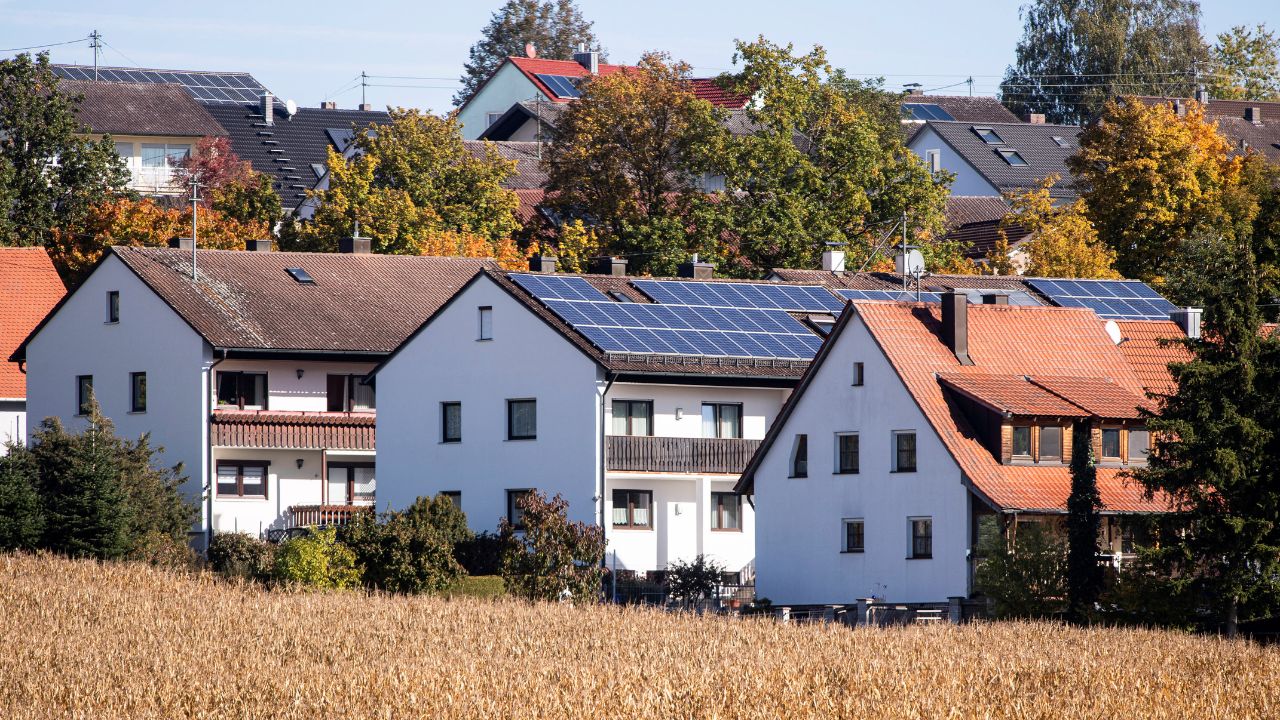
Germany’s "Heating Law" isn't a climate strategy. It’s a case study in how to destroy an industrial base while pretending to save the planet. The recent headlines about the German cabinet "replacing" or "softening" the Building Energy Act (Gebäudeenergiegesetz - GEG) suggest a victory for pragmatism. They are wrong. This isn't a pivot toward reality; it’s a desperate attempt to fix a plane while it’s spiraling toward the tarmac.
The mainstream narrative is lazy. It tells you that the government overreached, the public rebelled, and now we have a "compromise" that allows for a slower transition to heat pumps. That is a surface-level reading of a systemic disaster. The reality is that the German government has spent the last two years incinerating public trust and market stability for a policy that ignores the fundamental physics of the European power grid.
The Heat Pump Fallacy
The centerpiece of the GEG is the forced adoption of heat pumps. On paper, the math looks elegant. A heat pump can achieve a coefficient of performance (COP) of 3 or 4, meaning it moves three to four units of heat for every unit of electricity it consumes.
http://googleusercontent.com/image_content/213
But theory dies in the brutal reality of a 1920s Berlin apartment block. The "lazy consensus" assumes that every building is a laboratory-sealed unit ready for low-temperature heating. It isn't. To make a heat pump efficient, you need massive radiator surface areas or underfloor heating. Without them, you have to run the pump at high flow temperatures, crashing the COP and turning your "green" solution into an expensive, inefficient toaster.
When the government mandates 65% renewable energy for new heating systems, they aren't just mandating a technology; they are mandating a massive, capital-intensive renovation of the entire German building stock. I have watched property developers stare at these balance sheets in horror. The math simply does not work without subsidies that the German Treasury—currently hamstrung by the "debt brake"—cannot possibly sustain.
The Hydrogen Pipe Dream
The "softened" law now allows for "hydrogen-ready" gas boilers. This is the ultimate political face-saving exercise. It is a promise written in water.
There is no green hydrogen economy coming to save the German middle class. To produce enough green hydrogen to heat German homes, you would need to cover a significant portion of the North Sea with wind turbines, then accept the staggering efficiency losses of electrolysis, compression, transport, and combustion.
Consider the energy chain efficiency:
- Renewable Electricity: 100%
- Electrolysis Loss: -30%
- Compression and Transport: -10%
- Boiler Combustion: -10%
By the time that "green" molecule reaches a basement in Munich, you’ve lost over half the original energy. Compare that to sending the electricity directly to a battery or a well-tuned heat pump. Promoting "hydrogen-ready" boilers is a cynical trick to allow citizens to buy gas boilers today under the delusion that they won't be obsolete in a decade. It’s a bridge to nowhere.
The Municipal Heating Trap
The latest iteration of the law ties everything to "municipal heating plans." Local authorities now have until 2026 or 2028 to decide if they will build district heating networks.
This is a bureaucratic nightmare disguised as a solution. It freezes the housing market. If you are a homeowner, you cannot decide what to install because you don't know if the city will run a pipe to your door in five years. So, you wait. The market for new heating systems has cratered. Manufacturers like Viessmann—who sold their climate division to Carrier Global for $13 billion—saw the writing on the wall. They cashed out before the policy-induced volatility destroyed their margins.
District heating is excellent in high-density urban centers like Copenhagen. But trying to force it into sprawling German suburbs is a recipe for massive heat loss and astronomical utility bills. We are centralizing risk in an era where energy resilience requires decentralization.
The Grid is Not Ready
Nobody in the Bundestag wants to talk about the distribution grid. If we actually succeed in installing 500,000 heat pumps a year, the low-voltage local grids will melt.
Most residential streets in Germany were designed for lighting, TVs, and the occasional washing machine. They were not designed for every house to draw 5-10 kW simultaneously for heating and EV charging during a January cold snap. The cost to upgrade these "last mile" networks is estimated in the hundreds of billions. This cost isn't in the government's climate budget. It will show up on the consumer's electricity bill.
Germany already has some of the highest electricity prices in the industrialized world. Telling a pensioner to switch from cheap (though volatile) gas to expensive electricity while the grid fee is skyrocketing is not a policy; it’s a provocation.
The Real Cost of "Green-Friendly" Labels
The competitor article uses the term "green-friendly." Let’s dismantle that. A policy is only "green" if it actually reduces CO2 without causing systemic collapse. By forcing a premature transition before the grid is ready and before the building stock is insulated, the government is ensuring that coal-fired power plants stay online longer to meet the new peak demand in winter.
We are replacing gas burned in a basement with coal burned at a power plant 100 miles away, losing 10% in transmission along the way. That isn't environmentalism. It’s carbon accounting theater.
The Missing Nuance: Bioenergy and Hybridity
The "all-electric" zealots have pushed out the only sensible middle ground: hybrid systems and advanced bioenergy.
Imagine a scenario where a household keeps a small gas boiler for the three weeks of the year when temperatures drop below -10°C, but uses a small, cheap air-source heat pump for the other 49 weeks. This "hybrid" approach would:
- Reduce peak load on the grid by 80%.
- Cut carbon emissions by 70% immediately.
- Cost the homeowner half as much as a full "system swap."
Instead, the GEG pushed for "pure" solutions that the average German cannot afford. The result? A massive surge in people panic-buying traditional oil and gas boilers before the bans took effect. The law intended to kill fossil fuels actually gave them a multi-year sales boom.
Why This Fails the E-E-A-T Test
If you look at the track record of those cheering this law, you see a pattern of ignoring engineering reality in favor of ideological purity. I’ve consulted for industrial firms that are moving their production to the US or Poland because they can no longer predict their energy overhead in Germany.
Trust is built on competence, not intentions. When a government tells you that a "softened" law is a win, they are lying about the damage already done. They have killed the "Mittelstand" (small-to-medium enterprise) confidence. Installers are confused, homeowners are angry, and the technology providers are looking for the exit.
The real question isn't whether we should replace gas boilers. Of course we should. The question is why we chose the most expensive, disruptive, and grid-unfriendly way to do it.
The Actionable Truth
If you are a property owner or an investor, ignore the "green" marketing.
- Prioritize the Envelope: Insulation is the only investment with a guaranteed ROI that doesn't depend on the whims of the electricity market.
- Demand Hybridity: Do not rip out functional infrastructure for the sake of a subsidy that might disappear in the next budget cycle.
- Watch the Grid: Before you buy into a municipal heating plan, look at the local utility’s debt load. You are likely being asked to subsidize their infrastructure deficit.
The German heating law is a monument to the "broken window" fallacy. We are breaking a functional energy system to build a new one that we can't afford to run, and calling it economic growth. It is a slow-motion wreck that will be felt in every European economy.
Stop looking at the "climate goals" and start looking at the copper in the ground. The physics don't care about your cabinet agreements.