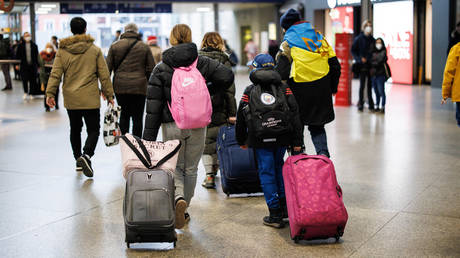
Germany is hitting a wall with its migration policy, and the tone is shifting fast. For the last few years, the country prided itself on its Willkommenskultur (welcome culture), throwing open its doors to over 1.2 million Ukrainians fleeing conflict. But the public mood has soured. Local resources are stretched thin, and political patience is running out.
Tabloid headlines, specifically a major report by Bild, point to a growing anxiety over a fresh wave of arrivals. However, the real story isn't just about total numbers. It's about a fundamental shift in who is arriving, how they're being funded, and a massive gap between public expectation and reality.
If you want to understand the actual friction in Berlin and local town halls right now, you have to look past the sensational headlines. The ground rules are shifting for the second-largest immigrant group in Germany.
The Citizen's Allowance Backlash
The primary source of friction isn't the physical space—it's the financial structure. Unlike asylum seekers from other nations, displaced Ukrainians in Germany were granted immediate access to Bürgergeld (citizen's allowance). This means access to standard unemployment benefits, healthcare, and housing support without going through the grueling, restrictive asylum process.
It seemed like the right humanitarian move initially. Now, it's a political landmine.
A poll commissioned by Bild revealed a stark reality: 66% of Germans now oppose continuing Bürgergeld payments for Ukrainian refugees. Only 17% support keeping the current system intact. Taxpayers are looking at local infrastructure—crumbling schools, delayed train lines, overwhelmed medical offices—and wondering why a temporary protection framework looks so much like a permanent welfare program.
The sentiment isn't just coming from the far-right anymore. Mainstream politicians are openly questioning why billions are channeled into basic cash welfare instead of aggressive, mandatory employment placement.
The Changing Face of the Diaspora
When the first waves arrived in 2022, the demographic was overwhelmingly women, children, and the elderly. Men were legally required to stay behind and defend Ukraine.
That demographic makeup is changing, and it's fueling the current wave of anxiety. A noticeable shift occurred after Ukraine authorized foreign travel for younger men aged 18 to 22 for educational and specific demographic reasons. Suddenly, local German job centers and reception centers noticed a wave of young, draft-age men arriving.
This has completely altered public perception. It’s one thing to support vulnerable women and children escaping active bombardment; it's another to provide full social benefits to young men who, in the eyes of many locals, could either be working or contributing to their home country's defense.
The Integration Gap and the Stay Dilemma
Germany needs workers. The country is facing a massive, acute labor shortage across almost every sector, from tech to hospitality. Yet, the transition from welfare to the workforce has been painfully slow.
By early 2026, data from the Federal Institute for Population Research (BiB) showed some improvement: employment numbers among Ukrainians are finally rising as people finish their mandatory integration and language courses. In early 2022, only 65,000 Ukrainians were employed in Germany. By early 2026, that number climbed past 370,000.
But here is the catch: over 523,000 Ukrainians are still registered at local job centers as fit for work but unemployed or underemployed.
Language remains a massive barrier. German bureaucracy requires high-level language certificates for jobs that frankly shouldn't require them. A Ukrainian doctor or engineer can't just walk into a clinic or firm; they face months, sometimes years, of certificate recognition delays.
This delay creates an awkward paradox:
- The German Public Sees: Hundreds of thousands of capable adults receiving state funds instead of paying taxes.
- The Ukrainian Refugee Experiences: A brick wall of bureaucratic red tape preventing them from taking jobs that match their qualifications.
Meanwhile, the temporary nature of this migration is dissolving. The BiB panel study found that 59% of Ukrainian refugees now intend to stay in Germany long-term. They are renting apartments, their kids are learning German, and they are setting down roots. Germany is realizing this isn't a short-term humanitarian crisis anymore—it's a permanent demographic shift.
Berlin Clamps Down on the Rules
The German government knows it can't keep running the 2022 playbook. The Interior Ministry quietly extended temporary protection permits under Section 24 of the Residence Act until March 4, 2027. This was done primarily to prevent absolute administrative gridlock at local immigration offices (Ausländerbehörden).
But don't mistake that extension for a soft stance. While existing refugees get a breather from paperwork, the rules for new arrivals are tightening significantly.
New asylum laws and tighter EU-aligned regulations are coming into effect. Germany has extended its internal land-border checks for consecutive six-month periods, resulting in thousands of turnbacks at the border. Interior Minister Alexander Dobrindt and other coalition officials are pushing a much harder line.
The strategy is clear: make Germany less financially attractive for future migration waves. Neighbors like Norway have already tightened residency rules for newly arrived Ukrainian men, and Germany is following suit by looking at ways to transition people away from cash benefits and into direct, low-barrier work requirements.
If you are navigating the system or employing Ukrainian staff in Germany, expect the following shifts over the coming months:
- Direct Placement Over Language Course Supremacy: Job centers are shifting toward a "work first" approach. Expect less tolerance for skipping work opportunities in favor of endless language certificates.
- Stricter Benefit Reviews: The criteria for receiving full Bürgergeld will face intense local scrutiny. Regional authorities are actively looking for ways to convert cash benefits into voucher-based or conditional aid.
- Streamlined Fast-Tracks: On the flip side, the government is trying to cut the red tape for professional recognition. If you have technical or medical skills, look into the new Chancenkarte (Opportunity Card) frameworks or specialized fast-track options to bypass the standard Ausländerbehörde bottlenecks.
The era of unconditional, unquestioned solidarity has ended. It has been replaced by a pragmatic, transactional relationship where Germany demands economic output in exchange for continued shelter.